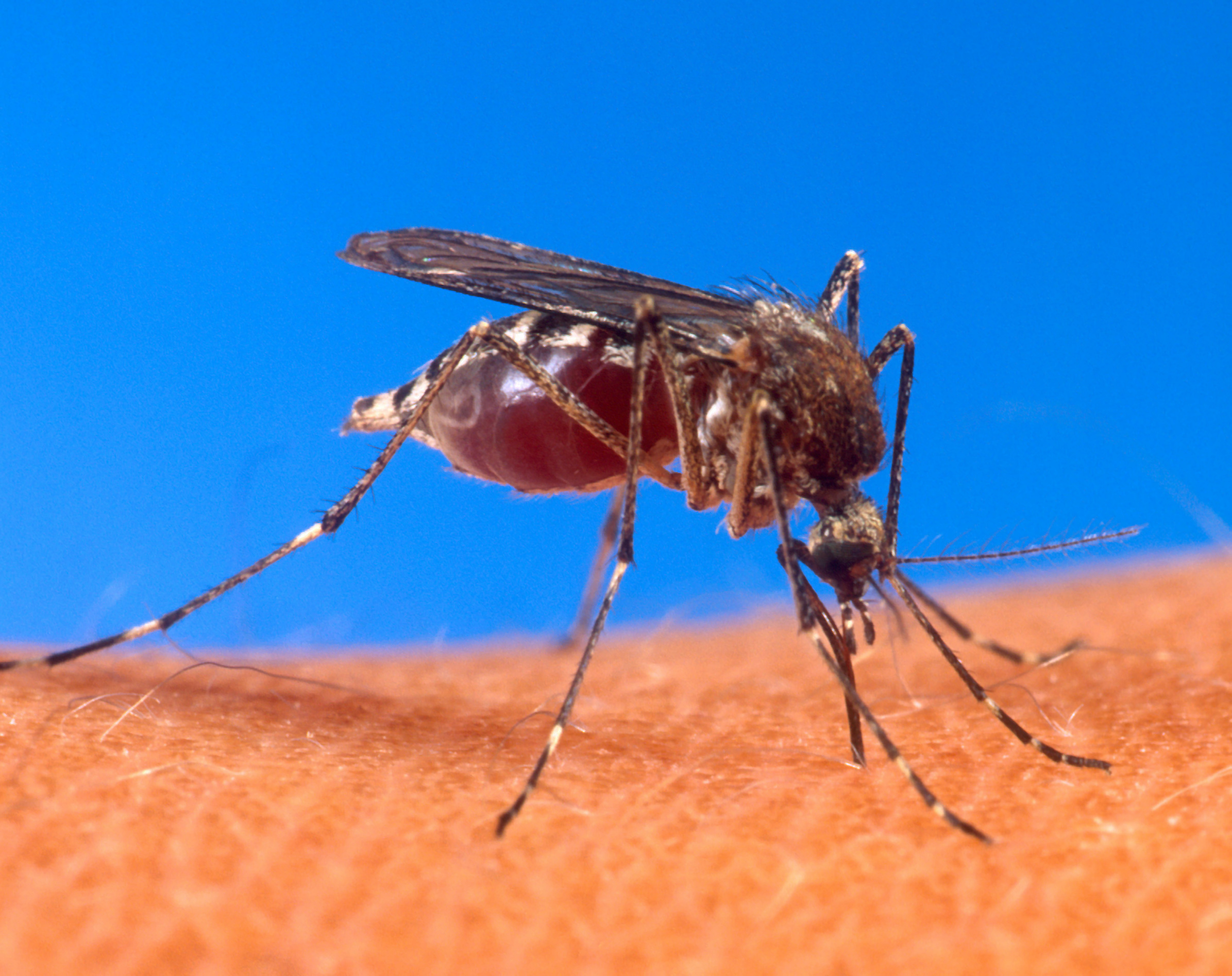
Showing posts with label mosquito. Show all posts

Tuesday, March 10, 2015

Better Know a Scientist: Interview with Estefania Elorriaga on Site-Specific Nucleases

This week in “Better Know a Scientist”, I’m interviewing Estefania Elorriaga. She’s in the midst of her PhD in Dr Steven Strauss’ lab in the Department of Forest Ecosystems and Society at Oregon State University. She is doing research on using site-specific nucleases for mutagenesis (fear not! She’ll have to explain her research in this interview). Let’s get started!


Q: What are site-specific nucleases? Why are they important?
Site-specific nucleases are enzymes that can cut DNA at specific  locations in the genome of your organism.  The nucleases create a break which stimulates the organism’s DNA repair mechanisms to fix the break.  Occasionally, the repair mechanisms will make a mistake (delete some DNA or insert some extra DNA) that will lead to a loss-of-function mutation in the target gene, meaning that the protein you targeted will no longer do its job.  Examples of site-specific nucleases are zinc finger nucleases (ZFNs), transcription activator-like effector nucleases (TALENs), the CRISPR (clustered regularly interspaced short palindromic repeats)-Cas system, and engineered meganucleases.  Site-specific nucleases can also be used for gene repair or gene replacement with the addition of a donor DNA sequence.  These technologies are important because they allow scientists to modify only specific locations of genes in order to obtain a desired trait.  In the area of crop breeding we believe these technologies will be crucial for improving current lines specially for particular cases like drought-tolerance, high or low temperature tolerance, disease resistance, or even nutrient content.


[Biochica’s note: if you want to learn more about gene editing, please see my previous post on the topic]


Estefania's work using TALENs.
The plant on the left has a TALEN (will show it's trait much later)
The plant on the top-right is her transgenic control,
expressing GFP (green fluorescent protein).
The plant on the bottom right is the unmodified control.
Q: How specific are the nucleases? If you can share, are you seeing off-target edits in your work?
We are still at the early analysis stage, so I cannot really say personally how specific they are.  But, according to the scientific literature, CRISPR-Cas nucleases appear to be the most active and specific, followed by TALENs, and last ZFNs.  CRISPR-Cas nuclease show a lot of promise because of the high activity that they show so far and their off-targeting appears to be somewhat predictable.  


Q: Are there any GMOs made using site-specific nucleases currently on the market? Do you know of any that are in development?
There are no commercially available GMOs currently in the market or in development (that I know of), but everyone in the field believes that the technology is going to revolutionize genetic engineering, especially breeding and gene therapy.


Q: Like me, you were raised in Venezuela (I was raised in Barquisimeto and I left after graduating from high school). Venezuela has a moratorium on growing any GMOs and activists would argue that the moratorium is in place because of how harmful GMOs can be. So, how do we know that you aren’t a spy sent to the United States to bring down the imperialist empire through evil GMOs?
Ha ha! If the Venezuelan government was making me get a PhD just to spy on the USA, I think I would have quit my job as a spy and gone to Colombia or Costa Rica.  I cannot imagine doing research while spying.  As it stands, I barely have any free time.  And also, I cannot imagine pretending to be a researcher.

[Biochica's note: that's exactly what a person tasked with destroying the imperialist empire with GMOs would do: deny it].


Q: What traits are you working on in the lab? Why are they important?
I work with flowering genes in both poplar and eucalypts. Understanding floral development and identity genes is important because it will allow us to generate transgenic trees that don’t have functional pollen or ovules, so there is no possibility of transgene flow.  Developing transgene containment technologies for forest trees to facilitate the commercial and scientific use of transgenic trees is one of the main goals of our lab.


Q: Can you explain what you mean by “transgene flow”? [Biochica note: some activists refer to this as “GMO contamination”] Does it basically mean that you’re blocking the GM tree or plant from hybridizing or crossing with a non-GM tree or plant?
“Transgene flow” is the movement of the gene we inserted into our trees into a wild or cultivated population of the same or a related species. And yes, it basically means not allowing our GM tree to cross or hybridise with wild or cultivated trees.


Q: If you’re creating a GMO to address one of the major concerns against GMOs, aren’t you creating a circular argument? How would that conversation even go? I imagine it would be like, “Activists! You’re worried about GMO genes getting into the environment? Here’s a GMO that will prevent GM genes from getting into the environment. Go forth and plant it!” Aren’t a few heads going to explode? Is THAT the real plan of the Venezuelan government? To bring down the imperialist empire through circular arguments?
By eliminating transgene flow, we are just allowing the GM trees to be used commercially for other purposes like a non-flowering faster growing eucalyptus.  Also, eliminating transgene flow in the current GM crops will allow the scientific community to educate the public, and also other scientists that are weary, about the safety of GM technology.  We hypothesize that transgenes will likely not do well in the wild, so they will probably get eliminated through fitness selection, but we need to study each particular case. Ha ha! Nothing from the current Venezuelan government surprises me, so who knows...


Q: Are there any non-GM crops where gene-flow is a problem that may benefit from the adoption of the technology?
The other case that comes to my mind is the case of gene purity in seed crops.  Seed producers follow standards and practices that guarantee the purity of the seeds available to farmers and home growers. Genetic purity in their case is essential to ensure that the seed will perform as expected, so seed producers must be careful about the pollen that fertilizes their plants.  


Q: What trait would you like to work on in the future?
I would like to work with either nutrients (e.g. create a highly nutritious fruit or vegetable crop), drugs (e.g. create plants that can make medicines), or abiotic resistance (e.g. create plants that can take up heavy metals).


Q: There are many articles in the news and in journals about potential traits that may benefit us, many of which never make it past research, but none-the-less create much buzz. Which one(s) do you think are the most exciting? Which one(s) do you think are the most promising?
Being a transplant in Oregon and feeling like a true Oregonian since I moved to the Northwest, protecting the environment is a topic dear to my heart.  In the University of Washington, Prof. Sharon Doty worked with transgenic poplars that were able to remove more than 90% of contaminants from Superfund sites. According to the EPA, “A Superfund site is an uncontrolled or abandoned place where hazardous waste is located, possibly affecting local ecosystems or people”. I think using trees to clean our aquifers and our soils is a win-win. We get more oxygen, cleaner air, and also cleaner soils and rivers. But, the trees are nowhere near being ready for use outside of university labs.  


There is also a transgenic pig called “the Enviropig” from the University of Guelph in Canada, that digests phosphorus from its food more efficiently than non-transgenic pigs, so it needs less feed and its waste is less toxic to the environment.  Doesn’t that sound like a win-win too?!  


I am also a big fan of producing medicines in plants (like I mentioned above).  This practice is known as biopharming.  I am also a fan of using GM mosquitoes to eliminate vector-borne diseases like dengue (after the GM mosquito mates with a non-GM mosquito the transgene causes the mosquito larvae to die).  These two cases I mentioned though are closer to production than the Enviropig or phytoremediating trees.  Biopharming had a rough time recently because many of the companies involved went bankrupt, but there is an experimental antibody for Ebola currently being made in tobacco by Kentucky BioProcessing called ZMapp that should give this industry a boost, and the British company Oxitec plans to release GM mosquitoes in the Florida keys to reduce dengue and chikungunya (both diseases you don’t want to get, and less yet while on vacation).  ZMapp is considered the most promising candidate to combat Ebola and it is currently being used in a controlled human trial in Liberia. The mosquitoes were already tested in Brazil and Panama with great success, so both countries plan on releasing a lot more of them.


[Biochica’s note: if you want to learn more about Oxitec’s mosquitoes, please see my previous post on my family’s experience with dengue and my review of the literature on these phenomenal skeeters]


Q: How much money is Monsanto paying you to develop these transgene containment technologies that will solve one of their public image problems? After all, we all know that Monsanto controls university research.
Monsanto has never paid me or our lab for the research we do.  Sadly, when many people think “GM technology” they think “Monsanto”.  But, in reality the technology is being used by hundreds of university labs, research facilities, and biotech companies developing more than herbicide- or insect-resistant crops.  Monsanto and all the other large biotech multinationals like Dupont, Pioneer, or Syngenta come up with cutting-edge seed and agro-chemical technologies, but given that there is no direct benefit to the end user (all the benefits go to the farmer), the public shows little to no support because of lack of understanding and fear.  If you look over the ISAAA’s (International Service for the Acquisition of Agri-biotech Application) Pocket K. Documented Benefits of GM Crops, you will find that from 1996 to 2012, global farmers’ income increased by $116.6 million billion and there was a reduction in herbicide and pesticide use of 503 million kgs (ISAAA is an international non-profit “that shares the benefits of crop biotechnology to various stakeholders, particularly resource-poor farmers in developing countries, through knowledge sharing initiatives and the transfer and delivery of proprietary biotechnology applications”).  All these agricultural biotech companies perform cutting edge science and create impressive biotech products.  However, as companies they are concerned with profits, so given the high cost of generating a GM product, they focus on products that will bring them a return on their investment.


Q: My dreams for crop modification aren’t as lofty: I just want a peelable pomegranate. Do you think that the research you’re conducting might be able to help?
My work won’t directly affect the possibility of creating a more peelable pomegranate. But, indirectly it can bring science closer to your dream.  My research can add onto the increasing scientific knowledge base that is proving that site-specific nucleases can someday be an important tool in crop breeding.  If we find the gene or sets of genes involved in making the pomegranate’s skin, we can either modify or replace the genes for ones that will make the pomegranate easier to peel.  For many centuries, humans have been modifying the aspect, size, and taste of cultivated crops by doing selective breeding without knowing anything about genetics.  Wild bananas and corn (and dogs...chihuahuas come from wolves!) are great examples of what selective breeding can do.  Wild bananas are small and loaded with seeds.  Meanwhile, cultivated bananas are large and have tiny seeds (that actually are not viable because cultivated bananas are sterile).  Teosinte (the wild ancestor of corn) make small ears with only two rows of hard fruit cases that protect the seeds.  Corn makes large ears with eight to twelve rows of tender seeds (no hard fruit cases).  So, GE is basically streamlining breeding by allowing use scientists and plant breeders to perform highly selective and direct breeding using genes from the same species or other species.

[Biochica’s note to the spouse: it sounds like there’s the remote possibility that Estefania’s research might be able to make my pomegranate. Please be advised that we may have to move to Oregon in the near future to help conduct this research].

Friday, April 18, 2014

Genetically modified dengue fighters

I know I generally don't say much about myself here, but this post requires a bit of  "Get to Know BioChica". When I was 6 years old, my family moved to Venezuela. I graduated from high-school and then chose to move back to Canada to go to college while my family stayed behind. It's only in the past 2-4 years that my family left Venezuela due to the economic and political instability. And the kidnappings.

Most of that time was spent in a city called Barquisimeto. Our house overlooked a valley where sugar cane was grown called "Valle del Turbio", named for a river that ran close to our house. The river, which translates to "murky", was aptly named because during dry season it was stagnant and stinky. As such, mosquitoes and the illnesses they bear were very common in our neighbourhood.

File:Valle del Turbio y Tarabana.jpg
Valle del Turbio, which separates the cities of
Cabudare and Barquisimeto in Venezuela.
Wikimedia Commons
I first learned about dengue fever when I was in 5th grade. It was introduced to us in health class along with other common tropical diseases such as yellow fever and chagas disease. We learned that it was a mosquito borne illness for which there was no vaccine. The dengue virus is transmitted primarily through the Aedes aegypti mosquito and recent statistics suggest that as many as 400 million people are infected each year.

My earliest memory of someone getting dengue was probably in 7th or 8th grade when my dad got dengue, and I very vividly remember seeing him wrapped up in one of the very few blankets we owned, because it never got cold enough for blankets. My dad was lying on the sofa in front of the TV while shivering in the blistering afternoon heat. I yelled for my sister to come see because he was rambling and uttering gibberish, which I thought was hilarious. Years later, I realized that it was due to the very high fever that accompanies dengue, and understood why my mom had been so anxious and worried.

We always took precautions when there were a lot of mosquitoes: all our beds had mosquito netting hanging from hammock hooks in the walls; about 1 hour before going to bed, my dad would spray all our bedrooms with Baygon bug spray; we used plenty of insect repellent when we sat outdoors; and we never chased away the bats that lived in our mango trees, in hopes that they'd eat their share of mosquitoes at dusk. When one of us got dengue or knew of our neighbours getting it, we'd use even more bug repellent since a person who is infected with the virus can infect a mosquito when they get bitten. In the course of doing research for this piece, I've learned that most of these measures didn't matter anyway, since the mosquito that carries dengue is most active during the day.

I got dengue when I was in 9th grade and I'm the only person in my family who got it only once, probably because I lived in Venezuela for the least amount of time. I remember that my body hurt a lot, like severe growing pains. We never went to the doctor when we got dengue, but recognized it due to the pain that it caused, the high fevers, and the red dots under our skin. Even if we had gone to the doctor, there wasn't anything that could be done, so we just took Tylenol to reduce the fever and rested.

My first true scare with dengue happened when I was in my first year of college in Canada. My mom called to tell me that they had taken my sister to a clinic because she had hemorrhagic dengue. I don't think I can accurately describe the fear that this statement caused unless I give you an idea of the status of Venezuela's hospitals. A hospital in Venezuela is just a concrete building where doctors work. That's it. There are no amenities, you have to buy your own medicine, you have to bring your own sheets, there are huge line-ups, it's hot, it's disorganized, and it's noisy. So we never went to the hospital. Ever. The only time I ever went to a hospital was to visit my brother, who's a surgeon, and it was not an experience that I'd care to repeat. I once asked my sister-in-law (who is an Ob/Gyn) what had been her craziest experience in the hospital. She and my brother worked in our state's largest hospital for several years. She said that in the middle of a C-section, there had been a power outage and, of course, there was no emergency generator. So she called all her students into the OR and asked them to turn on the lights on their cell phones, and she finished her surgery to the glow of Blackberry's and iPhones. So based on that single phrase, "we've taken your sister to the clinic", I knew just how bad it had to be. Dengue causes platelet and white blood cell counts to drop, leading to an inability to clot blood and internal bleeding. Patients then go into shock and can die within 24 hrs. According to the WHO, dengue has a fairly low mortality rate: 2.5%, yet most of those who are hospitalized are young children. While doctors were deciding whether my sister needed a blood transfusion, they noted that her platelet count was rising, and she was able to recover within a few days. She wrote to me about her experience: "The nasty part of dengue was the weakness, feeling dizzy and faint all the time. When I was in the hospital I remember getting nosebleeds a lot by just touching or scratching my nose a little. That's how low my platelet levels were."

I asked my family members to describe their own experiences with dengue. Here's what my dad wrote: "I had it 2 or 3 times. The things I remember are high fever, headache, pain in joints and bones, general weakness and discomfort which would last for a relatively long time and take time to recuperate, skin rash in case of hemorrhagic dengue, and low platelets that may result in blood transfusion. In Venezuela they give you folic acid to increase platelets, a pain killer that is not Aspirin, and lots of liquid."

My brother wanted me to stress a few other points, particularly insecticide use in public areas during epidemics: DDT was used in Venezuela until fairly recently. He mentioned that Abate larvicide was used in the drinking water in places where people didn't have running water. Although it's WHO approved for drinking water, he thought "it makes it taste horrible." Finally, my sister-in-law mentioned that she remembers having patients with miscarriages during dengue epidemics.

You can imagine that I'm pretty biased and was elated to learn that a genetically modified mosquito has been approved to combat dengue in Brazil. Although the mortality rate for dengue may not be high, it carries a high cost to individuals and medical systems when there is an epidemic.

File:Aedes aegypti biting human.jpg
Aedes Aegypti. Note the banding pattern on the legs.
Wikimedia commons
The genetically modified strain of mosquito (OX513A) is developed by a British biotech company called Oxitec. Their webpage has a pretty simple description of the technology: the genetically modified mosquitoes need a specific food supplement in order to survive. If they do not receive the supplement, then they die. The modified mosquitoes are released into the environment where they mate with wild-type mosquitoes, and the modified gene is passed on to their offspring. The modified mosquito and all its offspring die, since they will not have access to the supplement. The technology is abbreviated and copyrighted as RIDL (Release of Insects carrying a Dominant Lethal gene).

I was surprised that there are already several papers published on the OX513A mosquito, and as far as I could tell, all or most of the studies were (understandably) written in collaboration with Oxitec. OX513A requires tetracycline in order to survive. In the absence of Tetracycline, its offspring die at late larval or early pupal stage (details of the mechanism of action of the transgene can be found here). This antibiotic can be easily provided to the skeeters in the laboratory, but would be difficult for them to find in the wild. This was an important point for me, because as a fan of Jurassic Park, I knew that if dinosaurs were able to escape and find a source of lysine, then it might be possible for mosquitoes to find a source of food required for their survival. However, unlike lysine which is found everywhere, I couldn't find a readily available source of tetracycline in my web searches. The antibiotic is made synthetically so it is highly unlikely that the mosquitoes will ever find an abundant natural source for it. The modification for OX513A is non-sex-specific (some of the other RIDL modifications are specific to male-mosquitoes), and the mosquito also carries a red-fluorescence protein for visual identification (wouldn't it be AWESOME to see a glowing mosquito when you hear that annoying buzzing sound in the middle of the night right next to your ear!?!). However, for the purposes of the control program, only male RIDL mosquitoes will be released into the wild.

A study in 2011 compared lifespan and other metrics between the genetically modified mosquito and its wild-counterpart. It found that "unmodified mosquitoes survived on average about 5% better than the transformed OX513A line", and the unmodified mosquitoes pupated on average one day later than the modified ones. The unmodified mosquitoes were also larger and lived longer, concluding that there are statistically significant differences between OX513A and its wild-counterpart. The authors suggest several hypotheses for their findings: the silencing of the lethal gene may not be complete, the transgene may have negative effects, the transgene may have inserted itself in a region where it is impacting surrounding genes, or that the strain of mosquito is too inbred and may be expressing recessive mutations. The authors conclude that it will be necessary to determine if any of the differences observed in the OX513 mosquitoes have an impact on mating capacity (i.e. will 'normals' still find the mutants "sexy"? And unfortunately, a more rigorous study would be required than gauging audience reactions to Mystique in X-Men).

The question of mating capacity is key to the success of this entire program. I was surprised to learn that the Aedes aegypti female is monogamous, while the male is polygamous (I'm sure a scorned woman out there is probably thinking "Typical!"). So if the wild-type female were to prefer the wild-type male, then the whole project would fall apart because the mutant gene would never pass on to the next generation. A study examining mating capacity was published late 2011, and compared OX513A with it's closest wild relative. The materials and methods of this paper is really interesting: the authors set up 100 "mating arenas" for the mosquitoes and added either a wild- or mutant male to each arena. Then, they added 5 virgin females to the cages for 90 minutes a day until the males died. An alternate treatment was to not add females on the fourth and fifth day (i.e. the males got 2 days of 'rest'). The females were removed and dissected to check for the presence/absence of sperm. The key findings are that the longer the males lived, the more females they inseminated (that's sort of a 'duh' finding...). However, the wild-type males inseminated more females than the mutants, while resting had no effect. Additionally, wild-type males outlived mutants by approximately 4 days, which replicates their previous findings regarding lifespan. Resting increased the lifespan of male mosquitoes by approximately 4 days, in both mutants and wild-types. Their conclusion? "Attempting to mate therefore appears more costly in terms of energy investment to the genetically modified males." The authors find that the wild-type and mutant males mate with the same number of females in the first 3 days, suggesting that males of both strains may have the same amount of initial sperm and energy reserves, but the mutants don't regenerate their capacity as easily. They state that this would mean that mutants would have to be released into the wild more frequently and that it doesn't exclude their use in a control program. The authors didn't quantify the amount of sperm that the males released, so this might be important to examine at a later date.

I don't know how Oxitec prices their program, but if it is by the number of mosquitoes required, then this is a pretty convenient problem to have. Instead of requiring the release of males every X number of weeks/days, the findings of this paper suggest that the releases would have to be done more frequently than expected. However, I agree that it doesn't mean the control program sucks. And just to be clear, I'm speculating on the fact that this translates into greater costs to the consumer since the company's website was vague on the cost of their program.

Another important topic was the impact of the mutant mosquito on its predators, that is to say, how do the mutant proteins impact the animals who eat the mutant mosquitoes? In a paper published last year, the authors used the 2 species of the predatory Toxorhynchites (known as the "elephant mosquito") to answer this question. These large mosquitoes eat the larvae of other mosquitoes, including Aedes aegypti. The scientists' choice of organism was a smart one: they wanted an organism that would be small enough to be impacted by eating the mutants, that could be studied in the lab, and that could subsist exclusively by eating the mutants (this last point is key to the value of this study). They used 3 different diets: wild-type larvae, and mutants reared with and without tetracycline. Then they examined a variety of different parameters between the different groups.

They found that the Toxorhynchites females eating the wild larvae ate more larvae than the females eating the mutant larvae reared on tetracycline. The authors have no explanation for this statistically significant difference, particularly since it was not seen in the second species tested (it would be interesting to see if this could be reproduced, particularly with more mosquitoes. Each treatment group had ~20-30 mosquitoes for this study). All other comparisons were either equivalent, or could be explained. Most importantly, there was no difference in lifespan, development, or fecundity in the mosquitoes, and the authors conclude that the mutant mosquitoes are unlikely to impact predators in the environment.

The company also did a field test in the Cayman Islands and their results were published in 2011 in Nature Biotechnology (the paper is freely available on Oxitec's website via the link I've provided). The purpose of the paper was to determine how the mosquitoes would mate in the wild and whether the patterns they observed in the lab would carry over into the "real world". For their study, "OX513A males were released in a 10-hectare (ha) area at an average release rate of 465 males/ha/week for 4 weeks, starting on Nov. 16, 2009." They set up traps over the course of the study to determine how many of the larvae were mutants. They conclude that the mutant males can compete fairly well for mates in the "real world" (i.e. mutants are sexy!!).

The last paper I read was about the release of male mutant mosquitoes in Malaysia. The goal of the study was also to determine what happens to the mosquitoes when they are released in the wild, and was carried out in a region where there are no humans. The study, published in 2012, was approved by Malaysian regulatory agencies and was carried out in an uninhabited area. However, many public engagement activities were performed prior to the study's launch. The mosquitoes were released and monitored using nets, and several parameters were measured and compared to a control mosquito species. I thought that this sentence in the discussion was encouraging: "As with previous field releases, the transgene disappeared rapidly from the environment post-release, as expected, and was not detected more than a few hundred metres beyond the release area." Translation: the mutants don't go too far and die off (as expected).

I couldn't find any readily available studies outlining the data from Brazil's trials, but this news article states that the trials have been ongoing for 2 years and have seen a 90% drop in wild Aedes aegypti. As expected, the article also outlines opposition from environmental groups, whose concerns are:
  • A small number of [mutant] female mosquitoes could also be released - and end up biting people. My perspective? At least the mutant female mosquitoes don't carry dengue. Given the choice between getting bitten by a mutant mosquito vs a dengue carrying mosquito, bring on the mutants. 
  • Some of the new offspring could survive by feeding on food or waste contaminated with tetracycline and therefore pass on their GM traits. Seriously? How would this happen? I'm not sure how food or waste could get contaminated with enough tetracycline so that the mosquitoes get their "fix"? Tetracycline was discovered from a soil dwelling bacteria, and the antibiotic is abundantly produced via fermentation in the lab. However, it is within the realm of possibility that a cargo truck carrying tetracycline might topple over, thereby creating pools of antibiotics that the mosquitoes could then lap up. I'll give you that.
There is additional outrage in the United States because this technology was contemplated as a possible tool to combat dengue in the Florida Keys. According to the article that I've cited, there are allegations that the study in the Cayman Islands was done secretively, although Oxitec rebuts this claim on their website. In any case, the company probably learned its lesson, and seems to have done more visible community engagement activities in Malaysia and there are reports of the same being done in Brazil and Panama. The story from the Florida Keys states that concerned citizens feel that not enough independent research has been done. Personally, I feel that there's quite a bit published already and just because there are Oxitec scientists among the researchers on a study should not automatically invalidate its findings. The papers that I cited above were research projects led by major universities and to omit Oxitec entirely from the list of authors would not make sense, since the product belongs to Oxitec and has not yet been commercialized. Finally, in the comments section on the news story from the Florida Keys, there was concern that the mutant gene might harm humans. Again, I don't see a logical mechanism how this may happen. The dengue virus lives on the mosquito's salivary glands, which is how it gets transmitted when we get bitten. But I couldn't find any information on mosquito cells getting transferred in the biting process. However, let's assume that mosquito cells do get transmitted to humans when we get bitten. It would imply that mosquito cells have been getting transmitted to humans for thousands of years while humans and mosquitoes have co-existed. The two proteins that are being expressed in the mutants would not cause this to change and the mutant cells would not behave any differently.

An additional concern is the possibility that the mosquitoes will be released into the wild with no regulation. I don't think this concern is valid, based on several reasons: a) If a company releases genetically modified insects secretly into the wild, then how do they make money? b) Genetically modified living organisms are governed by the Cartagena Protocol on Biosafety, which is an "international agreement which aims to ensure the safe handling, transport and use of living modified organisms (LMOs) resulting from modern biotechnology that may have adverse effects on biological diversity, taking also into account risks to human health." As such, Oxitec has been working closely with public health organizations in each country who, after all, are their customers.

My perspective is that this company seems to have done the legwork: they started with a few publications outlining their findings, moved on to field trials where there were no inhabitants, and finally to trials where there were humans. It seems that they've done all the logical tests (note that there were several other studies on these mosquitoes that I didn't cover in this blog post) and I don't see anything missing. I don't think we can say that this is a technology that has not been tested, particularly since the lifespan of a mosquito is so short. Thousands of mosquitoes representing hundreds of generations have been tested throughout the course of the last decade, and it seems that everything is fine.

So my vote is for this technology to be adopted world-wide. During her review of this piece, my sister took it one step further: "I got an advisory from the Canadian embassy in Venezuela on this Chikunguya outbreak in Latin America. A lot like dengue, I assume the technology could be applied to this disease, too."

I think my whole family would agree on one thing:  we recommend its test in the "Colinas del Turbio" neighbourhood in Barquisimeto, Venezuela :)