Showing posts with label Better Know a Scientist. Show all posts

Saturday, April 16, 2016

Better Know a Scientist: Weed Scientist Dr Lynn Sosnoskie

People: we’re in for a special treat today. One of my favorite tweeple, Dr Lynn Sosnoskie, has graciously accepted a Q&A for “Better Know a Scientist”. Dr Sosnoskie is a scientist at UC Davis’ Plant Science Department where she does research on weed control. She has a PhD in weed science from Ohio State and has done research at University of Wisconsin, as well as the University of Georgia.


I did a bit of crowd-sourcing and asked on my private Facebook profile what questions my friends and family would like to ask, and there were some excellent recommendations. My comments throughout reflect the fact that we installed fake grass in a good chunk of our yard after two trucks full of mulch created a weed-free, yet visually unappealing and fire-hazardous yard.  So here we go!


Q: Weed research seems to be a fairly random field to study. I don’t think I’ve ever met a kid or high-school student who dreams of becoming a weed researcher when they grow up. What led you to this field?


Dr Lynn Sosnoskie
A: It’s a long and random story, but I’ll try to sum it up nicely. As a biology major (during my undergraduate degree) we took a Botany class field trip to Longwood Gardens in Kennett Square, Pennsylvania. I fell in love with the place and, more importantly, fell in love with plant science. Following my graduation, I was lucky enough to intern at Longwood and a few other gardens/arboretums in the greater Philadelphia area. While attending a pest control lecture on dandelions, I just knew that I wanted to go further into the plant protection arena. After a brief detour (my MSc. in Plant Pathology), I was fortunate to get a research assistantship in a weed ecology lab at Ohio State, where I earned my PhD. I enjoyed my pathology years, but I was just always more interested in plant-plant interactions as opposed to plant-pathogen interactions.


[Biochica’s note: if only everyone was inspired by dandelions instead of being filled with rage...]


Q: What are you currently researching?


A: I have quite a few projects underway. Firstly, I am finishing up some studies looking at seed production in hairy fleabane (Conyza bonariensis) following failed herbicide applications. Hairy fleabane is a common weed in our orchard and vineyard systems in California  and many plant populations have developed resistance to glyphosate (which has been the most frequently applied herbicide in perennial systems). Hairy fleabane is a real bane to growers because it produces LOTS of wind-dispersed seed, which are responsible for both new and continuing infestations [Biochica’s note to Lynn: I see what you did there… “The Hairy fleabane is a real bane”... Awesomeness!!]. To return to my earlier statement about seed production following herbicide failures, I am interested in understanding how the plants that escape weed control efforts might affect the development of weed populations.


I am also looking at the growth and development of junglerice (Echinochloa colona), which is also a pest of California orchard systems (almonds, walnuts, pistachios etc..., under differing environmental and disturbance conditions to look at its potential to invade other cropping systems. A chunk of my time is also spent researching the biology, ecology and management of field bindweed (Convovulus arvensis), which is a significant problem in processing tomatoes.


Q: Why do some herbicides develop weed-resistant pests more quickly than others?


A: The development of resistance is a function of many different factors...the phenomenon really should be looked as an interaction between the weed, the cropping system, AND the herbicide. The simple answer to your question is ‘overuse of certain products in time and space’ and the simple solution, in turn, is that we should avoid using a single herbicide mechanism of action, exclusively, to control weeds. Yes, we have to ensure that we use our herbicides responsibly (see this post by Dr. Andrew Kniss (University of Wyoming)), but we also need to understand the current constraints on our cropping systems that might limit our abilities to diversify (see this post, also by Andrew Kniss). And let’s not forget the weeds, themselves. Certain biological characteristics appear to be more commonly associated with the development of herbicide resistance. Dr. Jodie Holt (University of California, Riverside) and some colleagues published an interesting paper in PLOS ONE looking at the ‘Taxonomic and Life History Bias in Herbicide Resistant Weeds’. They found that evolved resistance is more common in certain plant families (i.e. the Amaranthaceae, Brassicaceae, and Poaceae) than in others. They also reported that annual weed species were found more often in the list of weeds with evolved herbicide resistance, suggesting that the length of a species’ life cycle is a contributing factor. Although they didn’t have enough data to link other traits (i.e. seed production or outcrossing rate) to the development of herbicide resistance, many other sources have suggested that these characteristics can facilitate the evolutionary process.


[Biochica’s note to Lynn: does this mean that I can ask the spouse to go kill the weeds as soon as possible, because if he doesn’t they’ll evolve to become herbicide tolerant? Don’t answer that! That’s what I’m going to tell him...]


Q: What beneficial weeds do we often overlook when thinking about weeds?


A: I think the biggest beneficial weed on (almost) everyone’s mind is milkweed, which is a host for monarch butterflies. Many people might ask themselves: “Should I be actively planting milkweed on my property?” Only you can answer that question. Talk to your local extension agents or master gardeners if this species is an appropriate addition for your yard. At the very least they can direct you to the appropriate resources.


Q: How often have you had to say “No, I’m not *that* kind of weed scientist”? Do you have a poster of Cheech in your office?


A: A lot. Whenever one of my professional societies (California Weed Science Society, Western Weed Science Society, Weed Science Society of America) has a meeting somewhere, and people see our name badges, there is the inevitable “Wow. You must have some great parties, you know what I mean.” I do know what they mean and, sorry to say, they are likely to be sorely disappointed if they ever found out the truth about our parties (we just talk about weeds, the ‘boring’ ones). I do have a cheeky magnet from the city of Weed, California, on my filing cabinet, though.


[Biochica’s note: yeah… I’m going to need video footage of the next “Weed Science Society of America” conference. But I’ve got a nagging suspicion that it’s a “what happens at the conference, stays at the conference” kind of event *Wink, wink* ]


Q: Currently, there’s a lot of buzz surrounding “chemicals” in and on our food. Do you think that a world without herbicides is possible?


A: Is it possible? Sure. Don’t forget we farmed without synthetic, exogenous herbicides for millennia. And, despite what many might think, numerous weed scientists are looking at non-chemical strategies for weed control. For instance, in Georgia, we had a serious problem with glyphosate-resistant Palmer amaranth (Amaranthus palmeri). I worked with Dr. Stanley Culpepper (University of Georgia) to investigate the use of a fall tillage (soil inversion to a depth of 12 inches) coupled with a rye cover crop that we killed in the spring and used as a mulch to suppress Palmer seed germination/seedling emergence. Using  this strategy, we were able to reduce our in-crop Palmer amaranth densities by 90% or more. Now, we weren’t completely free of herbicides, but we did reduce the selective pressure that we put on them. As another example, Drs. Steve Fennimore and David Slaughter (University of California, Davis) are doing some really great work to develop automated weeding machines to use in high-value specialty crops (which have a limited number of herbicides available to them). However, with respect to your original question (Do you think that a world without herbicides is possible?), I’m going to have to say no… at least not at this time. We (weed scientists) are working with growers to diversify their weed production practices, but many do not have the money, the labor pool, the infrastructure, etc that will allow them to abandon herbicide use completely. Herbicides are a tool and our goal is to help growers use as many tools as are appropriate in their systems both safely and effectively.


[Biochica’s note: The Food Babe disagrees with you: no amount of chemicals is acceptable. Ever. Your nuanced explanation with references carries little weight when the Food Babe has spoken on the topic.]


Q: What are some of the more effective ways to get rid of weeds?


Lynn's picture of Bindweed
A: The answer to that question will depend on more than a few criteria, such as: what is the weed you are trying to get rid of, where is the weed located, and how hard do you want to work at getting rid of it, to name just a few. The most effective weed management strategies that might be employed in one’s backyard may be very different from those used by a commercial grower. For example, in a small patio space, hand-weeding is a viable strategy...the same is not true for thousands of acres of soybean. But all weed control strategies can be grouped into a few general categories: 1) exclusion or preventative measures (i.e. preventing weeds from entering your system), 2) physical disturbance (i.e. hand-weeding and cultivation), 3) obstruction (i.e. the use of a mulch or other time of barrier), 4) cultural practices (i.e. using crop rotation to manage weed populations), 5) biological control (i.e. allowing sheep to graze on edible weeds), and 6) chemical control (i.e. using a synthetic or organic herbicide to disturb plant growth and development). Ideally, we would encourage anyone/everyone to make use of as many strategies as are appropriate for their system. And, remember, you don’t have to figure this all out by yourself; your state extension personnel are there to help you with these kinds of decisions.

[Biochica’s note to the spouse: there are weed control strategies other than mulching!!]

Q:  Are there any new, more selective (and perhaps safer) herbicides in the pipeline?

A: I always tell my growers that they shouldn’t rely on the introduction of a new herbicide for weed control. We saw an abundance of products being released in the 1970’s and 1980’s, however the number of new discoveries has certainly plateaued. I don’t work for a chemical company, so I don’t know what the research pipelines look like, currently. If I had to speculate, I would suggest that the corporations are putting more money into crop trait development and big data. Assuming that we aren’t going to be getting a new herbicide product anytime soon, I think that we need to become smarter about how we use the ones that are available to us. For example, improved knowledge about weed biology and ecology will helps target weeds at the more vulnerable parts of their life cycles; in doing so, we will maximize the use of our herbicide tools and, hopefully, use them less frequently.


[Biochica’s note to Lynn: chemical companies should get into the astroturf business. Best weed-control system in California!!]


Q: Dr Andrew Kniss wrote an awesome post looking into that meme that I keep seeing on Facebook, about how vinegar+soap is “better” than Round-Up. He concludes that Vinegar+soap has a more toxic profile and is also more expensive. What often heard myth about weed science would you like to dispel if you could?


A: That we are only interested in applying herbicides. Yes, herbicides are useful tools, but weed scientists study/evaluate a wide range of management strategies. For example, I have worked, and still work with herbicides, but I have also been involved in other research projects looking at the effects of tillage, crop rotation, and cover crops on weed suppression and changes in weed community composition and structure. My colleagues at UC Davis and other institutions are engaged in many fascinating projects designed to further our understanding of weed biology and ecology, resistance evolution, and precision agriculture with respect to weed control.


[Biochica’s note to Lynn: my backyard is open to UC Davis plant community to study the impact of concrete and astroturf on weed development. I've actually had a few weeds make their way through!! I have created superweeds!!]


Q: You are stuck on an island and about to go insane from boredom. A genie suddenly appears and gives you the following choices (you have to pick one): a) an iPad with infinite battery life where your only App is Twitter and it's locked so you can only follow Nassim Taleb or b) A copy of "Seeds of Deception" by Jeffrey Smith. Which do you pick?

A: Taleb’s twitter feed. Although I disagree with his stance on GMOs, and often find him to be rude, there is interesting dialogue to be had.

Thursday, November 12, 2015

Better Know a Farmer: No-Till Guru Bill Crabtree

In this issue of “Better Know a Farmer”, I contacted Bill Crabtree to learn about “no-till farming”. If you’re saying to yourself, “No-till? What are you waiting for? Till when? It doesn’t make sense” then you’re not alone. Bill has an awesome website which highlights his expertise in this field (get it?? Field? Because he’s also a farmer? Amazing pun!!). He lives in Western Australia (WA), but he provides consulting services worldwide helping farmers adopt no-till farming. He’s actively engaged in social media using the very apt twitter handle @NoTillBill, so we “met” through Twitter. I learned a lot in this interview and the spouse added a few questions, too. I read it with Bill's Australian accent in my head :)


Q: What’s your background and training? What do you grow on your farm?


A: I grew up on the land, I was doing night shift ploughing our very sandy fragile soils to 3 AM with no cab, no lights, and a modest jacket at the age of 14 on the south coast of WA. I went to University of Western Australia twice - B.Ag.Sci and M.Sci and now enrolled in a PhD in No-Till at same university. Eight years ago after energising the no-till movement for most of my life and helping farmers make lots of money at 47 years old, I realised I needed a retirement plan as $200,000 in assets was not going to go far.  So, with the help of Rabobank, I borrowed very heavily, bought a farm in the driest region of the globe, and have been 100% cropping on the desert’s edge not far from Yalgoo - East of Geraldton in Western Australia.  It was risky but it has paid off. The only profitable crop in this heat and dry is just wheat.  So, in contrast to my agronomic training, I have been growing continuous wheat for 8 years and it has been a huge success with no-till and full stubble retention. I grow a little of canola, triticale and lupins, but 95% wheat [BioChica's Note: if you don't know what triticale and lupins are, you're not alone :) I had to look those up!]


Q: What’s no-till farming? Why is it important?


A: It is seeding with less than 20% topsoil disturbance with narrow metal openers (sharp 12 mm narrow points or discs) and with no soil cultivation after the last crop. [BioChica’s note: I wanted to add a picture of tilling equipment for farming but couldn’t find a freely available image, so you can see one here on the John Deere website]. Tillage, or cultivation, used to be needed to soften the soil enough to be able to evenly place seeds at the right depth in the soil and for mechanical weed control. Neither of these factors are now required due to better mechanical tools and herbicides. Within a few years of no-till the soil softens through organic residue retention that feeds the bugs in the soil which make the soil spongy and ready to rapidly soak up heavy downpours of rain.  This softer/spongy soil can then store more water at depth and mitigate against droughts. Symbiotic plant root relations also form that are otherwise destroyed by tillage, fungi are increased as the decomposition of the organic matter becomes more of a steady release of energy into the soil food web that is very complex and not well understood but well appreciated by farmers. [BioChica’s Note: Bill has a YouTube video on this topic which you can view here.]


No-till has many other immediate farm benefits also, including less fuel use, better timing, higher whole-farm yields and greater economic efficiencies.
Field of wildflowers on Bill's farm


Q: So basically, you harvest the crop from the previous season, you leave all the stems and roots behind, and the next season you plant right on top of that? Does no-till work with only some types of crops? I imagine that it wouldn’t work in regions of the world where they don’t have a winter/rainy season?


A: No-Till works for all crops really, but some horticultural crops, like potatoes, onions, carrots etc, need tillage to harvest these crops. But, perhaps greater than 99% of global cropland could be no-tilled.  Some soils and environments do not necessarily give yield increases to no-tillage, however, all soil in all environments are protected and conserved by no-tillage practices.  In some places it takes longer for no-tillage to give a yield benefit. In most places the whole farm yield benefit can be immediate and significant - like in my state!  One region where no-till struggles to reward farmers is the wet Red River Valley in Manitoba, Canada (and this likely extends into Minnesota as well). The heat units are limited, the season is short, the valley floods to some degree in April/May most years and the minute the snow melts the race is on to get a crop out of cold wet soil before the season is over again in cold September. The land is fertile and the residue that no-till helps to maintain can keep the soil cool and damp when the race is on to get the crop ‘making hay while the sun shines’.


No-till actually works best in regions globally where the rainy seasons are unreliable and spasmodic. The ability of the long-term no-till soil-biology complex to suck up rainfall quickly helps to drought-proof the crops. Additionally, arbuscular mycorrhizae and similar symbiotic bug activity in the rhizosphere (root zone), enable the crops to partner with soil-biology to extract more water than is normally available to crops from the soil. While not miraculous it is not what happens when farmers do tillage and it can result in some very nice and increased water use efficiency by crops over tillage based farming systems.


Q: What do GMOs have to do with no-till farming?


A: GMO’s can have nothing to do with no-till farming, as in South Australia where they are illegal and no-till adoption is about 90% adoption. However, these farmers would love to have GMO crops as they allow them to use less herbicides and manage herbicide resistance better.  In Canada both RoundUp Ready canola and Liberty Link (glufosinate ammonium tolerant) GMO types has ensured their herbicide resistance issues have been better managed than in most countries who have abused them agronomically by over-relying on one type. [BioChica’s note: I’ve written about the RoundUp Ready trait here].


Q: Then why do GMO advocates claim that GM Round-Up Ready crops allow for no-till farming?


A: Because it is technically true. GM Round-Up Ready means that farmers can seed straight into undisturbed soil and control their weeds in-crop with Round-Up, which is no-till.  But ‘easy come, easy go’. It is my experience that when farmers, by default, have no-till happening for them and they do not adopt it thinking about the technique and understanding the benefits that it offers that they can then easily jump back into the tillage habit. Some of these farmers do not learn the long-term benefits of the no-till system. While Round-Up Ready crops sure are of valuable assistance in helping farmers adopt no-till as it can give excellent weed control, but it does not necessarily guarantee high quality no-till.


A clear example of this is in Argentina where, due to government policies, farmers grow soybean continuously season after season. Being a legume the soy fixes lots of nitrogen and effectively this ‘lights a fire’ in the soil of fast microbial activity and this burns up the soil carbon quickly and leaves the soil with very little soil cover. The soil is then readily exposed to soil erosion and there are more nitrates for loss to the environment. The microbes effectively cultivate the soil. So, you could easily argue that a common Argentinian no-till practice is only a small step up from tillage based farming.


Q: Are there any aspects or practices from no-till farming that people could adopt in their backyard gardens or planter-boxes?


A: Sure, just like the mulch on the surface of the soil is magic, it stops evaporation and feeds the soils bugs! No-tillage, and the mulch that it maintains, makes earthworm numbers explode. Earthworms are reported to be on top of the soil food chain and this gives us great comfort that no-till, even with herbicide use, is good for the soil microbial hierarchy. Similarly for no-till farmers, backyard gardeners also need to keep an eye out for crop nutrient deficiency symptoms! Particularly for NPKS - the big four nutrients in soil science. [BioChica’s note: NPKS stands for nitrogen, phosphorus, potassium, and sulfur, and is an abbreviation used for labeling fertilizers]
Field of Wheat on Bill's farm. Or is it a field of dreams?


Q: The  International Agency for Research on Cancer’s recent assessment of glyphosate (the active ingredient in RoundUp) classified the compound as a probable carcinogen? Why are you trying to kill us all by forcing farmers to adopt this compound and how much is Monsanto paying you to do this?

A: The idea that glyphosate is a probable cancer causing agent is fanciful in the context of its registered use pattern.  But, it could probably be right if you are going to inject glyphosate into our cells nucleus or vacuole.  In this context it probably does cause DNA damage - similarly to injecting sodium chloride, detergent or dozens of commonly used household products, into the same place.  So the idea of suggesting that using glyphosate over a crop is the same as injecting glyphosate into our cells is quite misleading and points to activism by those who suggest it.  For the Cancer branch within WHO to come to this conclusion is almost disillusioning.  It suggests to me that someone is being quite mischievous and unscientific and has an agenda and it equates to fearmongering. I have emailed them for clarification and they responded!  I asked them for the specific information lead them to conclude this. They then said I should read the whole 92 page document. I could find nothing that supported the idea that glyphosate is a probable carcinogen. But most concerning is that they have referenced the discredited research by Seralini and indeed they have used 7 of his papers in their study. Seralini is a known anti-GM and and glyphosate activist.


No farmer on the globe is forced to use Monsanto’s technology, they have the choice, if the technology does not benefit the farmer then he walks away from it - well that’s true for most of the farming world anyway! :)  Although in Russia they are banned from using the technology.  Some other countries have followed their lead.

I have not received any funding from Monsanto, ever!  I have visited their facilities, as any person interested or working in agriculture should.  But I have visited John Deere many more times.
Field of Wheat on Bill's farm


Q: As we all know, nothing on the internet is false. I’ve read many times that Round-Up used on wheat is leading to leaky-guts, is increasing gluten allergies, and is killing us all. If there’s no GMO wheat on the market, why is Round-Up used on it?


A: There is no GMO wheat on the market! Although it looks like drought tolerant genetically engineered wheat will be released in 2016 in Argentina. Round-Up is not killing us, despite a concerted campaign to convince people otherwise!  Over-eating and smoking definitely kill people, in contrast glyphosate use in no-tillage has greatly increased food production, lowering the price of food, allowing people to eat more and therefore killing them with obesity - haha :).  But seriously, Round-Up has been safely used on wheat pre-harvest in Canada since the late 1980’s. It is used to control weeds in a 100 day crop growing window and for more information on why and how farmers do it see; http://www.nurselovesfarmer.com/2014/11/the-truth-about-glyphosate-and-wheat/.


Q: It sounds like no-till farming is amazing: builds the topsoil, reduces erosion, environmentally friendlier, etc. It even seems to me like there’s less work involved, because you don’t have to till the land. Why wouldn’t a farmer adopt the method? Are there any drawbacks to no-till farming? Or is no-till farming like puppies, i.e. everyone thinks they’re awesome?


A: No-till was demonised 30 years ago in my state by experts saying that “it did not work before and it will not work now” and “all your nice new no-till machines in two years time will be parked under a big tree, behind a big shed and going rusty”. Indeed, it took a huge effort and a lot of courage by a few to remove those philosophical obstacles. Most of the technical obstacles have been removed and no-till works all over the globe but it is challenging in wet and cold areas that lack heat units. In these areas the soil can get real cold and wet and stay wet and cold for a long time and no-till, with residue retention, slows evaporation and helps to keep the soil wet and cold for longer. This makes it a bit harder for crops to get growing fast. Soil disturbance, or tillage, can blacken the soil and help it absorb heat and get the crop growing faster sooner. For different reasons there are times when tillage is also needed in my hot and dry state on a small portion of the land, and I have blogged on this here: http://seedhawkseeder.com/blog/is-soil-tillage-ever-justifiable-no-till-bill-checks-in


Q: My spouse is from West Texas, where they famously had the Dust Bowl in the 1930’s. Some people think it might come back with Texas’ drought. Do you think no-till farming can help?


A: Sure, and it does, I have farmer friends on Twitter in that region and I have also visited there several times. There are some very good farmers doing a great job of no-till there. Each year no-till farmers congregate at Salina, Kansas and share their knowledge together, indeed I have spoken at this event in the past http://www.notill.org/

Monday, September 21, 2015

Better Know a Scientist: Rice Research Scientist Dr Nir Oksenberg

In this month’s “Better Know a Scientist”, I’m interviewing Dr Nir Oksenberg. He works in a lab that actually makes transgenic crops!! Nir’s career seems to have taken a very windy road: he completed his PhD at UCSF studying a gene implicated in autism, but is doing his post-doc in Dr Pamela Ronald’s lab at UC Davis (if you aren’t familiar with Dr Pamela Ronald, please view her TED talk or her book “Tomorrow’s Table”. Her book is a fantastic read for anyone interested in learning about genetically modified crops and organic food). We “met” over the internet, when he kindly sent me an encouraging email on one of my articles. I have yet to take him up on his offer of visiting the lab in Davis, mostly because my kid would probably knock over someone’s research project or trample on a GMO that took a few years to make.


Q: Please explain what you’re currently working on (unless you will be assassinated for divulging it) and why it’s important?


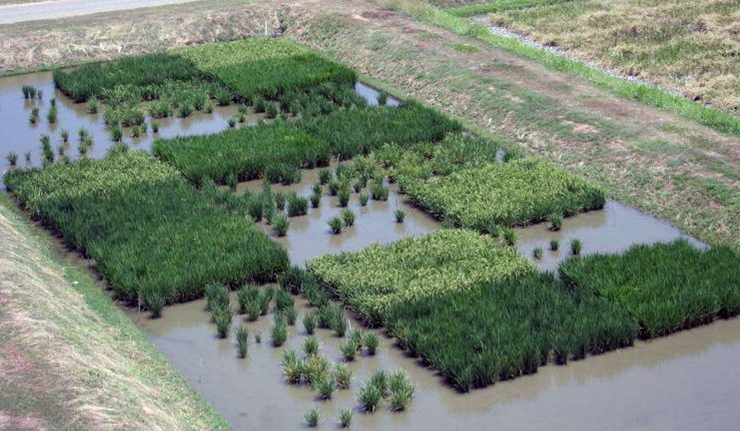
A: My research focuses on how rice protects itself from environmental factors, which is particularly important in places in the world where people rely on rice for survival. Rice is a staple food for ½ the world’s population. However, 25% of rice is grown in flood prone areas. When rice is completely submerged in water due to floods, the plant will die after a few days, and the farmer will lose his or her crop. Pam Ronald and others were able to identify a gene that would cause rice to survive much better if completely submerged. Through breeding techniques (not GM technology), they were able to transfer this gene into strains of rice that farmers prefer and now millions of farmers in flood prone countries in mostly in South Asia are producing higher yields with the flood tolerant rice.
Test plots of rice that were flooded. Some plots are tolerant to flooding while some are intolerant and die. Credit Dave Mackill


Now, in the lab, we are asking: can we learn how to make rice or other plants resistant to other stresses, such as drought, or diseases like bacterial blight? I am focusing on drought tolerance and have identified a candidate gene that could protect rice from drought. We engineered rice in the laboratory to either silence the candidate gene, or express excess amounts of it. We are currently testing our genetically modified rice for its ability to survive drought conditions and have some promising preliminary data. If we are successful, it could lead to rice that requires less water to grow. The information we gain on how the rice survives drought can also be used to attempt to engineer drought tolerance in other crops.


I think it is important for people to understand that we are not just trying to make a bunch of GMOs and hope one works. We spend years, sometimes decades, studying these plants. We don’t just want to make a plant better and move on, we want to understand the biology of how it works.


[Biochica’s Note to Nir: After providing this detailed answer, you will probably have to move into a bunker for having provided information about your research, which we all know is sponsored by Big Ag, and is therefore considered a trade secret. Syngenta: if you’re reading this, we’ll know it was you if anything ever happens to Nir!]


Q: Like me, you did your PhD in human genetics (I was actually in a lab that studied the genetics of autism, too, although my thesis project wasn’t related to autism). Why did you decide to do a postdoc in plants? Was it a difficult switch?


A: In 2012, California Prop 37 was put on the ballot. Voters were being asked if California should mandate labels on all genetically engineered foods. At the time I was in grad school studying the role and regulation of the AUTS2 gene in autism. As the token scientist in my group of friends, and with contradictory commercials constantly airing on Prop 37, people would ask me all sorts of questions about GMOs. For the first time ever, I actually read the ballot measure. It made a lot of scientific claims such as genetically engineered foods “can lead to adverse health or environmental consequences” without any scientific references to back them up. The measure claimed that “Mandatory identification of foods produced through genetic engineering can provide a critical method for tracking the potential health effects of eating genetically engineered foods”, which is not true given the exemptions to certain interests such as alcohol. I found that I was really interested in the topic, and moreover, I enjoyed educating my friends about the science, helping them make informed decisions.


I also very much enjoy researching human genetics. The switch was hard, but I made it because I wanted to learn how genetically engineered foods are actually made and studied in the lab. I joined Dr. Ronald’s lab because of the research she does and her active role in biotechnology education.


[Biochica’s note to self: Phew! Sounds like my plan to move into plant research is feasible. POM: if you’re reading this, you’d better have a job opening for me in about 10 years time so that I can start working on a peelable pomegranate.]


Q: Why are you working on a technology that will make half of children autistic in just a few years, particularly after you spent so many years trying to understand autism?


A: If you were to believe the internet, you’d think that academic scientists are out to: 1) kill all the butterflies, 2) make everyone sick, 3) stuff our pockets with Monsanto cash. Finding information about genetic engineering online is ridiculously difficult. I would rather do my taxes while at the dentist than try to learn about genetic engineering by googling the term “GMO”. But, for the sake of science education, let’s dissect the article about autism which you’ve provided above.


The article is peppered with scientific red flags. The first thing you notice (not including the terrifying title) is a man in a mask and protective clothing pouring chemicals into something that is presumably used for agriculture. This picture (with no credit or reference) has one goal: to scare people. This red flag is known as “the scary science scenario” and is your first clue that you are about to dive into some less than reputable reporting. If you decide to keep reading, it starts with “A senior scientist at MIT”. BAM! Another red flag: stressing status and appealing to authority. If you move on, it talks about how the use of the herbicide known as glyphosate has doubled from 2001 and 2007 due to the introduction of engineered plants that can resist the herbicide. It is true that glyphosate use has increased, but the article cherry picked (red flag) this information. It left out that with the increase of glyphosate use, there was a dramatic decrease in the use of other, more toxic and persistent herbicides. It is a bad sign when an article spits out some hard facts with no sources to back them up. Keep an eye out for that!

The article goes on to accuse science writers that have “taken up the Monsanto banner”, a science red flag known as “charges of conspiracy”. But there is a glimmer of hope. The article mentions the biggest concern many people have with the conclusion that autism is connected with genetically modified crops: confusing correlation with causation. The claim that “half of all children may be autistic by 2025 due to Monsanto” is based on a graph that shows the increase use of glyphosate overlaps very well with the increase in autism diagnoses over the years. I have seen the exact same graph showing how the increase in organic sales correlates with increased cases of autism. Correlation does not mean causation.

I did end up making it to the end of the article. This is the last sentence: “Seneff’s predictions can only be ignored at grave risk to the human race.” The deafening irony! The real risk is if people reject a beneficial technology due to shoddy science. This is exactly what happened with autism and vaccines. Don’t let it happen with genetic engineering.


[Biochica’s Note to Nir: You, my friend, are an evil genius and I bow before you. This incredible answer goes to show that you have taken the Secret Oath of Scientists very seriously. By the way, I just sent you an email: could I borrow your apartment in Monaco during Thanksgiving weekend? If that doesn’t work, how about your yacht in Turks & Caicos?]


Q: What traits and crops would you like to work on in the future?


A: Good question! I would be interested in studying coffee. I love coffee. I love roasting it, brewing it, drinking it, talking about it, reading about it, and obviously, taking a break from work to get it. Figuratively, I rely on coffee to survive. Literally, millions do. Coffee is responsible for the livelihood of 25-125 million people and 90% of coffee production is in developing nations.


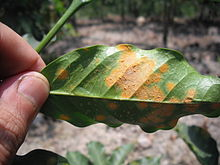
Coffee is potentially in some trouble. Coffee leaf rust (CLR) is a fungus that has become epidemic, and resulted in severe loss of yield (for more information, see here). I am not saying that using genetic engineering is the solution to this problem. There are currently other strategies being implemented with success. For example, there are CLR resistant varieties of coffee trees, and breeders are crossing these varieties with coffee varieties that farmers like due to their taste and high yield. However, I believe we should use multiple approaches to study this very serious problem. Traditional breeding techniques may not keep up with the devastating fungus. Genetic engineering can more accurately, and sometimes more quickly, insert resistance genes into favorable varieties without introducing undesired genes (like conventional breeding does). Moreover, we can use genetically engineered crops as a tool to study the fungus and better understand how to stop it.


Would I drink GMO CLR-resistant coffee? Hell ya! And I would do so knowing that it may be responsible for the livelihood of millions of individuals.  


Or maybe I should make a football sized hippo that hangs out on your desk, and laughs when you tickle it. It would munch on cabbage, maybe relax in a little pool.  


Symptoms of coffee leaf rust Image from Wikimedia Commons
[Biochica’s note to Nir: It sounds like you’re forgetting your priorities. Do you know how much money you could make by selling football sized hippos as pets, particularly around Christmas time? Forget this whole “let’s help people” thing that you’ve got going. You have a golden opportunity before you! Never forget the Oath: dough before bros]


Q: You are also interested in science communication. Why do you think that genetically modified crops are feared by the broader population? Is there anything that can “fix” that perception?


A: I think this is an issue of where we live. In parts of the world where your life depends on being able to produce food, or getting the right nutrients from the food you produce as in the case of Golden Rice, for many people there isn’t a fear of GMOs, there is a fear of death. However, in the United States and many other places, we have the luxury of caring about every single aspect of food production. This is not a bad thing, but we need to keep things in perspective: we need to understand true risks and true benefits. We want our phones and other technology to improve greatly every year, but we want our food to stay exactly the same despite a growing population and a warming climate. There are a handful of reasons why people oppose genetic engineering. But I think the main reason the technology is feared by the broader population is because we like thinking of our food as “natural” and “whole”, rather than “engineered”. People will say “the banana is perfect the way it is, why would you want to change it?!” And yes, the banana is perfect the way it is if you want to feed a population a fraction of the size that it is today. Humans bred our crops to sustain a much smaller number of people. Traditional breeding techniques do not always keep up with our demands.


Can we “fix” the perception that GMOs are something to be feared? More and more scientists are getting involved in the conversation, and I think it is helping. From my experience, public opinion is actually shifting a bit. I have no evidence of this, just a feeling. More people I talk to, and more articles I read are less critical of genetic engineering and more focused on the science and facts. Instead of trying to change people’s mind (which is very hard), we should focus on educating those who want to learn. I have links to many good resources for the public (and no, they are not Monsanto leaflets). Don’t hesitate to contact me on Twitter with any questions: @NirOksenberg


[Biochica’s note to Nir: Yes. Science and facts... *wink, wink* .]


How to make a GMO
Q: After a quick search on the internet, I learned that to make a GMO you take a syringe filled with fluorescent liquid and inject it into a plant (look at all the pictures of GMO tomatoes that I found! Strangely enough, there's no GMO tomato currently on the market...). How many syringes do you use when you make GM rice?

A: This may be the best question anyone has ever asked me. I took a selfie to show you. Turns out I only use 1. With blue.


Nir's satirical image of blue food coloring and rice is worthy of
NaturalNews
Jokes aside, understanding how a crop can become genetically engineered can get a bit confusing. The best video I have found describing the process is this one. There are multiple ways to genetically engineer a crop. The method described in the video mechanically introduces the gene into the genome. In rice, we often use Agrobacterium-mediated gene transfer. Scientists found a neat bacteria that has a way of transferring its genomic material into its host’s. Scientists now use this bacteria to their advantage. We delete all the genes in the bacteria that could cause any harm to the host. Then, into the bacterial genome, we insert the new gene we want introduced into the plant. Now the bacteria does all the work and transfers just the gene we want  into the plant we want. This technique has been tested and retested for safety and efficacy countless times. This description of Agrobacterium-mediated gene transfer is oversimplified. I am happy to go into more detail with anybody who wants to know!
Bonus selfie: Nir and his rice. #GMOselfie
Post your own #GMOselfie on twitter! 

Q: We all know that research into GMOs is funded by big Ag, who probably have a patent on what you’re working on, and will release these GMOs into the wild without any testing. What do you say in your defense?


A: Next question.


Just kidding I’ll answer. A lot of people hate big anything. Big Ag, big oil, big retail, big donut and so on. I talk to some people who tell me that they don’t have a problem with genetic engineering in theory, but they have a problem with corporations. It is fine to have problems with Big Ag, whether it is economic, environmental, humanitarian or for other reasons, and to try to reduce their footprint. What people do not realize is that demonizing genetic engineering as a whole is counterproductive to this end for multiple reasons. First of all, companies like Monsanto are also making mad profits off of conventional and organic seeds. If you want to protest Monsanto, avoiding genetically engineered corn but munching down on their non-engineered carrot doesn’t make a lot of sense to me. Secondly, public disapproval of genetic engineering has tightened regulations on the technology so drastically that only mega corporations can afford to go through with them. That means if a small company tried to produce a genetically engineered crop, they would rarely be able to afford to move it forward, and would have to sell the company or patent rights to one of the big guys. The rich get richer. My point is that if you have a problem with big corporations, don’t necessarily focus your attacks on genetic engineering technology.


[Biochica’s note to Nir: what you don’t know is that you DO get paid by Big Ag: US currency bills have cotton. Cotton is a GMO. You get paid with bills. Therefore you get paid by Big Ag.]


Q: If there’s one thing you’d want everyone to know about transgenic crops, what would it be?


A: Each genetically engineered crop needs to be assessed on a case by case basis. Remember that we are talking about a technology, and not an ingredient. The technology is inherently neutral. If I use the technology to improve nutrient consumption in regions with nutrient deficiency, that is good. If I use the technology to make artichokes have even less eatable flesh, that would be bad. Really bad. Every new genetically engineered food is tested rigorously for safety. People will say that we don’t know the long term effects, or that we can not prove they are safe. But we have safely been eating genetically modified foods for decades. Maybe that is not long enough for you. Maybe you are hesitant to try new products. Fine. But if you ask a scientist who studies these plants, she or he will tell you that the benefits of the technology greatly outway the risk.


Q: Recently, several public sector scientists who do research on GMOs or advocate for these crops have had their emails read under a Freedom of Information Act. Personally, it has made me reconsider my plans for a post-doc on peelable pomegranates. Why deal with the hassle when I could be lounging on a beach somewhere instead? Has it impacted you in any way? What are your thoughts?


A: FOIA can be an important tool to discover scientific fraud, but it is obvious that is not what is happening here. The actual scientific methods and results are not being investigated. The goal of this inquiry is to link public sector scientists to Monsanto or other private companies. Proponents of the inquiry claim that the public has a right to know how publicly funded scientists conduct themselves. This “right to know” argument is one we saw a lot with GMO labeling too, and is very powerful. Why would I fight against somebody's right to know? Especially if I claim to be a science communicator! What I have discovered is that a fact that is out of context can be more dangerous than no fact at all. Not to say that people should hide information from people, but facts without details can be misleading. Here is a fact: GMO plants are bad for the environment. That's something you can quote and put on twitter. Here is the rest of the story: All agriculture is bad for the environment. We have known that for centuries. GMOs are not necessarily better or worse for Earth than conventional methods.


Yelling that an academic scientist has accepted $25,000 from Monsanto is a tactic anti-GMO groups are using. They are tricking people, using an out of context fact, to make them believe that all pro-GMO people are in Monsanto’s pocket. In truth, the money used in this real example was not used for research to support Monsanto’s products. The money was used for science communication, where Monsanto had no say over the material presented.


Sometimes, industry does sponsor academic research. In these cases, it is important that the researcher disclose potential conflicts of interests, whether the science is funded by a biotechnology company, or a company that sells organic deodorant. [Biochica's note: I've written on industry/public sector relationship topic here].

I think I forgot to answer your question. No, the FOIA has not personally impacted me or the way I conduct myself. Except now I write all my letters to Monsanto on hundred dollar bills instead of email.  Jokes aside, the FOIA has deeply affected scientists I admire and look up to, and I sympathize with them. You can read about their stories here and here.


Nir and I wanted to close on a more serious note: we’d like to draw attention to the fact that the number of groups and organizations exploiting the unknowns surrounding Autism are vast, and we consider this to be misinformation of the worst sort. Other than Dr. Seneff’s paper where she outlines a murky hypothesis between ASD and glyphosate, there is no data that we know of that associates autism with GMOs, much less a causal relationship. If parents have any concerns about their children’s diet, we recommend that you consult with their pediatrician.