Saturday, August 24, 2013

GMOs and Liver Problems

This week, I continue my review of the health impacts of GMOs, as outlined by the Institute for Responsible Technology. I won't lie: I'm starting to develop a strong bias against them, because nothing they've said so far has been accurate. And this is my fourth installment on the topic.

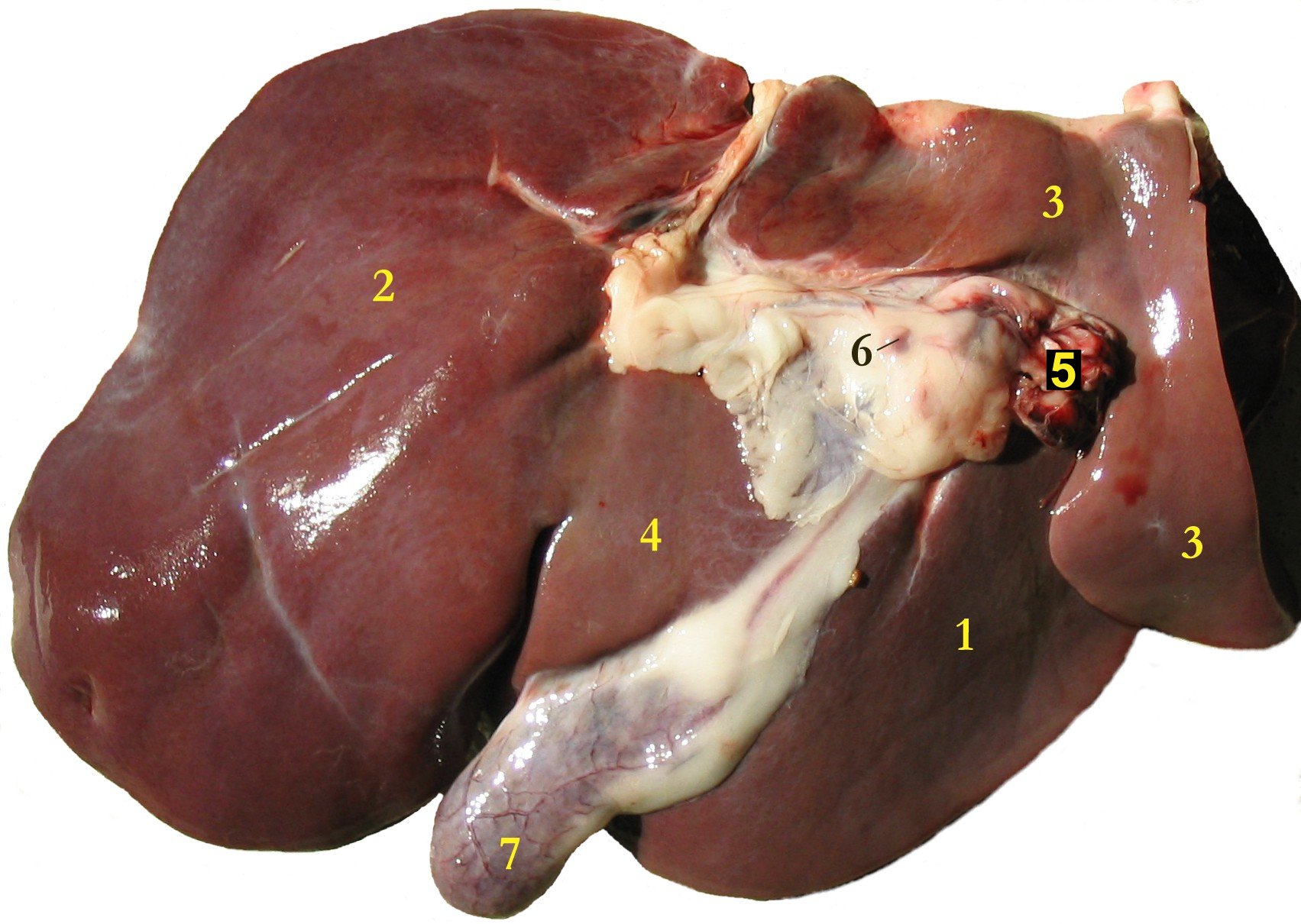
File:Leber Schaf.jpgI start at a section entitled "GMOs and liver problems". There are 3 statements and 4 references tied to the section and one can be discounted right off the bat. Before I continue, I feel the need to explain when/why articles or references can be discarded (this  explanation is brought to you by Biochica's spouse, who runs a constant commentary in my mind). The section ended up being pretty long so it is now a permanent section in this blog.

I hope you went and read the page, so let us proceed with the analysis of the 3 statements associated with liver problems:
  • Rats fed GM potatoes had smaller, partially atrophied livers.
    • Based on the abstract, this paper seems to be a review of existing literature on the subject of the impact of GM foodcrop on human health. The paper's conclusion is that funding is needed to develop tools for the identification and elimination of GM crops in our food system. What does that have to do with livers?? I did a search in pubmed using search terms "rat GM potato liver". I found two papers on the topic and did a quick read of the abstracts: both had done feeding studies on rats using GM potatoes (one had done the study for 5 generations) and both found that there was no difference between rats fed GM potatoes and those who had been fed non-GM potatoes.
  • The livers of rats fed GM canola were 12-16% heavier.
    • This was comments to Food Standards Australia/New Zealand, written by the Public Health Association of Australia (see the References tab for an explanation on "comments"). The link provided by IRT was dead and a search in google only brought up this same statistic in other anti-GMO pages. I searched pubmed looking for a paper using search terms "rat canola GM liver" and different variations of this, and didn't find anything. It seems that this statistic has been recirculated many times, but I have no idea where it came from. 
  • GM soy altered mouse liver cells in ways that suggest a toxic insult. The changes reversed after they switched to non-GM soy.
    • There were two references for this citation (one for each sentence). For the first, I read the entire paper and although it may sound harsh, I have no idea how it ever got published. My biggest beef with the paper is sample size: they took 24 mice; half ate food with 14% GM soybean and half didn't. Then, they sacrificed the mice at 1, 2, 5, or 8 months of birth. If you do the math, that represents only 2 mice per group. The authors state that there were differences in the shape and components within the nucleus of liver cells. But due to the low number of mice they used, you can't really determine if the difference in these was due to the age of the mouse or due to the type of food. Every time there was statistical significance for food type, it was also paired with statistical significance for the age of the mouse. Since changes in the shape of liver nuclei are known to happen with age, I don't really think it's possible to parse apart cause/effect. This study should have been done with all the mice being sacrificed at the same time point, so that there would only be one variable. Even if the study had been done correctly, the authors state that they don't have a hypothesis on how this could be happening.
    • The second study is a follow-up on the first, and I found the paper online. They took 12 mice and split them into two groups: they fed half of them GM soybean and half were fed non-GM soybean. Then after 3 months, they swapped the diets between the two group and examined the livers (pretty sloppy to not include a group that was fed non-GM and a group that was fed GM throughout the duration of the experiment, as controls). The authors state that there were differences in components of the nucleus of liver cells. When they performed experiments to back-up the microscopy observations, they didn't find statistical significance.
    • So, in summary, two papers with inconclusive findings, even if you overlook the flaws in the controls and numbers.
Another section of IRT's "Health Risks" where no risks were identified. On the plus side, I relearned a lot about the nucleolus that I had forgotten. In the fifth installment, dissecting the IRT's webpage, I'll look at GMOs, reproductive problems, and infant mortality. Yikes! (although, given everything I've read so far from their webapge, it will probably be more like 'meh').

Saturday, August 17, 2013

Labelling GMOs - Why not?

This week, I wanted to look into the topic of labelling GMOs. As I start writing this blog, my perspective is "who cares"? If people want to purchase GMO-free food, then they should have that right. Similar to buying organic labelled or fair-trade labelled, if it's important to the buyer then why shouldn't they be able to do the same? So, I'm interested in reasons why pro-GMO parties would be against labelling.


I started by reading a study carried out by the Food Standards Agency in the UK. The UK has had GMO labelling for several years and you can read all about their guidelines. The goal of the study, published in 2012, was "To explore UK public views on the labelling of GM (genetic modification) on foods, and the options for labelling food as GM-Free in the UK". The 129-page study looked at numerous areas, including how labelling impacts decision making about buying foods, and public awareness about GMOs. There were 70 participants in the study from across the UK, broad age range, and range of education.

Some findings seemed pretty obvious. For example, there was strong association between people who check the label and concern with food quality or healthy eating. I was shocked to learn that only 2% of participants check for GM ingredients in their labels. Even when the survey prompted them, 4% of participants said that they check for these ingredients.

There was low awareness and knowledge on the topic of GMs: 60% of participants knew little or nothing about genetic modifications in food or food production. Some people didn't know that GM foods were for sale, others thought that they had been banned. Participants generally felt that they couldn't make a decision about GM foods, but tended to feel that GMOs were "unnatural". People who tended to view GMs negatively were more suspicious overall of the food industry (probably because they've heard of Monsanto's kitten-eating cows)

I was interested to read the section on cost of GM and was a bit disappointed that this topic wasn't investigated in-depth. The only conclusion in this section was that most participants didn't want to bear the burden of GM-labelling costs, although anti-GMO individuals and highly health-conscious participants didn't care about paying extra.

The study also looked into nuances and wording of the labels, as well as what the public felt comfortable labelling as "GM-free". Here are a few interesting findings:
  • 53% thought that meats should not be labelled "GM free" if the animal had received vaccines or medicine produced using genetic modification (huh??? I wonder why the participants thought that a vaccine produced using GM technology would affect the meat?)
  • 69% thought it important for that animals not be fed GM plants, for items like meat, milk, or eggs (I was surprised about the eggs).
  • 41% of participants would be more likely to buy a product labelled GM free. 49% would be less likely to buy a product with a label that indicates that it contains GM
I tried searching for a similar study on US public perception on food labelling. I found a lot of interesting information and conclusions align with the UK study. Here are a few nuggets:
  • One study took identical pairs of ingredients and labelled one in each pair as "organic". Consumers found that the "organic" ingredients tasted better, thought they had fewer calories, and were willing to pay more
  • A recent study examined food label designs. Although I didn't have access to the article, the abstract states that even if the label is stating that the product is free of genetically modified ingredients, it increased the consumer's hazard perception and decreased purchase intentions, relative to a no-label condition.
  • A study from 2003 found that most Americans do not know about GMOs, and their opinions are not yet firm on the technology. Although only 1% of participants mentioned that the labelling of GMOs in food was important to them, 94% said that GM ingredients should be labelled when prompted with the question. 52% of individuals surveyed said that a label indicating that food has a GM ingredient would make them less likely to purchase the item.
  • A news poll on GM labelling generated very similar results. 93% of participants want to see labels stating if food has been genetically modified, and 57% said that they would be less likely to buy foods with such labels. 52% of those surveyed also though that these foods were unsafe.
  • In "huh... that's interesting" category: there's a WTO agreement, where food safety standards are set by each member nation and must be based on science. Hypotetically, if a labelling law were to pass using the argument that GMOs are not safe, then the evil Monsanto could lodge a complaint with the WTO against the government on the basis that there's no scientific evidence for the law.
So... Labelling... I'm not sure where I stand on this one anymore. The best solution would be for people to learn about GMOs and to make an informed decision. But in the course of writing this blog, I'm learning that it's not easy, even for people with strong backgrounds in science. If you've been following this blog, you'll know that I still haven't read anything to merit food labelling, and it bothers me that people would be swayed easily enough to think that GMOs are bad for you even by reading a label that says "GMO-free".

Basically, I don't want to pay the price for labelling and I don't want my kid growing up thinking that his mom is evil. So, I ask the question: if you're concerned about GMOs, why don't you just buy "Certified Organic" labels? The USDA has clarified that "organic" also means GMO-free, so why is an additional label required? Is the label not specific enough? I honestly don't know the answer to these questions, so please feel free to comment below.

Sunday, August 11, 2013

Reading about GMOs can give you allergic reactions - An unpublished study

I resume my review of health impacts of GMOs from the Institute for Responsible Technology. I pick up where I left off: at a reference to damaged intestines.

Although damaged intestines sound like a fascinating read, I lack access to the article. What I can glean from the abstract is that they fed GM potatoes with Bt to mice and found microscopic differences in the intestines of GM-fed mice, so I tried to find similar articles/studies (although I can't tell anything about the experimental design or statistics from the abstract). One study whose abstract I read fed Bt potatoes to rats and didn't find a difference between the GM-fed and control rats. However, the study was only for 30 days, which may not have been long enough. That was the closest study I could find. With the relative absence of information on the topic, I think it's fair to say that someone should try to reproduce the results of the study, although an equally fair argument is that it shouldn't matter whether the Bt toxin is in a potato, corn, or peach, and a lot of studies have already looked at the effect of Bt-corn on mice (no... Bt peaches have not been made... I'm just craving a peach cobbler with vanilla ice cream right now).

Moving on... The next sentence goes back to allergies: "Farm workers throughout India are getting the same allergic reactions from handling Bt cotton as those who reacted to Bt spray". The citation is from a 2005 news article out of a paper in India that outlines that farmers in a district in India had allergic reactions when working with GM cotton crops, and cows had died when eating seeds from the crop. Studies have not been done and it's basically someone's opinion that these reactions were due to the crop. As demonstrated in my excellent study, which links the manufacturing of televisions to a reduction in global polio rates, just because two events take place during the same period of time, doesn't mean that they're related.

The next section states: "No tests can guarantee that a GMO will not cause allergies. Although the World Health Organization recommends a screening protocol, the GM soy, corn, and papaya in our food supply fail those tests—because their GM proteins have properties of known allergens." That last section is linked to 4 papers. Sheesh... This will take forever...
  • First paper (The use of amino acid sequence alignments to assess potential allergenicity of proteins used in genetically modified foods): no paper available or even an abstract. Based on the title alone, it's an in silico analysis. That means that the analysis was performed computationally. Computational analyses are fantastic: you can identify genes and proteins that your queried sample is similar to. They save time and definitely save money. But a computational query would be a first step in identifying similar allergens. The next step is to go out and test it. Based on the title alone, I'm assuming that the lab test was not done.
  • Second paper (Screening of transgenic proteins expressed in transgenic food crops for the presence of short amino acid sequences identical to potential, IgE – binding linear epitopes of allergens): I read most of the paper, and it's along the same lines as above. The authors recommend computationally comparing GM proteins to known allergens to give a prediction of the GM protein's allergenicity. Note the use of the word prediction.
  • Third paper: An unpublished study. Let me remind you again that a work of total fiction can be an "unpublished study". My childhood diary is an "unpublished study" on pre-adolescent behaviour. There are often times very good reasons why works of science remain "unpublished": flaws in the study's design, missing data, etc. Don't get me wrong: I have a paper that never got accepted and remains "unpublished" because I needed to do extra work in order to make the paper meatier. But I also don't pass around the paper as if it had been accepted and peer reviewed, which is what I feel that the Institute for Responsible Technology is doing here.
  • Fourth Paper: No access, but the book seems to outline concepts, not novel research. I looked at the author's CV and most of his work around the time of this paper centered around identifying GM proteins in crop using various methods. What strikes me as odd is that the book is from 1995. There has been so much work done in this field since. Shouldn't there be a more recent publication for this reference?
In summary, none of these papers demonstrate that "GM proteins have properties of known allergens", as stated by the IRT. In fact, from what I could glean, none of the papers seem to have done any allergy testing at all. However, as previous stated, there have been papers that have looked at the topic of allergic reactions in GMOs and have not found anything.

I think this is the 3rd blog that I've written that has touched on the topic of allergies. And it's a very important topic in the area of GMOs, which is why current food guidelines demand allergenicity tests before putting a GMO out on the market. Here's a blurb about allergies directly from the WHO's webpage:

"Allergenicity. As a matter of principle, the transfer of genes from commonly allergenic foods is discouraged unless it can be demonstrated that the protein product of the transferred gene is not allergenic. While traditionally developed foods are not generally tested for allergenicity, protocols for tests for GM foods have been evaluated by the Food and Agriculture Organization of the United Nations (FAO) and WHO. No allergic effects have been found relative to GM foods currently on the market."

Doesn't that directly contradict the statement from the IRT?

Next week, I'm going to skip the IRT's section on "GMOs may make you allergic to non-GM foods" because I feel like I've dedicated enough space to the topic. I'll go directly to liver problems caused by GMOs. YAY!!!


Saturday, July 27, 2013

Monsanto Develops Kitten-Eating Cows

My first review request!! YAY!! So, someone sent me an article entitled "This Food Knowingly Causes Cancer in Rats - Are You Eating it?" It starts with a scathing review of Monsanto. A few people have asked me for my opinion on the company and whether "Monsanto is evil". Do I believe that Monsanto works out of the goodness of its heart to create food that will make puppies cuter? No. I think that Monsanto is the same as any other global corporation: Apple, Samsung, Toyota, McDonald's. Their motivation is money. That being said, I also believe that Monsanto adheres to the same principle that all these other conglomerates follow: that selling a bad product can be costly. Also, I don't think that there's a boardroom where a bunch of scientists are strumming their fingers a la Mr Burns-style saying "Excellent" when they hear of rats getting cancer. Monsanto scientists are probably just the same as me: they want to do something useful and productive, while making a lot of money. But of course, that's not the point of my blog. Let's get back to rats getting cancer :)

I'll go through all the health impacts listed on the page, where a study is cited and is not a result of an interview/opinion:
  • Bt toxin has appeared in maternal and fetal blood. The paper looked at levels of proteins and pesticides/herbicides associated with GMOs. They examined 30-40 pregnant and non-pregnant women. The only statistically significant difference between the two groups was the presence of the Bt toxin, meaning that pregnant women had more of the toxin than non-pregnant women. The authors don't draw any conclusions, but state that more studies are needed to determine what it means. I think it's a pretty interesting finding that needs to be replicated, and the proper controls need to be added. For example, we don't know that the Bt toxin came from GMOs. It could have come from household pesticides, as reviewed in previous blogs.
    • Will I stop feeding my family GMOs over this? Not yet. Here's why. Mammals lack the receptors for the Bt toxin. To explain this, let me give you an example: I did my 4th year honours thesis on a disease called Sitosterolemia, which is an extremely rare genetic disorder. You end up with uber-high cholesterol levels and ultimately heart failure, and your cholesterol spikes from eating plants. That's right. Not Big Macs or delicious recipes from The Pioneer Woman, but from plants. By definition, cholesterol is found in animal cells, however, plants have a very similar molecule called sitosterol. The vast majority of people on the planet don't absorb sitosterol because we don't have receptors for the molecule. However, patients with the disorder have mutations and their cells lose the ability to distinguish between plant and animal cholesterol-like molecules. I think of the Bt toxin in the same way as sitosterol: it's a toxin/molecule found in nature that I ingest, but my cells lack the receptors to do anything with it. I think that it's for this reason that the authors didn't come to any meaningful conclusions or a substantial discussion: they just made an observation.
    • That being said, it doesn't explain why the authors found higher levels of the toxin in pregnant vs non-pregnant women. I'll keep this one on my radar.
That's the only point on the page that has a citation and is related to health impacts of GMOs. Everything else links to opinion/interview pieces, the evils of Monsanto, or articles from the site or Institute for Responsible Technology (which I'm still in the process of reviewing...). As for the article's title, the only sentence I found was "GM potatoes may cause cancer in rats", linked to an article on the same website and is strangely behind a password. I did a pubmed search for "rat + cancer + potato", found 36 articles, but none of them were about GM potatoes. Even without reading the article, GM potatoes possibly causing cancer is a far cry from "knowningly causing cancer", don't you think? Seems like a bit of fear mongering.

If I give you two statements: "Monsanto is developing mutant cows that feed on kittens" and "Monsanto finds a cure for cancer", which are you more likely to believe? The answer should be "neither one", because you should look it up yourself. But I think that there's so much fear mongering today, that you'd likely believe statement #1 because we're so skeptical and biased against big corporations. Particularly if I include a picture of mutant cows. Look at that cow... Those poor kittens don't stand a chance.


Thursday, July 18, 2013

Autism and GMOs - From gmoinside.org

I know I'm supposed to be reviewing all the health risks from the Institute for Responsible Technology's webpage, since I keep getting referred to the page by many anti-GMO organizations. But this week I took a break to review an article on gmoinside.org, whom my twitter feed referred me to.

I first went to their "Get Informed" section and saw a link entitled "Poor Gut Health And Autism Linked Through GMOs". Having worked in a lab that did Autism research (although I never worked on autism-related projects), I've always tried to follow news and studies on the disorder and thought it would be a good read.

The article, originally published in "Health and Wellness Magazine", had no references and most of the arguments presented were people's opinions or interviews. The author refers to a talk given in Germany in 2011, where a research scientist presented information on physiological, neurogical and behavioural symptoms of livestock animals which were remarkably similar to those in autistic patients. I looked up the name of the speaker (Don Huber from Purdue University) and only found two papers that he's published, and neither one of them was about GMOs. I went to his page on the Purdue website, but he doesn't have any publications listed about GMOs or autism. Here's why this matters: talks, posters, and workshops are not peer reviewed. There's no vetting process, so you could talk about anything you wanted, even if the information is incorrect.

The author goes on to state that 20 years ago, autism was rare. Now, it's found very frequently in the population and a large number of these patients have digestive ailments. Animals fed GM feed also have gastrointestinal ailments. The author sites one Dr Snow, a veterinarian, who has noted that since GMOs were introduced in the '90s, he's seen an increase in small intestine irritation. Then the author mentions a mysterious Dutch farmer, whose animals got diarrhea when he switched them to GM feed. Autistic patients also suffer from diarrhea. Autistic patients have unbalanced gut bacteria, and the author is willing to bet that GM-fed livestock do, too.

Believe it or not, that's as strong as the evidence gets. The rest of the article has nothing to do with autism and I felt that the purpose of the additional info was to instill fear.

I went into the pubmed database to search for papers linking autism to GMOs. I searched to "GMO + autism", "genetically modified + autism", and "Bacillus thuringiensis + autism", and didn't find a single paper. I couldn't find a single published paper on the topic.

Just because two seemingly related items change during the same time period does not mean that they're related. For example, polio rates decreased over the course of the last century while the production of televisions increased over the same period of time. If you look at the map, polio is currently found in nations where they don't have many TVs per capita: Nigeria, Pakistan, and Afghanistan. So polio is being irradicated by television appliance sales. I should make a donation to Samsung.
TV Manufacturing Causes a Decrease in the Incidence of Polio

There's a limitless number of examples: I bought more shoes in the past 2 years and my son has been growing an average of 2 lbs per month over the same time period. Therefore the increase in the number of shoes I own is caused by my kid's growth.

In conclusion, I could not find a single peer reviewed article about autism and GMOs. But if you go into google, you'll find 853,000 results (a quick scan revealed things such as "the amish population doesn't have autism and they don't eat GMOs"... really??). If you visit the Autism Science Foundation, you'll see that there are a few featured papers about nutrition and autism, but none of them are about GMOs. I also checked Autism Speaks and the National Autism Association's webpages, and didn't find any information on genetically modified organisms. I would suggest that the gmoinside organization take down this article as being misleading.

Now, I'm off to buy shoes. After all, the kid's going through a growth-spurt :)

Friday, July 12, 2013

Allergic reactions to GMOs (or not)

I continue the review of the Institute for Responsible Technology's (IRT) claims of the health impact of GMOs. In my last post, I left off with a promise to look into whether mice fed Bt have powerful immune responses against the toxin. As a refresher, companies that use Bt claim that it only affects insects (please see my last post or Wikipedia for more information on Bt. If you choose to use Wikipedia, please think about giving a donation to the organization).

So, there were 3 papers linked to this specific claim about the health impact of GMOs. Since they were all written by the same authors and had similar titles, I picked the latest one to read, but also flipped through an older paper. The paper was published in 2000 and is very immunology heavy. I'll be honest. I struggled to keep my eyes open and have a whole new level of respect for immunology researchers. But I think I got the gist of it. The authors prepared different forms of the toxin, administered it to mice, and saw that the mice began making antibodies against the toxin. Although I don't know if the response qualified as "powerful" or not, there definitely seemed to be a response of some sort. A few things struck me as odd: one, despite what is implied by the IRT's webpage, the authors didn't make an immediate link between their conclusions and GMOs. Also, the 2000 paper and the older paper were pretty similar, but the 1999 paper didn't mention GMOs at all and they stated that the reason for looking into the antibody responses was to determine if the toxin could be used to produce a vaccine. So the second part can easily be explained: often times, after you finish writing a paper, you add a few interesting facts that are loosely related to your findings in order to make your paper "sexier". I've been guilty of this myself. I clearly remember writing "human chromosome 7 has been associated with numerous parent of origin disorders, including autism". Why would I throw in "including autism"? Because it made my paper seem more interesting, even if it had nothing to do with autism (which it didn't). So it seemed to me that the GM link was thrown in afterwards. But I still felt like I needed to understand if the paper was conclusive evidence of an immune response to Bt in a mammal. As a reminder, we're talking about Bt here, whether it's within the context of a GMO or not.

From what I understood, the study seemed OK: they had controls, they tried two different ways of getting the purified toxin into the mice, and they had done very basic stats showing an immune response. But they didn't come to the conclusions that IRT wanted me to get to. So, I started to look for more recent papers that had cited the paper above to find out if the results had ever been replicated. I found a paper published 10 years later in PLoS (2010). This paper actually looked at the immune impact towards the purified protein and as well as the GMO corn. I started reading it and... snore... another immunology paper. Sheesh... I'm never going to finish this blog post.

The 2010 paper was much more thorough, looked at many additional variables, and was actually about Bt GM corn. As controls, they used proteins with various degrees of allergenicity. I was fascinated to learn that the first paper I had read (the one cited by the IRT) hadn't studied the Bt toxin found in GM corn (which confirmed my theory that the GM-tie was thrown in). As I noted in my previous post, there are various strains of Bt, and each one has different properties. However, the authors note that the toxins produced are similar enough that if you have an immune response to one, you should have an immune response to all. And they hadn't gotten the immune response seen in the first paper. The authors suggest that the first paper had generated a contaminated protein due to their methodology.

They go on to state that although they hadn't seen the specific immune reponse documented in the first paper, they had seen a different immune response. Mammals produce different types of antibodies (that much I DO remember from Immunology 301), so you can have a specific category of antibodies react against a substance. They go on to state that the antibody response that they saw against the Bt toxin, was the same response seen against their negative-control. They conclude that the strain of mice used in their study just seems to be pretty sensitive to protein extracts. Basically, they had zilch.

Finally, they looked at the different immune responses to GM corn vs standard corn. Again, zilch. 

They also provide their funding list. No agribusinesses were listed.

So, I have learned a few things here:
  1. Any future papers that I read where immune responses are examined in mice, I should pay close attention to the strain used. Mice strains seem to be scientists' undoing, as previously reported.
  2. I should also pay attention to the type of Bt toxin examined, since it may not be the same one used in GMOs
  3. I have yet to confirm a single health impact from the IRT's webpage, who proclaims itself as being "The most comprehensive source of GMO health risk information on the web." I'll continue next week with the next reference.
  4. I didn't know that there were so many papers that had examined the issue of allergies against GMO. I guess that they're ignored since the results are not controversial.
  5. I need to take a course in immunology. Or hire an immunology grad-student. The latter is probably cheaper.
To wrap up here, I wanted to add a more personal note. The spouse asked me the other day how I can be so calm and collected when I read a sentence such as "GM corn causes cancer". To tell you the truth, there are often times when I'm not. But I always have to tell myself to think with my mind and not my emotions, even though I often fail. I'm trying to go about this with my feet firmly planted on our organic lawn and let science be my bioluminescent flashlight through this murky controversy (that reminds me of the bioluminescent fish that Sheldon made).

Bazinga.

Monday, July 8, 2013

A look into the Institute for Responsible Technology - Second Act

Hello dear readers,

As promised, I continue examining the "Health Impact" section from the Institute for Responsible Technology's webpage. I'm picking up where I left off last time: on the section about Bt corn and allergens.

I can hear my husband right now telling me "BioChica, you've got to explain what Bt is". OK, voice in my head. I'll listen to you. Here's my feeble attempt: Bt or Bacillus thuringiensis, is a naturally occurring bacteria that produces a protein that acts as an insecticide. There are various strains of the bacteria, and the protein that is produced by each strain has variable insecticidal properties.  Scientists have taken this protein and inserted it into different commercial crops. If a pest who is sensitive to the Bt endotoxin starts chewing on the GM crop, then its gut gets blown up. Not literally, but it's a close figurative approximation. As an FYI, you can also buy Bt sprays to kill insects that chomp on your garden plans, so the Bt toxin doesn't necessarily have to be genetically engineered into a crop: it has been used for decades as a pesticide.

The voice in my head has now quieted down, allowing me to resume my review of the Institute for Responsible Technology's section on Bt corn and allergens. The first argument is "hundreds of people exposed to Bt spray had allergic-type symptoms". This is linked to an article published in 1990 in the American Journal of Public Health, looking at the health implications of the Bt pesticide. In 1984, there was an infestation of gypsy moths in western Oregon and helicopters sprayed Bt over a populated area. The study looked at cultures obtained from human specimens in 4 clinical labs in the area to determine if the Bt bacteria was present. I read the complete study, and the only sentence that I could find that could be related to hundreds of people having allergic-type symptoms was the following: "Many of the complaints from the public received by the Lane County Health Department were related to skin rashes, angioedema, eye irritation, and respiratory involvement. It could be argued that these symptoms are more consistent with diseases caused by the insect itself rather than B.t.-k. There have been reports of major outbreaks of dermatitis in the NE US involving thousands of persons exposed to gypsy moth larvae. Dermatitis in these outbreaks was attributed to irritation by ... hairlike projections of the gypsy moth caterpillar". Wha-a-a-a-at? In case you didn't catch that, the paper states that these allergic-type symptoms were most likely due to the pest itself, rather than the treatment. Despite what the Institute for Responsible Technology implies in their webpage, the authors are concluding that it's unlikely that the Bt spray has anything to do with the symptoms. The study concludes that Bt should be examined in lab cultures, and not ruled out as a contaminant. Additionally, it states that Bt has the potential for causing disease in immunocompromised individuals, and such patients should be given advice on how to use biopesticides and how to protect themselves. I think it makes perfect sense and is a reasonable recommendation.

Can someone remind me what any of this has to do with GMO?

The next section states: "...mice fed Bt had powerful immune responses and damaged intestines", linked to several papers published. Unfortunately, they're immunology-heavy papers and although I did pretty well in my intro to immunology courses, I don't remember much at all. In fact the only thing I remember is that my prof spoke like Antonio Banderas. I have a feeling that I'll spend a lot of time with Dr. Wikipedia this weekend...