Sunday, June 26, 2016

The Institute for Responsible Technology's "10 Reasons to Avoid GMOs" List

Hello kind readers. Today I'm reviewing a post from the "Institute for Responsible Technology" entitled "10 Reasons to Avoid GMOs". For those of you who are not familiar with the IRT, it's a "charitable organization" run by some guy: it's not a government institute, it's not affiliated with a university, research facility, or hospital. And when I say that it's run by some guy, that's not an exaggeration: its founder is not a scientist and doesn't have a background in science, to the best of my knowledge, yet he's a leader in the anti-GMO movement, and information from his "Institute" is often used as authoritative, scientific evidence of GMO harm.
How can you protect your family from the dangers
of GMOs unless you buy the IRT's book???

Before even starting, I noted that there are no hyperlinks to references or even a list of references at the bottom of the IRT's post. But, since I've seen this list pop up with greater frequency, I'll still read the list and try to figure out what it's all about.

1) GMOs are unhealthy. The website claims: "The American Academy of Environmental Medicine (AAEM) urges doctors to prescribe non-GMO diets for all patients. They cite animal studies showing organ damage, gastrointestinal and immune system disorders, accelerated aging, and infertility. Human studies show how genetically modified (GM) food can leave material behind inside us, possibly causing long-term problems. Genes inserted into GM soy, for example, can transfer into the DNA of bacteria living inside us, and that the toxic insecticide produced by GM corn was found in the blood of pregnant women and their unborn fetuses."
  • The AAEM is an organization that believes that WiFi, "toxins" in vaccines, and water fluoridation are harmful. So not exactly the place I'd turn to for medical advice. In contrast, literally hundreds of scientific organizations have stated that crops generated through transgenesis (i.e GMOs) pose no greater risk than traditionally bred crops.
  • I have never seen a study stating that genes from GM soy have transferred into the DNA of bacteria living inside us. Note that the website says "can transfer". Here are a couple of similar statements of my own: "you could die in a sharknado". "Genetic material from a boa constrictor could transfer to a rat that it ingests, creating a hybrid ratstrictor". You get the idea... All my hypothetical scenarios have as much evidence to support them as the statement about GMOs from the IRT,
  • Regarding the study finding Bt in the blood of pregnant women, that study has been found to be deeply flawed, because the method the authors used to detect Bt was made for plant cells, not mammalian ones.
The IRT continues to highlight the dangers of GMOs by pointing out correlations: since GMOs have been introduced, the number of chronic health problems has increased. But there's no evidence that one causes the other. Could it possibly be that our population is just living longer? Or that we're getting better at diagnoses of many disorders/diseases?

Summary: No credible evidence is provided demonstrating that GMOs are unhealthy.

2) GMOs contaminate - forever. Just when I thought the IRT couldn't get more dramatic, it goes on to say: "Self-propagating GMO pollution will outlast the effects of global warming and nuclear waste." The IRT claims that this genetic pollution is affecting all of us, particularly organic farmers. I've never heard of a farmer losing organic certification in the US/Canada due to "GMO contamination", maybe because there was such a thing as "cross-pollination" before GMOs existed and farmers who are concerned about this take proper measures to prevent it from happening by establishing appropriate buffer zones with surrounding farms. So unless the IRT can establish that GM pollen is some sort of super-pollen that spreads further or pollinates more easily or that the pollen will survive for all eternity, then I can't really buy this argument. To support my statement, here's the USDA's latest report on coexistence of GM crops and non-GM crops. I know!! Isn't it crazy that the organization that certifies organic farms actually has guidelines on how organic farmers can coexist with GM crops?? The report also contains information on surveys conducted by the USDA to determine if farmers have experienced economic losses due to GMO contamination. However, the report doesn't distinguish or examine how these losses occurred: was it due to cross-pollination in the field, contamination during harvest, during transportation, or storage, for example? Despite the flaws in their numbers, it's still incredibly low: only 87 farmers experienced losses due to GMO contamination between 2011 and 2014 in 20 states surveyed. 

3) GMOs increase herbicide use. The website claims "Between 1996 and 2008, US farmers sprayed an extra 383 million pounds of herbicide on GMOs." The amount of herbicide used isn't a very useful statistic. Is it because we have more fields dedicated to herbicide tolerant crops? Was there a decrease in other herbicides? Were the other herbicides harsher on the environment and have a more toxic profile? The article goes on to say: "Roundup, for example, is linked with sterility, hormone disruption, birth defects, and cancer." There's no evidence for any of this. The EPA examined whether glyphosate is linked to hormone disruption and found "no convincing evidence" to support it. Regarding Round-Up and cancer, "a Joint Meeting of the Food and Agriculture Organization of the United Nations (FAO) Panel of Experts on Pesticide Residues in Food and the Environment and the World Health Organization (WHO) Core Assessment Group on Pesticide Residues (JMPR)" recently stated that "glyphosate is unlikely to pose a carcinogenic risk to humans from exposure through the diet".

4) Genetic engineering creates dangerous side effects. The article claims that by "mixing genes from totally unrelated species, genetic engineering unleashes a host of unpredictable side effects". There are several papers that have done comparisons on unanticipated consequences/changes of GMOs and traditionally bred crops (see here, here, and here). In each case, the transgenic crop had fewer unanticipated changes in DNA and/or RNA than the traditionally bred crop. To read more about these studies, see this post. So perhaps the IRT is concerned about the ratstrictor or something, otherwise I'm not sure what they're referring to. 

5) Government oversight is dangerously lax.
 The paragraph explains that GMO safety studies are not required. Technically, this is true. All GMO safety studies and submissions are voluntary. However, to date, I don't know of any GMOs that haven't gone through FDA approval. As such, the voluntary testing of GMOs is only on paper, not in practice: in practice it is mandatory. Surprisingly, the FDA's process for approving GMOs is one that was meant to be applied to all novel crops. This op-ed from Nature explains: "[The FDA] recommended through a guidance document — not a regulation — that developers of foods derived from 'new plant varieties' undergo a voluntary consultation process with the agency. This guidance did not exclude non-GE new plant varieties. In practice, however, developers of conventionally bred foods seem not to have undergone such consultations, whereas the FDA has been notified of more than 100 foods derived from GE plants (see go.nature.com/z78s1e)." This "voluntary but not really voluntary" aspect of the regulatory process of GMOs is one that, I believe, should change because it can be exploited by organizations such as IRT to imply that safety studies are not conducted. Not only is the FDA involved, but EPA and USDA-APHIS are also involved in the regulatory process, depending on the trait. However, Biotech Regulation in US is being restructured to make it simpler, and to adapt it to newer crop modification techniques.

6) The biotech industry uses “tobacco science” to claim product safety. IRT's point here is to suggest that the only scientists claiming that GMOs are safe are those that are paid off by large companies, whereas independent scientists know that GMOs are dangerous. They draw a parallel between scientists who claim that GMOs are safe and scientists who claimed that tobacco is safe. I was curious as to how the scientific consensus on tobacco safety was obtained, and I found this paper (H/T Skepticalraptor's post on the topic). To generate a scientific consensus on a topic, there needs to be enough research to support a conclusion. The paper I've linked to highlights that it took decades to generate a consensus on whether tobacco is safe or not: first, it took a few years to observe that there was an increasing incidence of lung cancer, and it wasn't until the 50's that case-control studies were conducted associating cigarette smoking with cancer. After several such studies were conducted, the medical organizations of the time issued statements highlighting the association. The tobacco industry defended the safety of their products and funded research to demonstrate this, but this stands in stark contrast with the safety of GMOs: the scientific consensus on GMOs is supported, not only by the industry, but also by dozens of reputable scientific organizations around the globe. The scientific consensus on cigarettes was not upheld by the tobacco industry. Basically, if the tobacco industry can't pay off the WHO to say that smoking cigarettes is safe, then neither can Monsanto. You can read more about the consensus on tobacco, how it was opposed, and how researchers within the tobacco industry spoke out here.

7) Independent research and reporting is attacked and suppressed.
 IRT quotes an article from Nature from 2009 about how scientists who show the harm of GMOs are attacked or are censured. Here's the full article from Nature and I'd like you to read it to see just how much cherry-picking was done by IRT. The article highlights how research on GMOs that generate results suggestive of harm elicit two responses: from the anti-GMO camp, the information is used to campaign against the crops and to drive policy; from the pro-GMO camp, there is swift criticism of these papers to highlight any flaws there may be. The article interviews scientists who have been criticized and those who conducted the criticism and provides perspectives from both sides. The pro-GMO camp basically states that papers on controversial topics need to be reviewed more carefully, since they can and are used by activists to further their agendas, even if the papers are heavily flawed (which is ironic, because I'm reviewing a piece from the IRT which does exactly that). As for IRT's claim that research is being "suppressed", I'll need a citation for this.

8) GMOs harm the environment. The IRT claims: "GM crops and their associated herbicides can harm birds, insects, amphibians, marine ecosystems, and soil organisms. They reduce bio-diversity, pollute water resources, and are unsustainable." However, there's no evidence to support this. The National Academy of Sciences (NAS) recently released their report reviewing GMOs and stated: "Overall, the committee found no conclusive evidence of cause-and-effect relationships between GE crops and environmental problems." The NAS' answer is more nuanced, provides many examples of why there's no conclusive evidence, and I encourage you to review the document.

9) GMOs do not increase yields, and work against feeding a hungry world.
The NAS report states that GMOs have not really increased yields, although the IRT doesn't use this document to make this statement. It's important to note that none of the GMOs that are currently on the market were directly designed to increase yields. The NAS' summary states that, although there is disagreement on whether the current traits on the market have improved yields, there's no data to suggest that the increase in yields that farmers have observed due to GMOs are different from the increase in yields that farmers have observed in conventional farming. However, from my perspective, not having seen an increase in yields isn't a reason to shun GMOs: transgenesis gives agronomists the ability to create crops designed to withstand stresses or be more efficient, and using such traits we may see increases in yields. The IRT makes similar statements regarding current GMOs and their ability to feed the world. Again, none of the GMOs on the market are currently fortified, but transgenic crops have the potential to help reduce malnutrition and there are a few projects that have made lots of headway.

10) By avoiding GMOs, you contribute to the coming tipping point of consumer rejection, forcing them out of our food supply. Ah... We finally get to the heart of the matter. The IRT doesn't want to just label GMOs, but to get rid of them entirely from the food supply. The IRT makes this really convenient, by making a handy dandy shopping guide for people who want to avoid GMOs. And guess who sponsors the guide?!? ZOMG! Food companies that want you to buy their food!!!!

Monday, June 20, 2016

Things I Have in Common with GMO-Opponents.

Dear Angry Person Commenting on my Post,

I hear you. I genuinely do. You're telling me that corporations are destroying the environment. That nature is being harmed. That greedy CEOs don't care about anything other than lining their pockets. That politicians are turning a blind eye to the suffering and destruction around them because those same CEOs are keeping them in office.  You're angered by your inability to exert change: that our democracy is being hijacked by the highest bidder. I understand where you're coming from. You're frustrated with the undue role of industry in our political and social systems, with the blatant corruption that exists in society, particularly when corporations can get away with so much.

You think that I'm ignoring you. But I'm not, and I agree with you. I, too, am concerned about the future, about my children and grandchildren: will they have clean air? Will they have enough water? And why doesn't anyone seem to care about this?? I, too, am aghast by the ruling on Citizens United vs FEC. I, too, feel powerless when our elected representatives stand idly by while nature's clock is ticking.

You're frustrated by the fact that the laws we need in society to protect our environment are being ignored because some politicians are ideologically driven to believe that climate change isn't real. These ideologies are fueled by corporate lobbyists, so it's natural that you don't want corporations to be "tinkering" with our food.

You think that I'm a cold, mechanical scientist who is letting this happen. That I'm ignoring the evidence that we're being slowly poisoned because I, too, am part of the system that is letting this destruction happen. You think that GMOs, which I am defending here and are made by the same companies that you distrust so strongly, are the newest evil that they have unleashed on our planet.

I hear you. But here's where I believe we disagree.

We have societal challenges that we'll be facing in the next few decades: global warming and population growth. Both of these bring with them additional challenges that will impact agriculture even further: more plant borne illnesses, more land dedicated to homes/roads/industry, deepening droughts, etc. As we confront these problems in agriculture, we need every tool at our disposal.

You're trying to single out a crop modification technique when the lines between these modifications are incredibly blurry since the end result can be the same. For example, there are herbicide tolerant crops generated by transgenesis (i.e. GMOs) but there are also herbicide tolerant crops generated by mutagenesis. In trying to draw these lines, you may eliminate a powerful, precise, and efficient tool that we may need down the road to help us face these challenges.

You claim that we should have access to an economical, healthy, and safe food supply. But what if in the process of trying to achieve that goal you eliminate a tool that could have actually helped you achieve it? Take for example citrus greening: if we don't find a solution for it in the next few years, our citrus industry may get decimated. There's quite possibly a genetic modification that could address citrus greening. Should we remove the solution from the table just because of the way the modification was introduced?

In the course of writing this blog, I've been put in the uncomfortable position of defending companies
Me
whose actions I may not always agree with, but have developed the transgenic crops that I support. And I do this because I have read no credible evidence to suggest that there's a risk that is uniquely associated with GMOs. I do this because the scientific consensus is strong on the side of GMOs. This is the same scientific consensus that you defend when you speak of global warming. Why do you trust one and not the other? Why do you trust the scientific institutions on one and not the other? If the gas and oil industry is orders of magnitude larger and could not buy the consensus on climate change, then what leads you to believe that the agricultural industry has somehow bought a consensus on GMO safety?

You and I are not so different. We care about many of the same things. The elimination of GMOs is not a silver bullet that will somehow solve the issues in our society. We should focus our efforts on the real issues and not a convenient scapegoat that has been placed in front of us.

Sincerely,

A Mother of a Four-Year-Old Who Believes that She Has a Moral Responsibility to Protect the Planet for Future Generations

Saturday, May 28, 2016

Review of "GMO Dangers: The Facts You Need to Know"

Hi everyone!!! I was on vacation for the past month, which is why you haven't heard from me here. We went to Prague and to Haifa in Israel, both of which were awesome. I was able to keep up with my Facebook page and share lots of GMO news from the past month, which included a report from the National Academy of Sciences declaring GMOs to be as safe as conventionally bred crops and a statement from the Royal Academy calling for a review of the cultivation ban in Europe. It's been a busy month!!

I also got an email asking me to review this article entitled "GMO Dangers: The Facts You Need to Know", which is the topic of today's blog.

Why is there a person in a hazmat suit holding up an ear of corn
as if it were a stick of dynamite? Is the corn radioactive?
Is hazmat dude allergic to corn and has to wear a filter?
I know!!! The kernels are somehow in a Fibonacci Sequence,
and the hazmat dude knows it's worth a fortune and doesn't want to
damage it.
The article, written by Dr Jonathan Latham, starts by outlining his credentials and how his concerns about GMOs grew over the course of his career as he realized the complexity of biological systems. I think that a scientist would have to be very arrogant not to share this perspective. Nature is beautiful in its diversity and, as a scientist, I'm awed daily at the complexity and elegance of the smallest of proteins. The fact that a bunch of different molecules make something as amazing as my kid is astounding. But that doesn't mean that we should halt progress merely because nature is complex.

Dr Latham goes on to highlight that the risk assessment process in the regulatory process is flawed and that the data is often messy. I happen to agree with this, as do many others, as evidenced by the fact that US Biotech regulations and agencies are being restructured. I hope that Dr Latham provided his input on how these should be improved during the open comments period. But the fact that the risk assessment process is flawed doesn't mean that GMOs are dangerous, particularly when compared to other crop breeding processes.

Dr Latham then starts outlining the science-based "Dangers of GMOs". I've categorized each "danger" according to the trait. Italicized phrases are from the article.
  1. Regarding the Bt trait, which is an insecticidal protein produced by some GMOs. The gene is from the Bacillus thuringiensis bacterium. It's very important for the next few bullet points to keep in mind that the insecticidal protein that is produced by the Bacillus thuringiensis bacterium is a common pesticide used in organic farming. So any concerns about the safety of the protein should also be a concern for produce grown using organic standards. 
    1. "Bacillus thuringiensis is all but indistinguishable from the well known anthrax bacterium". The only possible reason this sentence could have been written is to create fear. A protein that is encoded for in a GM crop is not equivalent to the organism it came from. It's like saying that a wire is the same thing as a car, and then trying to scare you into not using wires by telling you numbers for car accidents.
    2. "Another reason is that Bt insecticides share structural similarities with ricin." This is altogether a stupid argument. It's like saying that eating mushrooms from the grocery store are dangerous because there are poisonous mushrooms out there.
    3. "A third reason for concern is that the mode of action of Bt proteins is not understood." In such a case, why is it used in organic farming? Much is understood about the proteins. Of course, we could always learn more, but that doesn't mean that it's dangerous.
  2. Regarding herbicide tolerance traits
    1. "This resistance is an invitation to farmers to spray large quantities of herbicides, and many do." Why on earth would a farmer spray any more than is needed and decrease their profit margin? But I can imagine that some farmers may not follow proper guidelines, but then how is this an issue unique to GMOs when there are non-GMO herbicide tolerant crops?
    2. "Glyphosate has been in the news recently because the World Health Organisation no longer considers it a relatively harmless chemical." Actually, the most recent statement from the World Health Organization says that: " ... glyphosate is unlikely to pose a carcinogenic risk to humans from exposure through the diet."
    3. A lot about the dangers of glufosinate. I haven't written about glufosinate crops because there doesn't seem to be much hoopla over them. My guess is that it's because a) it's not made by Monsanto (it's made by Bayer) and b) they aren't used as much. Looking at the EPA's data, only ~3 million pounds of glufosinate were used in 2013, whereas over 250 million pounds of glyphosate were used the same year. The section about the dangers of glufosinate resistant crops sound eerily similar to criticisms of Round-Up Ready crops: that we're eating small amounts of these pesticides that are absorbed by these plants over time and that these trace amounts will negatively impact our health. There's no evidence to this. The World Health Organization has also examined evidence to determine the likelihood of a health impact from long-term exposure to trace amounts of glufosinate, and has stated that it is "unlikely to present a public health concern".
  3. A terrifying paragraph about how a viral gene is possibly being made in GMOs.
    1. Except it's not. The paragraph is based on this paper. Basically, when a transgene is added to a crop's DNA, a segment of DNA known as the promoter region is also added. A promoter dictates when and where a gene should be turned on. Its DNA sequence isn't part of the protein that's made. If you think of the protein coding part as a factory, then the promoter would be the loading dock that dictates when things can go into the factory and is also the place where things that go into the factory get assembled.  The paper highlights that one of the promoters that are commonly used in transgenic crops could possibly encode for a small portion of a known viral gene, because the DNA sequence of the two have some similarities. The paper does computational analyses to determine how similar the promoter is to the viral gene, and what would happen if the viral gene actually got made. They computationally examine questions such as: is the protein structure similar to known allergens? Is the protein structure similar to known toxic proteins? Their conclusion is that, if the viral gene is ever made, it is unlikely to be an allergen and unlikely to be toxic. Most importantly, the paper states that the likelihood of the viral gene ever being made is low.
  4. The "real" reason for GMOs
    1. Folks... Farmers around the world have been fooled. GMOs pose no benefit to them!! Dr Latham highlights that the real reason that GMOs exist is because companies want intellectual property rights!! In fact, farmers must have been hypnotized into purchasing GM seeds season after season. Why else would they buy them, right?
Dr Latham ends with the following: "I left science in large part because it seemed impossible to do research while also providing the unvarnished public skepticism that I believed the public, as ultimate funder and risk-taker of that science, was entitled to." I find that hard to believe. If you genuinely believe that the public is being put at risk due to GMOs, why wouldn't you stay in science and demonstrate the risk/harm? It's like saying "As a water safety researcher, I left Flint because I was skeptical about the government's claims of water safety and I believed that the taxpaying citizens of Michigan deserved better."

Anyway, those are all my thoughts on this post. When reading posts such as "GMO Dangers", I think that it's really important to distinguish between the potential or possible dangers, and real evidence of harm. If you look through websites like the Institute for Responsible Technology, you'll note that every other sentence about GMOs is about how they "may" or "could" cause harm. Such articles/website use alarming language to instill fear. 

Feel free to comment below!

Saturday, April 16, 2016

Better Know a Scientist: Weed Scientist Dr Lynn Sosnoskie

People: we’re in for a special treat today. One of my favorite tweeple, Dr Lynn Sosnoskie, has graciously accepted a Q&A for “Better Know a Scientist”. Dr Sosnoskie is a scientist at UC Davis’ Plant Science Department where she does research on weed control. She has a PhD in weed science from Ohio State and has done research at University of Wisconsin, as well as the University of Georgia.


I did a bit of crowd-sourcing and asked on my private Facebook profile what questions my friends and family would like to ask, and there were some excellent recommendations. My comments throughout reflect the fact that we installed fake grass in a good chunk of our yard after two trucks full of mulch created a weed-free, yet visually unappealing and fire-hazardous yard.  So here we go!


Q: Weed research seems to be a fairly random field to study. I don’t think I’ve ever met a kid or high-school student who dreams of becoming a weed researcher when they grow up. What led you to this field?


Dr Lynn Sosnoskie
A: It’s a long and random story, but I’ll try to sum it up nicely. As a biology major (during my undergraduate degree) we took a Botany class field trip to Longwood Gardens in Kennett Square, Pennsylvania. I fell in love with the place and, more importantly, fell in love with plant science. Following my graduation, I was lucky enough to intern at Longwood and a few other gardens/arboretums in the greater Philadelphia area. While attending a pest control lecture on dandelions, I just knew that I wanted to go further into the plant protection arena. After a brief detour (my MSc. in Plant Pathology), I was fortunate to get a research assistantship in a weed ecology lab at Ohio State, where I earned my PhD. I enjoyed my pathology years, but I was just always more interested in plant-plant interactions as opposed to plant-pathogen interactions.


[Biochica’s note: if only everyone was inspired by dandelions instead of being filled with rage...]


Q: What are you currently researching?


A: I have quite a few projects underway. Firstly, I am finishing up some studies looking at seed production in hairy fleabane (Conyza bonariensis) following failed herbicide applications. Hairy fleabane is a common weed in our orchard and vineyard systems in California  and many plant populations have developed resistance to glyphosate (which has been the most frequently applied herbicide in perennial systems). Hairy fleabane is a real bane to growers because it produces LOTS of wind-dispersed seed, which are responsible for both new and continuing infestations [Biochica’s note to Lynn: I see what you did there… “The Hairy fleabane is a real bane”... Awesomeness!!]. To return to my earlier statement about seed production following herbicide failures, I am interested in understanding how the plants that escape weed control efforts might affect the development of weed populations.


I am also looking at the growth and development of junglerice (Echinochloa colona), which is also a pest of California orchard systems (almonds, walnuts, pistachios etc..., under differing environmental and disturbance conditions to look at its potential to invade other cropping systems. A chunk of my time is also spent researching the biology, ecology and management of field bindweed (Convovulus arvensis), which is a significant problem in processing tomatoes.


Q: Why do some herbicides develop weed-resistant pests more quickly than others?


A: The development of resistance is a function of many different factors...the phenomenon really should be looked as an interaction between the weed, the cropping system, AND the herbicide. The simple answer to your question is ‘overuse of certain products in time and space’ and the simple solution, in turn, is that we should avoid using a single herbicide mechanism of action, exclusively, to control weeds. Yes, we have to ensure that we use our herbicides responsibly (see this post by Dr. Andrew Kniss (University of Wyoming)), but we also need to understand the current constraints on our cropping systems that might limit our abilities to diversify (see this post, also by Andrew Kniss). And let’s not forget the weeds, themselves. Certain biological characteristics appear to be more commonly associated with the development of herbicide resistance. Dr. Jodie Holt (University of California, Riverside) and some colleagues published an interesting paper in PLOS ONE looking at the ‘Taxonomic and Life History Bias in Herbicide Resistant Weeds’. They found that evolved resistance is more common in certain plant families (i.e. the Amaranthaceae, Brassicaceae, and Poaceae) than in others. They also reported that annual weed species were found more often in the list of weeds with evolved herbicide resistance, suggesting that the length of a species’ life cycle is a contributing factor. Although they didn’t have enough data to link other traits (i.e. seed production or outcrossing rate) to the development of herbicide resistance, many other sources have suggested that these characteristics can facilitate the evolutionary process.


[Biochica’s note to Lynn: does this mean that I can ask the spouse to go kill the weeds as soon as possible, because if he doesn’t they’ll evolve to become herbicide tolerant? Don’t answer that! That’s what I’m going to tell him...]


Q: What beneficial weeds do we often overlook when thinking about weeds?


A: I think the biggest beneficial weed on (almost) everyone’s mind is milkweed, which is a host for monarch butterflies. Many people might ask themselves: “Should I be actively planting milkweed on my property?” Only you can answer that question. Talk to your local extension agents or master gardeners if this species is an appropriate addition for your yard. At the very least they can direct you to the appropriate resources.


Q: How often have you had to say “No, I’m not *that* kind of weed scientist”? Do you have a poster of Cheech in your office?


A: A lot. Whenever one of my professional societies (California Weed Science Society, Western Weed Science Society, Weed Science Society of America) has a meeting somewhere, and people see our name badges, there is the inevitable “Wow. You must have some great parties, you know what I mean.” I do know what they mean and, sorry to say, they are likely to be sorely disappointed if they ever found out the truth about our parties (we just talk about weeds, the ‘boring’ ones). I do have a cheeky magnet from the city of Weed, California, on my filing cabinet, though.


[Biochica’s note: yeah… I’m going to need video footage of the next “Weed Science Society of America” conference. But I’ve got a nagging suspicion that it’s a “what happens at the conference, stays at the conference” kind of event *Wink, wink* ]


Q: Currently, there’s a lot of buzz surrounding “chemicals” in and on our food. Do you think that a world without herbicides is possible?


A: Is it possible? Sure. Don’t forget we farmed without synthetic, exogenous herbicides for millennia. And, despite what many might think, numerous weed scientists are looking at non-chemical strategies for weed control. For instance, in Georgia, we had a serious problem with glyphosate-resistant Palmer amaranth (Amaranthus palmeri). I worked with Dr. Stanley Culpepper (University of Georgia) to investigate the use of a fall tillage (soil inversion to a depth of 12 inches) coupled with a rye cover crop that we killed in the spring and used as a mulch to suppress Palmer seed germination/seedling emergence. Using  this strategy, we were able to reduce our in-crop Palmer amaranth densities by 90% or more. Now, we weren’t completely free of herbicides, but we did reduce the selective pressure that we put on them. As another example, Drs. Steve Fennimore and David Slaughter (University of California, Davis) are doing some really great work to develop automated weeding machines to use in high-value specialty crops (which have a limited number of herbicides available to them). However, with respect to your original question (Do you think that a world without herbicides is possible?), I’m going to have to say no… at least not at this time. We (weed scientists) are working with growers to diversify their weed production practices, but many do not have the money, the labor pool, the infrastructure, etc that will allow them to abandon herbicide use completely. Herbicides are a tool and our goal is to help growers use as many tools as are appropriate in their systems both safely and effectively.


[Biochica’s note: The Food Babe disagrees with you: no amount of chemicals is acceptable. Ever. Your nuanced explanation with references carries little weight when the Food Babe has spoken on the topic.]


Q: What are some of the more effective ways to get rid of weeds?


Lynn's picture of Bindweed
A: The answer to that question will depend on more than a few criteria, such as: what is the weed you are trying to get rid of, where is the weed located, and how hard do you want to work at getting rid of it, to name just a few. The most effective weed management strategies that might be employed in one’s backyard may be very different from those used by a commercial grower. For example, in a small patio space, hand-weeding is a viable strategy...the same is not true for thousands of acres of soybean. But all weed control strategies can be grouped into a few general categories: 1) exclusion or preventative measures (i.e. preventing weeds from entering your system), 2) physical disturbance (i.e. hand-weeding and cultivation), 3) obstruction (i.e. the use of a mulch or other time of barrier), 4) cultural practices (i.e. using crop rotation to manage weed populations), 5) biological control (i.e. allowing sheep to graze on edible weeds), and 6) chemical control (i.e. using a synthetic or organic herbicide to disturb plant growth and development). Ideally, we would encourage anyone/everyone to make use of as many strategies as are appropriate for their system. And, remember, you don’t have to figure this all out by yourself; your state extension personnel are there to help you with these kinds of decisions.

[Biochica’s note to the spouse: there are weed control strategies other than mulching!!]

Q:  Are there any new, more selective (and perhaps safer) herbicides in the pipeline?

A: I always tell my growers that they shouldn’t rely on the introduction of a new herbicide for weed control. We saw an abundance of products being released in the 1970’s and 1980’s, however the number of new discoveries has certainly plateaued. I don’t work for a chemical company, so I don’t know what the research pipelines look like, currently. If I had to speculate, I would suggest that the corporations are putting more money into crop trait development and big data. Assuming that we aren’t going to be getting a new herbicide product anytime soon, I think that we need to become smarter about how we use the ones that are available to us. For example, improved knowledge about weed biology and ecology will helps target weeds at the more vulnerable parts of their life cycles; in doing so, we will maximize the use of our herbicide tools and, hopefully, use them less frequently.


[Biochica’s note to Lynn: chemical companies should get into the astroturf business. Best weed-control system in California!!]


Q: Dr Andrew Kniss wrote an awesome post looking into that meme that I keep seeing on Facebook, about how vinegar+soap is “better” than Round-Up. He concludes that Vinegar+soap has a more toxic profile and is also more expensive. What often heard myth about weed science would you like to dispel if you could?


A: That we are only interested in applying herbicides. Yes, herbicides are useful tools, but weed scientists study/evaluate a wide range of management strategies. For example, I have worked, and still work with herbicides, but I have also been involved in other research projects looking at the effects of tillage, crop rotation, and cover crops on weed suppression and changes in weed community composition and structure. My colleagues at UC Davis and other institutions are engaged in many fascinating projects designed to further our understanding of weed biology and ecology, resistance evolution, and precision agriculture with respect to weed control.


[Biochica’s note to Lynn: my backyard is open to UC Davis plant community to study the impact of concrete and astroturf on weed development. I've actually had a few weeds make their way through!! I have created superweeds!!]


Q: You are stuck on an island and about to go insane from boredom. A genie suddenly appears and gives you the following choices (you have to pick one): a) an iPad with infinite battery life where your only App is Twitter and it's locked so you can only follow Nassim Taleb or b) A copy of "Seeds of Deception" by Jeffrey Smith. Which do you pick?

A: Taleb’s twitter feed. Although I disagree with his stance on GMOs, and often find him to be rude, there is interesting dialogue to be had.

Sunday, April 3, 2016

Review of "Compositional differences in soybeans on the market: Glyphosate accumulates in Roundup Ready GM soybeans"

File:Soy Bean Field with Central Pivot Irrigation Sprinkler Summerfield Township Michigan.JPG
Soy bean field with irrigation system.
Wikimedia Commons. Image by Dwight Burdette.
A friend asked me to review the paper entitled "Compositional differences in soybeans on the market" (free available here), so I thought I'd make my comments publicly available. I'm going to read the paper first, provide comments as I go along, and then find reviews online (if any exist).

The paper starts by outlining the principle of substantial equivalence, meaning that GMOs have the same nutritional content than their unmodified counterparts. The authors outline that studies examining substantial equivalence for Round-Up Ready soybean were performed early on, but not when treated with Round-Up. A follow-up study found substantial equivalence when the soy was sprayed with Round-Up, but didn't examine how much glyphosate accumulated in the plant. It is the authors' hypothesis that this is a flaw and their study is designed to examine this question (i.e. is GMO Round-Up Ready soy substantially equivalent to its non-GMO counterpart when sprayed with Round-Up, and how much Round-Up accumulates). They hypothesize that high levels of glyphosate may affect plant metabolism. The authors point out that USDA data highlights that glyphosate use is increasing, so this question is all the more important.

I pause here to note that the authors do not clarify if this is glyphosate use per acre, or total glyphosate use. If I owned a house with 0.5 acre backyard ten years ago and now owned a house with 10 acre yard, and I used weed killers on both properties, then of course the total amount of weed killer I used would show an increase, simply because I have more land. But that may not mean that I've been using more weed killer per acre.

In their study, they examine 31 samples of soybeans grown in the state of Iowa to examine their two questions. They examined 3 different types of soy:
1) Round-Up Ready Soy
2) Conventional Soy possibly sprayed with other pesticides
3) Organic Soy bean which would have no glyphosate residues

The authors then list the variety of soy bean and how they were grown. They collected 3 kilos of soy from 31 different farmers, and it seems very odd to me that they'd select different varieties of soy and different methods of treatment for each category. Why wouldn't they try to find 31 farmers that used the same type of seed? The authors don't specify if the conventional soy is the isogenic variety to the Round-Up Ready soy. This is a key issue given the question they're trying to answer: for example, if I did a study on apples and collected apples from 31 different farmers, you'd want them all to be of the same variety rather then having some Red Delicious, some Fuji, etc.  Otherwise, it's not really an apples to apples comparison. Ha!! Get it???

So, they did a bunch of analyses on the soy beans. They found residues of glyphosate and one of the compounds it breaks down into in all the GM-soy, but not the conventional or organic (oddly enough, their graph doesn't have error bars...). Then, they did statistics on nutritional content and the authors highlight some of the differences (it's also worth nothing that they highlight measurements where the organic category had higher measurements, but not where GM/conventional had higher measurements). The authors then cluster the soy samples based on the results and find that the three different categories tend to group together.

Then the authors go on to reject the null-hypothesis of substantial equivalence. They highlight that their paper identified glyphosate residues in the crops at higher levels than had been hypothesized. They highlight the "toxicity" of Round-Up by citing Seralini (minus 200 points for citing Seralini).

My main comment, as I've mentioned in the past, is that substantial equivalence does not mean identical: "Substantial equivalence is often confused for identicality, however, the Food and Agricultural Organization of the United Nations states that substantial equivalence “is established by a demonstration that the characteristics assessed for the genetically modified organism, or the specific food product derived therefrom, are equivalent to the same characteristics of the conventional comparator. The levels and variation for characteristics in the genetically modified organism must be within the natural range of variation for those characteristics considered in the comparator and be based upon an appropriate analysis of data”" (emphasis has been added)

Also, the levels of glyphosate are provided and the authors point out that these are below the maximum permissible levels. So I'm not sure what their problemo is.

So, I searched for reviews of the paper and found one on GMOanswers, written by someone at Monsanto. They too, made the same criticism as me about the seeds: "When the authors collected the soybean varieties for this study, they separated them into the three groups — organic, conventional and GM. Unfortunately, each group contained different soybean varieties, with no overlap (with one exception) of varieties between the three groups, so each group was already inherently different from the others. Even the authors acknowledge that different varieties can have widely different seed composition. Therefore, concluding that any differences between the groups in this study were due to the way the soybeans were grown (organically or not), or the presence/absence of a glyphosate-tolerance gene in the GM varieties, is simply not possible. The three groups are expected to produce different results because they started out with different genetics."

GMOanswers also notes the fact that they were grown in different farms: "Since the plants in this study were not grown together but rather taken from separate fields across a region spanning a 200 km radius, any real differences between the three groups can’t be separated from the variation caused by location, and no reliable conclusion about their nutritional quality can be made. To put this in context, we are looking at satellite imagery to help farmers make more-informed decisions by increments of meters, not miles." I agree with this point, but having a bunch of crops that were grown in the same area could have provided some information if they were the same type of seed. But since they weren't, the different farms makes matters only worse.

GMOanswers puts the findings within the context of natural variation, which I appreciated: "Finally, when we take into account the effects of genetics and location, we see that the compositional differences the authors observed in this design are not unexpected. Protein levels in soybeans generally average ~40 percent dry weight (dwt) but have been shown to range naturally from 34.1 to 56.8 percent dwt (Wilson, 2004). This natural variability can be due to variety, location or environment, and it means that people are already consuming soybeans with larger variability than the differences in soybeans reported here."

The reviewer also notes that glyphosate residues were within permissible levels and then there's a blurb about the safety assessment of pesticides, yada, yada, yada... He also noted the slant that the authors have in not really discussing what pesticide residues in organic food means.

Amelia Jordan, whom I've interviewed in my series "Better Know a Scientist", did a review on Skepti-forum, and highlighted several other issues: the fact that there's no information on how the organic crops were treated, how the soil was treated in any of the farms, and very importantly, the
fact that 31 samples for a study with this much variability in a number of factors is very, very low.

All in all, I don't think the study is conducted well enough to draw any meaningful conclusion, especially not the one that they're trying to draw which is that organic food is "better" than GM. Their finding about glyphosate is interesting and I think that future studies that examine compositional differences between pesticide/herbicide tolerant crops and controls should do similar analyses, but the measurements in this study have been deemed to be safe.

Sunday, February 28, 2016

Vitamins and nutrients from GMOs

This week, my fellow #Moms4GMOs Kavin Senapathy and I published an article in Forbes magazine (every time I think of "Forbes magazine", I get that Bruno Mars song stuck in my head...). Our article was about how there are documented instances of foods losing their nutritional content when they obtain Non-GMO certification from the Non-GMO Project. There was a LOT we wanted to write, but we had to keep it short so we focused on baby formula. So in this post, I wanted to write a few more of my thoughts on this important topic.

The nutritional fortification of our food is a big deal. Sometimes, food is enriched with nutrients that are lost during food processing, like when nutrients are added back to flour. Then there are foods that are fortified to provide more nutrients for health. Cereals are a good example.

The enrichment and fortification of our food is of importance to public health. Micronutrient deficiencies are an issue in developing nations, as well as underprivileged segments of our population. As such, the World Health Organization has recognized the fortification of food with micronutrients as beneficial to public health because it can “deliver nutrients to large segments of the population without requiring radical changes in food consumption patterns.” (see this publication from WHO and this post from CDC for more info).

So the fact that these nutrients are being removed from food just to obtain a certification that is of no health benefit is mind boggling, because our food is actually becoming less healthy because of it. Genetically modified yeast and bacteria are often used to make micronutrients because they're very efficient. Think of them as vitamin producing mini-factories. At the same time, many vitamins use corn or soy as starting material in manufacturing, and this corn or soy may be genetically modified which is somehow a "health risk"...

File:Multivitamin picture.JPG
Multivitamins. Image from Wikimedia Commons.
The idea that anti-GMO activists believe that this is a risk just blows my mind. Genetically modified corn is used as starting material to make a vitamin. In that process, it's fermented/processed. A pure vitamin is produced. A miniscule, yet nutritionally important amount of the vitamin is added to a food during it's processing (which is why it's a micronutrient). And somehow, people are concerned that Round-Up or some other contaminant made its way through all of that in sufficient quantities to pose a risk?

No doubt there are detractors who argue that fortification and food enrichment does not address the issues that we’re facing with nutritional deficiencies in America; that we should strive towards diets with more fresh fruit, vegetables and whole grains as sources of vitamins and minerals. While I agree this is the ideal and should be our societal goal, we cannot simply reduce the enrichment of our food without having achieved it. The removal of these nutrients due to a marketing label that has no scientific basis puts at-risk individuals in our population in harm’s way.

Monday, February 22, 2016

Naturally modified sweet potatoes

Several months ago, a paper was published about sweet potatoes being "natural GMOs". It got a lot of coverage in the press. I thought that it was high time that I read the original paper to see what it was all about.

The paper is freely available in PNAS (Proceedings of the National Academy of Sciences. My mom freaked out the first time she heard me jokingly call the journal "pee-nass" after they rejected one of my papers during grad school). The paper starts by defining horizontal gene transfer. This naturally occurring process is when a gene goes from one species to another, and has been studied quite a bit in bacteria. Scientists are starting to identify instances of horizontal gene transfer in non-bacterial organisms: sometimes the gene that gets transferred ends up being non-functional, but sometimes it does. So horizontal gene transfer can also be important in the evolution of species.

When anti-GMO activists claim that GMOs are not natural because scientists are taking a gene from one species and adding it to another, it is often pointed out that horizontal gene transfer happens "naturally" without any human intervention. To understand this point (and the importance of this paper), it is necessary to explain one of the more common methods that scientists use for transgenesis: Agrobacterium-mediated transformation.

File:Agrobacteriumgall.jpg
Agrobacterium induced gall (Wikimedia commons)

Agrobacterium-Mediated Transformation

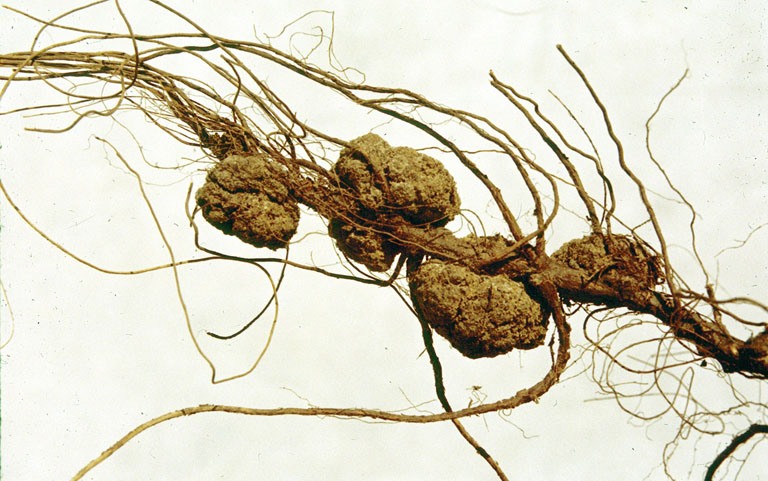
The summary below is from this freely available review (any additional references are indicated). The Agrobacterium genus has many different bacteria that cause different plant diseases. For genetic engineering, the species used is Agrobacterium tumefaciens which causes crown gall disease. Crown galls are growths on plants, similar to tumors. When the spouse read this, he pointed out that many of the gardening books that he's read highlight the fact that you're not supposed to use pruning shears on plants that have galls without cleaning them, so that you don't transfer the bacteria from one plant to another. Galls develop when a chunk of DNA from the bacteria, known as Ti-DNA (Tumor inducing) gets added to the plant's own DNA. For this to happen, the DNA needs to get cut out of the bacteria, transported into the plant cell, and integrated into the plant's genome. This process is carried out by proteins that are made by the bacteria known as vir genes (virulence), and there's quite a few of them that perform different tasks in the transformation process.

Crown gall caused by Agrobacterium (Wikimedia commons)
The vir genes get activated by sensing compounds that are released when a plant is injured. Think of the injury as an alarm bell that suddenly alerts the Agrobacterium to the fact that infection is now possible. Once the vir proteins are active, they process the bacterial DNA that will be transported into the plant cell. This DNA is flanked on both sides by a very short segment of DNA that acts as a recognition site for vir proteins which then cut the DNA. Think of the short DNA segments as neon lights flashing "CUT HERE". Once the vir proteins cut the DNA, it is transported by proteins across a channel in the plant's cell wall. In this process, different vir proteins transport the DNA, protect the DNA from getting degraded, and also form the channel to get the DNA into the plant cell, so there are many players in this process. Once it's in the plant cell's nucleus, the bacterial DNA gets integrated with the plant DNA, and several mechanisms have been proposed as to how this may happen. Once the DNA gets integrated, it can activate gall-causing proteins using the plant's own cellular machinery. The DNA that gets transferred from the bacterium to the plant is known as T-DNA (Transfer-DNA. Remember this one, because the abbreviation will be used in the paper).

A fear inducing meme, made by GMO Inside!
Rebranded by David Avocado Wolfe.
In genetic engineering, the Agrobacterium has been engineered such that the bacteria no longer causes tumors. Additionally, the T-DNA consists of the gene that scientists want to transfer into the plant, such as the gene that confers Round-Up resistance, or a gene that may confer drought resistance.

Many anti-GMO websites will use emotional phrases such as "GMOs use bacteria that cause cancer in plants" (see the image from GMO Inside! that I've shared here). Although the statement is correct, it's a half truth because the bacteria has been engineered to no longer cause tumors in plants. So the intent is to evoke fear by combining scary or emotional phrases and terms.

So now we'll get back to the paper.

The Sweet Potato: Nature's GMO

The paper outlines that the sweet potato is "one of the oldest domesticated crops in the Americas". Archeological studies have found it in caves dating back as far as 8,000-10,000 years. There are 13 known species and 2 naturally occurring hybrids. The authors explain that in a previous study that was studying short RNA molecules in sweet potato, they had found RNA molecules that were similar to Agrobacterium, so they decided to investigate this further by looking for Agrobacterium T-DNA sequences in the genome of the sweet potato. First, they took the snippets that they had identified in their first study and confirmed that they were real using a different technology. This is important, because it highlights that their findings weren't due to contamination or some issue related to the methodology they chose. Once this had been confirmed, they went on to identify the entire T-DNA sequence in the sweet potato genome. They found two large regions of Agrobacterium rhizogenes DNA: this bacteria is from the Agrobacterium family and it creates galls in plant roots. The two regions of Agrobacterium DNA that they identified in the sweet potato genome contained the code for potentially 9 different proteins. Again, these findings were confirmed using a different technique.

They found that one of these large DNA segments had gotten inserted into the sweet potato genome at a site where there was a gene, thereby interrupting the gene. They found evidence suggesting that the gene that was interrupted was active before the large DNA segment interrupted it.

The authors went on to determine if the genes in the large DNA segments that were inserted into the sweet potato were turned on. They did this by checking to see if the inserted DNA had been transcribed into RNA. Sure enough, the inserted genes were turned on; not at very high levels but still detectable in most tissues.

The authors decided to check to see if the genes that had been inserted into the sweet potato they were studying were also present in other sweet potato varieties. They selected a wide variety of plants from different continents. They found that one of the large DNA segments was present in nearly every domesticated sweet potato plant examined, but wasn't present in wild sweet potatoes. The second large DNA segment wasn't present in every sweet potato variety. The authors hypothesize that the widespread presence of one of the large DNA segment in domesticated sweet potatoes suggests that it caused a trait that we selected for.

The paper concludes with this paragraph "Agrobacterium-mediated transformation has been the method of choice for the development of genetically modified crops. Despite their cultivation on more than 170 million ha, the growth and consumption of transgenic crops still faces societal opposition. This has impeded their use in efforts to contribute to a more sustainable agricultural future. Our data reveal that T-DNA integration, the interruption of an F-box gene, and the subsequent fixation of foreign T-DNA into the sweet potato genome occurred during the evolution and domestication of this crop, which is one of the world’s most consumed foods. This finding could influence the public’s current perception that transgenic crops are “unnatural.” "

Why is this Paper Important

I think it's important to highlight the key features of the paper, with respect to genetic engineering (the points below are my thoughts and summary).

-Thousands of years ago, a bacteria closely related to the bacteria used to create GMOs, inserted a bunch of genes into the sweet potato. The GMOs on the market add fewer genes than what was naturally introduced into the sweet potato.

-The introduction of these genes into the sweet potato generated an "unintended consequence": namely, that a sweet potato gene was interrupted.

Sweet Potato Cakes that are "GMO-Free"
-The fact that these changes are present in domesticated sweet potatoes and not wild sweet potatoes points to the strong possibility that they were selected by artificial selection. In natural selection, it's the survival of the fittest where the genes that give reproductive and survival advantages usually win. So a mutant plant that creates a more toxic substance may propagate its genes because fewer predators will eat it. In artificial selection, it's the genes that are most convenient for humans that win out, and we see it most commonly in agriculture and animal breeding. That means that we might select for genes that create cuddly dogs. Or we might select for genes that give rise to sweeter fruit. But that does not mean that the Chihuahuas that we've created and the oranges that we've bred are the strongest to survive out in the wild. If the genes examined in this paper did in fact give the sweet potato selective advantage out in the wild, then odds are that the wild sweet potatoes would have the gene, too. So this point, that we humans selected for a mutant that arose through transgenesis, defies the anti-GMO argument that nature has created what is naturally best over the course of evolution. The incredible irony is that what we selected for was transgenic in origin.

-I think the example of the sweet potato can make the legal definition of the term "GMO" more difficult. If it's defined as a crop where genes have been added by Agrobacterium, then should the sweet potato be excluded?

-This is a great example for individuals who think that genes from viruses or bacteria in crops are "unnatural" (or what I call "The Ick Factor").

In conclusion, I usually don't use the argument that "everything we eat is a GMO". But, in the case of the sweet potato, the genes added arose by Agrobacterium-mediated transgenesis, which is a method used in modern-day genetic engineering. So next time you're shopping, you'll know that the "Organic, GMO-Free, Sweet Potato Cakes" that are for sale at Costco have bacterial DNA and proteins in them.