Showing posts with label Seeds. Show all posts

Monday, June 8, 2015

I got 99 Problems but a GMO Ain't One

In the past, I’ve written a short list of problems that are attributed to GMOs, but are actually problems with modern agriculture. Well, I’m going to expand the list to “9 Reasons Why GMOs are Opposed that Aren’t Really About GMOs”, or as the spouse aptly entitled this post "I got 99 Problems, but a GMO Ain't One". But it's really only 9 problems. As I've written before, transgenesis, or the method used to make most GMOs, is a tool and it makes no sense to oppose a method with broad applications. It's like opposing electronics as a category because you don't like the fact that your Roomba chews up your computer cable (which is happening this very instant...) or that iPhones cost too much.  In fact, an article was just written in the NY Times about GMOs, and in the comments section, you'll see the reasons below being listed time and time again.

So, here we go.

Success Kid - I got 99 problems But a GMO Ain't One
9) "GMOs are patented". Yes, many of them are patented, but so are many non-GMO crops. Pluots didn't just drop out of the sky: someone had to work for years to develop those tasty treats, so there are patented varieties. Not all GMOs are patented: there are open-source GMOs, and there are also GMOs where organizations have worked with private enterprises to give away seeds on humanitarian grounds, such as Golden Rice. So using the "GMOs are patented" excuse makes no more sense than saying that you don't like electronics because Windows is under a copyright. 

8) "GMOs cause superweeds". GMOs that carry traits for herbicide tolerance can lead to weeds that develop tolerance to the herbicide, known as "superweeds", and I've reviewed this topic here. Superweeds are far from being an issue unique to GMOs, and even pulling weeds by hand can lead to weeds that look like the crop itself (known as mimicry). The issue of superweeds is a serious one, and this database tracks herbicide resistant weeds as they develop across different nations. Reducing it to a "GMO-specific" problem and severely narrowing the scope of the issue, deters the efforts of finding genuine solutions to the problem. So using the "GMOs cause superweeds" excuse makes no more sense than saying that you don't like computers because they can lead to electric shocks, when the issue is much broader in scope.

7) "GMOs are drenched in pesticides". Yes, pesticides (be they herbicides, insecticides, or fungicides) are used on GMOs, as well as any other form of modern agriculture unless it specifically states "pesticide-free". That includes the U-Pick farm I went to last week for cherry picking and the organic peach farm next to it. That includes the fields of corn that we drove by to get there. It took me a while to come to the realization that no form of agriculture is perfect. If we insist on going pesticide-free, crops will be lost which will increase costs to consumers and we will have to dedicate more land to get the same output. Pesticides are expensive. Farmers don't just decide to spray their fields with pesticide because they feel like it, nor do they "drench" their fields in it. There are laws and regulations on how much can be applied, and why on earth would anyone use any more than necessary when its use can cut from your profits? Here's an excellent post written from a farmer's perspective on the topic of pesticides and why they're used. PLEASE read it. Some GMOs are designed to resist pests so that pesticide doesn't have to be applied, such as the Rainbow Papaya which is designed to resist the ring-spot virus and saved Hawaii's papaya industry.

6) "GMOs are monocultures". When I was preggers, the spouse and I went on a road trip around California. I was miserable. I was one of those people who had morning sickness well into the 3rd trimester. Anyway, I was on medication to control it because I was losing weight, but the medication made me horribly drowsy. So the road trip ended up being more of a sleeping trip. Somewhere between Sequoia National Park and Fresno we drove through orange farms. And we drove. And drove. And drove. I don't know how long it was but it felt like every time I woke up, we were still driving by orange trees. And GMO oranges don't exist on the market. So yes, there are vast fields of GMO corn in places across the US, but there are also vast fields of non-GMO spinach and giant orchards of fruit. When I lived in Venezuela, we lived across from a valley that was a giant sugarcane farm. It was enormous and it belonged to the local sugar refinery. Every year, they'd harvest sugarcane about 3 times. It never changed, there was no crop rotation, and it just went on for miles. There's no GMO sugarcane. Monocultures can lead to crop resistant pests, and farmers are encouraged to rotate their crops from one year to the next so that this risk can be minimized. So, again, reducing the issue of monocultures to a GMO-specific one is highly disingenuous.

5) "GMOs are being made by Big Ag to line their pockets". Unless your problem is with making money in general, then this doesn't make much sense. Of course ag-businesses want to make money. Why would any corporate enterprise embark on a project where they think they'd lose money? Again, the "Big Ag" argument doesn't apply to all GMOs. Arctic Apples were developed by a small company up in BC, Canada that only had 7 employees. AquaBounty, which developed the transgenic salmon (not yet commercialized) only had 12 employees on staff in 2012. And of course, many transgenic crops are being developed by public sector scientists, some of which address undernurishment such as biofortified bananas to address vitamin A deficiency. This reason for opposing GMOs is like saying that you oppose electronics because Apple makes too much money from the iPhone.

4) "GMOs place restrictions on seed saving". This is tied to #10 on this list. Farmers who plant GMOs sign a contract where they state that they will not reuse seeds. In the same way that you're not supposed to copy and give away that Maroon 5 song that you just downloaded from iTunes because it's a copyright violation, farmers are supposed to respect the intellectual property rights of the companies with whom they have signed a contract. Many farmers have written about the plethora of choices they have when it comes to seeds (here's one of my favorite articles). Basically, if farmers do not like the restricted seed use, they don't have to buy the seeds. It's as simple as that. The fact that they do and that they buy the seeds on a fairly regular basis suggests that there's something about GMO seeds that they prefer. Not only that, but there are non-GE crops where farmers have to sign agreements as well (this includes non-GE sunflowers, which Chipotle switched to when they adopted more integritiness). So this has little to do with GMOs: it has to do with patents. If you can think of a better way that companies can recover the dollars they spend on making a product after the first year, by all means, make the suggestion. Farmers who do not use GMOs generally buy their seeds from one year to the next, too, because the seeds they plant are often hybrids. Recalling Mendel's pea experiments, this would mean that if farmers reused the seeds, only a portion of the following year's crop would have the traits they want.

3) "GMOs use the carcinogenic Glyphosate". Glyphosate use is not restricted to GMOs. That by itself is enough to earn it a place on my list. In fact, we just used it this week to get rid of a particularly thorny wild blackberry that we couldn't control and was right in Baby Boy's biking path along the driveway. Regarding the label "carcinogenic", I think that Dr Andrew Kniss wrote one of the most balanced pieces I've read on this topic, and I'd like you all to head over there to take a look. An important point to keep in mind is the time at which herbicides such as glyphosate are applied. Think about it: glyphosate is being applied so that corn/soy can grow heartily without getting choked out by weeds. Does it make sense to apply glyphosate when corn is several feet tall? Here's Pioneer's recommendations for glyphosate application, and they recommend using glyphosate when the plants are just a few weeks old. Between that time and harvest, it might rain, the sun will have beaten down on the crops, and the crops will have been watered. So saying that the corn we eat is "drenched" in glyphosate doesn't make sense to me. Regarding the amount of glyphosate used, I love this graphic by Sarah Schultz where she explains that approximately one soda can-sized amount of glyphosate is applied across an entire acre of crop in one season. More importantly, there are MANY GMOs that are not glyphosate resistant: the Arctic Apple or Innate Potato, for example, could be grown using organic practices (without the organic label), and again, all those GMOs that are being made for humanitarian purposes that have absolutely nothing to do with pesticides.

2-1) "Monsanto". I give Monsanto 2 spots on this list, because there are different aspects to the "I hate GMOs because of Monsanto" reason.

2) "GMOs promote a monopoly." Every time I see this, I think that someone over at Dow Agro is cackling. I work in a field in biotech right now where a single company has between 70-80% of the market. Google web searches are used almost 70% of the time. Android has 80% of the market in operating systems for smartphones. But strangely enough, I've never seen a "March against Google". I tried to find out how much of the seed market Monsanto owns, and the numbers are all over the place, because it's such an easy number to rig to portray your point. For example, Monsanto says that it has 5% of the world market in seeds. The Organic Consumers Association says that Monsanto has 80% of the US GM market on corn. However, GMOanswers.com explains the latter by stating that they license the trait to other independent companies, so they're not sold by Monsanto. Commercial licensing agreements are set up between companies ALL the time, so the stat from OCA is blurring the real numbers. This would be equivalent to saying that the Lenovo laptop I'm typing on was sold by Microsoft because it has a Windows OS on it. No: the laptop and the sales go to Lenovo, which then pays Microsoft a licensing fee. So I honestly don't know how much of the seed market Monsanto owns. Keep in mind that organic and non-GM farmers have to buy seeds from somewhere, and Monsanto does sell organic seeds. Unless you know what seeds your local farmers used when you buy your veggies, you have no guarantee that you're boycotting Monsanto if you boycott GMOs.

The problem with monopolies is a tough one and I don't know what the solution might be. Since it takes such a long time to get a GE product through the regulatory process, it's difficult for a small company to last very long. During that time employees need to be paid, logistics need to be taken care of, and the product pipeline needs to continue its development while no revenue is being generated. By no means is this a problem unique to the agricultural biotech sector. Small tech companies are gobbled up by larger behemoths every day. So the issue of monopolies is far from being a problem about GMOs.

1) "Monsanto made (place your favorite scary chemical here)". This is a topic that I'm struggling with myself. I know that Monsanto has a very checkered past, particularly when it comes to Agent Orange. Very briefly, Agent Orange is an herbicide that was used by the US during the Vietnam War to deprive the guerrillas on the ground of food and cover. Agent Orange production during the Vietnam War contained a contaminant which caused severe health problems in the local inhabitants. The US government placed orders from many companies for Agent Orange, and Monsanto was one of them. I don't know how it came to be that Monsanto is exclusively blamed for Agent Orange. As I see it, there are multiple people to blame, primarily the US government. I'm assuming that all the companies involved could have turned down the US government contract, and I'd like to believe that in an ethical world, they would have. But to blame Monsanto for this issue makes no more sense than to blame Boeing for military airstrikes, and I have yet to see a "March against Boeing". The Monsanto that exists today has gotten rid of its chemical division, however there's no denying that the company is built upon the revenue generated by the company that existed back when it made chemicals. There are many companies that exist today that were built decades or centuries ago under very shady circumstances (see the Hugo Boss brand as an example, where they provided uniforms during Hitler's Germany; here's a short list of companies that benefited from slavery. When the spouse read this section, his degree in Political Science kicked in and he started rattling off companies that benefited from times of war, including IBM). I believe that these companies should acknowledge their past and make amends. GMOanswers addresses the topic of Agent Orange and Monsanto, but they have a very PC statement basically pointing the finger elsewhere. Ultimately, this issue has very little to do with GMOs, but is a discussion that we need to have in our society.


In conclusion: there are many legitimate concerns about modern food production. There are many legitimate concerns about the corporate nature of our society and the undue strength they exert over the American political system. These are the things we should be opposing. But whether you realize it or not, when you yell "No GMO!" and list one of the reasons above, the crops that are designed for you and I as consumers, the crops that are designed for humanitarian efforts, all suffer as a consequence. I know it doesn't make for a catchy slogan, but why not try voice your concerns by stating "No to the patenting of all seeds, regardless of technology used for their development!!" or "Increase funding so that our public institutions have the resources to commercialize and license crops!!". I'd recommend focusing your efforts on the REAL reason why you oppose GMOs, and not on the technology as a whole.

Thursday, December 18, 2014

Transgenic Crops and Traits

So, the spouse has often complained that I don't have a post with an overview of what transgenesis means and the transgenic (GMO) crops themselves. They're scattered throughout the history of this blog, but not in a single place.

Transgenesis means taking a gene (or genes) from one species and sticking it into another. Unlike another process known as cisgenesis, transgenesis involves adding genes from a species that is sexually incompatible with the organism in question. Transgenesis is like taking a gene from a pomegranate and adding it to a Granny Smith apple. In contrast, cisgenesis is like taking a gene from a Red Delicious apple and adding it to a Granny Smith apple. For transgenesis, the species doesn't even have to be a plant: you can take a gene from an animal or bacteria and add it to a crop/plant or viceversa.

What does this mean? To explain, I have to go to the beginning: the working units within any cell are proteins. Proteins are made up by linking together amino acids in a given sequence. The exact amino acid sequence is defined in the cell's DNA; the DNA blueprint for a specific protein is known as a gene for that protein. In general, one gene encodes for one protein (of course, there are exceptions). Since there are thousands of proteins, there are thousands of genes. We're still figuring out what different genes/proteins accomplish.

Spouse: I think that you've been surprised by the fact that I can't just "make up" a protein. I wish!!! No, biotech still isn't at the point where I can say "I'm going to invent a DNA sequence that's a blueprint for a protein that will make the plants absorb more water". That would be AWESOME. The best we can do right now is to look in nature at the plants/animals/bacteria that have the trait that we want, find out what protein accomplishes that task, and then use it in transgenesis. The reason why this is important in discussions about transgenesis is that the proteins that have been added to GMOs are already in nature.

In transgenic crops, they've taken one or more genes from different species and added them to the plant's DNA so that you have new genes/proteins in the plant. That brings us to the main point of this article: what are some of the more popular genes/proteins that have been added to commercial transgenic crops or GMOs.

Transgenic proteins currently used in US agriculture can be split into 3 broad categories: herbicide tolerance, insect resistance and disease resistance. Here are some of the traits used in each category (NOTE: this is not a full list. You can find all traits in this database):

Herbicide tolerance
  • EPSP synthase. A wonderfully short abbreviation for the painfully long "5-enolpyruvylshikimate-3-phosphate (EPSP) synthase". EPSP synthase is a protein that naturally exists in bacteria, plants, and fungi. The protein is part of a system that makes several crucial amino acids in these organisms. The active ingredient in weed killers such as Round-Up is "glyphosate", a synthetic compound that blocks EPSP synthase. The plant can't make the amino acids that it needs to survive so it dies. In order to make plants resistant to glyphosate, the EPSP synthase enzyme from a bacteria was added to the plants. This bacterial enzyme does the same thing (ie. it synthesizes the amino acids) but it's just different enough that glyphosate doesn't block it.

    It's important to note that EPSP synthase doesn't exist in mammals, which is why glyphosate has low toxicity. My previous post on glyphosate is here.

    In the US, the transgenic crops cultivated with the EPSP synthase gene are: alfalfa, canola, cotton, corn, soy, and sugar beet.

  • AAD Enzyme. Another mercifully short abbreviation for "aryloxyalkanoate dioxygenase enzyme" and is from the bacterial species Sphingobium herbicidovorans. The protein breaks down 2,4-dichlorophenoxyacetic acid (2,4-D), a pesticide that's been used for many decades because it kills broadleaf weeds. 2,4-D mimics a natural plant hormone in these weeds, causing their leaves to grow uncontrollably, wither, and the plant eventually dies. The AAD-1 protein allows the plant to break down 2,4-D, so nothing happens to it (for a diagram of the biochemical reaction, please see here).

    In the US, there's only one transgenic crop with the AAD-1 gene approved for cultivation: corn made by Dow Agro was just granted approval this year. However, there are several others in the works. 
Insect resistance
It seems odd that no one is demanding for labeling of GM cotton
Image from Wikimedia commons
  • Bt trait/Cry protein. There are several proteins from the bacteria Bacillus thuringiensis (Bt) that have been used in various crops and they're known as Cry proteins. Apparently, there are over 200 different Cry proteins from the Bt bacteria and they're toxic to specific orders of insects and nematodes. The insects that Cry proteins target are not all the same, which is why different proteins are used. Additionally, since the protein is toxic to insects, you may also see it referred to as "Bt-toxin". This website from UCSD offers a really simple explanation on how the Bt-toxin works: the protein dissolves in the high pH environment in the insect's gut. Then, it binds to receptors in the bug's gut causing the wall in gut to dissolve, which eventually kills the insect.

    Cry proteins are also used in organic farming (if you weren't aware that organic food production uses pesticides, please see bullet #2 here). The pesticide is considered to be benign to humans because the protein's mechanism of action doesn't work on mammals: our guts have a low pH and we don't have the receptors that the Cry protein binds to.

    Bt-corn and Bt-cotton have been commercialized. There's exciting work being done with Bt-eggplant in Bangladesh.

Disease Resistance
    We had a papaya tree in our backyard in Venezuela.
    I love the stuff, but the spouse can't even stand the smell.
    Image from Wikimedia Commons. 
  • Proteins from plant virus coats. In the United States, there are two commercial crops that have disease resistant traits: summer squash and papaya. Hawaii's Rainbow papaya is one of the great success stories of transgenesis: the papaya ringspot virus was threatening to wipe out this crop, which is a $17 million industry for Hawaiian farmers. In 1997, farmers started planting Rainbow papayas which have a protein from the virus itself. Likewise, transgenic summer squash carries proteins from several viruses which can harm this crop. I previously read up and shared my learning about how these proteins confer disease resistance to transgenic crops. Briefly, the transgene encodes for a protein from the virus (coat-protein) and this "blocks" the infection process from starting (interferes with the virus' disassembly). This is known as "coat-protein mediated resistance" or CP-MR. 
As you can see, there are no blue-strawberries or fish-tomatoes in the list. Such crops have never even made it far enough to start the regulatory approval process. I had written a conclusion for this article, with something along the lines of "See?? There's nothing scary about transgenesis! All you're doing is taking a protein that we know a lot about and moving it into a plant." But then I realized that to a lot of people, that can be scary, so I think I need to explain just a tad further.

You may have read arguments from GMO advocates stating that "we've been genetically modifying food for thousands of years. There's nothing different here." To a large extent, that's true. When you cross breed two compatible species, it's generally because there are specific qualities from species A and species B that you want to blend into a single species. For example, you may want to cross a rice strain that is naturally insect resistant with a second strain that grows very quickly. When you perform such a cross, you're blending all the genes from the two rice strains and then trying to find the hybrid that has all the traits that you're looking for.

Now, imagine instead that you know EXACTLY what gene/protein(s) caused the insect resistance in the first rice strain. Instead of crossing the two strains and blending together thousands of proteins, you specifically add this one protein to the second strain. How would you feel about that? My guess is that the vast majority of individuals would be OK with it. Now how would you feel if that gene/protein came from barley and you're adding it to rice? Again, I think many would be fine with it.

But what if it came from a bacteria?

I think that THIS is where the fear creeps in: the addition of a gene from a species that "doesn't belong". To be clear, I have no evidence to suggest this and have never polled anyone on this topic: it's just from conversations that I've had. And I think the reason why the majority of scientists don't have this fear is because we see things as proteins, and genes, and units, and no gene "belongs" to a species. We see genes/proteins as building blocks that came into existence in viruses and bacteria, and have changed, morphed, been copied, and erased throughout evolution. I work with enzymes (proteins) that have been mutated and morphed by companies so that they do what scientists need them to do in the lab. Back in grad-school, we added and removed genes in mice to figure out what they did in human disease. It was so common, that it had it's own term: "making a mouse". So the concept of adding a gene that we know a lot about into another species doesn't scare me nearly as much as it freaks out the spouse. In reviewing this piece, he agreed with my assessment adding that he views a species as a whole, whereas I view a species as bits and pieces that make a whole.

Feel free to comment below!

Sunday, March 16, 2014

David vs Monsanto - Part 2 of "Patents and Seeds"

File:Brassica rapa (7490648454).jpg
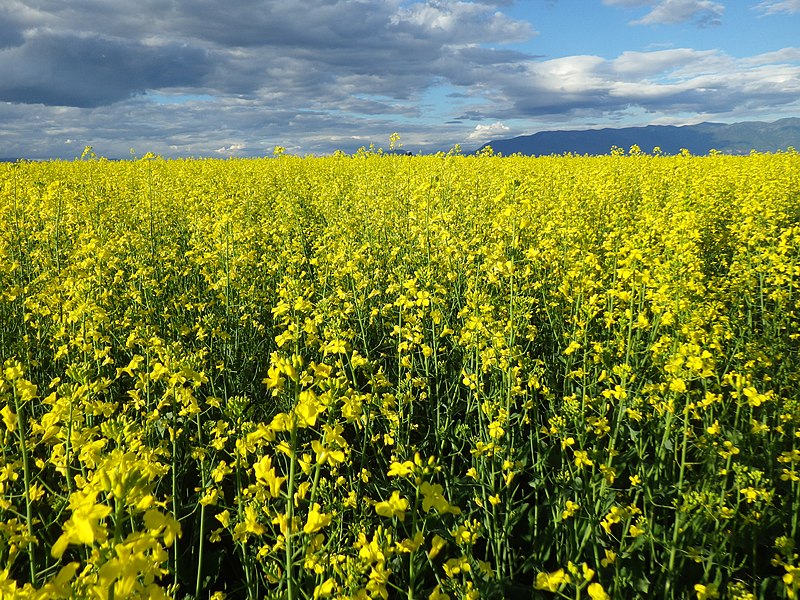
Canola Fields
Image from Wikimedia Commons

This is part 2 of a multi-part series on Patents and Seeds. Previously, I covered the basics, including agreements between farmers and seeds suppliers, as well as the Schwarzeneggar gene (i.e. Terminator). This week, I'll mostly be writing about lawsuits between farmers and the patent holders on seeds.

According to Monsanto, they have never sued a farmer who has inadvertently used their seeds (this is a statement whose validity I'll explore throughout the series). They have, however, sued farmers who have allegedly replanted Monsanto seeds with knowledge of what they were doing. The most famous of these cases is against Canadian farmer Percy Schmeiser, whose story is now the subject of a documentary made by Journeyman Pictures "David versus Monsanto". This movie production company is also behind the documentary "Designer Babies & Gene Robbery", so I'm not sure how unbiased their productions may be. I actually watched a good chunk of the movie (which is just over 1 hour and freely available here) and my comments on it are below.

Anyway, here's a summary of the case as best I could tell based on court documents (see Section II entitled "Salient Facts" in the Canadian Supreme Court Case and the Federal Court Case): Mr Schmeiser had been a farmer in Saskatchewan for over 50 years (if you haven't been, you should go. Saskatoon is lovely). He grew canola, among other crops. He saved seeds from a portion of his field every year for planting the following year. In the mid-90's, a bunch of his neighbours switched to Round-Up Ready (RR) canola. He never purchased a license to plant the crop. In 1998, testing revealed that >90% of his 1000 acres were Round-Up Ready. The Federal court case states that Mr Schmeiser did not deny the presence of GM canola on his field but he claims that he did not deliberately plant or deliberately cause the planting of the seeds (see paragraph 11 of the document). Mr Schmeiser additionally stated that he had suffered substantial damage and loss due to the GM canola, because his own strain that he had been developing over the course of many years got contaminated. Additionally, he argued that in order to have infringed upon the patent, he must have sprayed his fields with Round-Up, and he claims that he did not do this. Finally, Mr Schmeiser's defense team argued that by releasing the gene into the environment in an uncontrolled manner, Monsanto had lost or waived their rights to an exclusive patent.

So Mr Schmeiser found out that there was Round-Up Ready growing on his field in 1997. He routinely sprayed the area around power-poles and ditches, and he noticed that a portion of the plants he had sprayed had survived the spraying, i.e. were Round-Up resistant (keep in mind that Round-Up is used to kill grass and plants - see previous post for more info on Round-Up). So he then conducted a test. He sprayed 3-4 acres of field along the roadside with Round-Up, and he noticed that about 60% of them survived, with a higher density along the roadside. This road is used by his neighbours for delivery/transport of canola seeds. He then used the seeds from that field, including the swath tested for Round-Up, to plant the following year's crop.

Mr Schmeiser's canola was tested by a private firm who conducts random audits of canola crops. The farms are either identified by Monsanto among their licensed farmers, or they receive anonymous tips/complaints. The private firm received an anonymous tip from someone who claimed that Mr Schmeiser was growing Round-Up Ready canola, when he didn't have the license for it.

Seriously... Wouldn't this make a fantastic whodunnit movie?? I can just imagine Clint Eastwood as Mr Schmeiser. And that anonymous tip would be left by someone who's face you can't see and is muffling their voice with a handkerchief, and later on in the trial you recognize the handkerchief sticking out of the Monsanto lawyer's pocket (played by Kevin Spacey). But the next-door neighbour also has the same handkerchief, so who was it??? But let's continue investigating this fascinating saga!!

Between 1997-1998, a series of samples were taken and tested. Some were by court order, but the first series were just from road-side samples (allegedly taken without trespassing, although this is heavily contested in the documentary). The samples showed from 0-98% Round-up tolerant canola. In 1999, Mr Schmeiser was advised to buy new seeds, since the lawsuit had started.

The judge in the Federal Court Case wrote that Mr Schmeiser's argument that Monsanto cannot control their patent/products defies all evidence, including the fact that Monsanto tests crops/fields, and removes "plants from fields of other farmers who complained of undesired spread of Roundup Ready canola to their fields." Two farmers testified that they had called Monsanto to have unwanted crops removed from their field, which had been done (in the documentary, Mr Schmeiser said that all the witnesses had been paid off by Monsanto). The judge also stated that Mr Schmeiser himself admitted to have kept seeds that had been shown to be Round-Up Resistant for replanting. The judge agreed with expert testimony that the wind/birds/bees alone would not account for the high concentration of GM crop found on the field, therefore, the patent had been infringed upon. He dismissed Mr Schmeiser's claim that in order for Monsanto's patent to be infringed upon, it would have required his fields to be sprayed with Round-up.

When it came to the all-important topic of money, the judge took middle ground. He threw out Monsanto's claim for exemplary damages. Monsanto was also seeking $105,000 representing the profit that Mr Schmeiser made on Monsanto's seeds/patent. The judge said that this was too high and asked for Mr Schmeiser and Monsanto to agree to a mutually beneficial amount within a given time period.

That's the Federal case. In the movie version that I'm writing in my mind, there's a fictional character (Mr Schmeiser's daughter) played by Emma Stone. She's a sassy, high-strung girl who always speaks her mind, and oddly enough, her lines in the movie sound a lot like my opinion. At some climactic point in the movie, she turns to her dad and says "Seriously Dad? You replanted those seeds and you're going to put up a fight? Why not just settle?? Do we really need this?"

But somehow, Clint Eastwood, aka Mr Schmeiser, keeps fighting and takes it all the way to the Supreme Court of Canada. Cut to a screenshot of Parliament Hill with the Canadian flag flying, and the tulips in full bloom. Ottawa's a beautiful place if you haven't visited. You should go. And yes, you're all thinking it so let's just get it out in the open: I'm a shill for Travel Canada :)

So what happened at the Supreme Court? The ruling was in favor of Monsanto, but when you read the court document, quite a few of the judges wrote partially in favor of Mr Schmeiser. The word "partially" is important here, because they didn't agree with all his arguments. The biggest issue that the judges had was whether or not higher life forms are patentable. Mr Schmeiser's team had argued that the patent was over the gene and the seed, not over the plant because plants are not patentable as higher life forms. Mr Schmeiser had ultimately "used" the canola plant and not the seed (at least I think that's what the court documents say... All this legalese is pretty new to me). A few of the Justices agreed with this argument, but not the majority. Ultimately, the majority of the Justices ruled that Mr Schmeiser had infringed on the patent by keeping and replanting the seed.

To better understand Mr Schmeiser's point of view, I watched the documentary. Actually, I only watched 30 minutes of it, because so much of what was said contradicted the official court documents. Within the first 5 minutes, Mr Schmeiser says (I transcribed the following quote from the movie): "This is what the judge ruled. Number One: If you are contaminated against your wishes by Monsanto's GMOs, you no longer own your seeds or plants, they become the ownership of a corporation, in this case Monsanto. He also ruled we were not allowed to use our seeds or plants again. He also ruled that all our profit from our 1998 canola crop goes to Monsanto."  Mr Schmeiser's point of view is that Round-Up resistant canola was introduced without much testing and that government officials were blinded by Monsanto's promise of better yields and more nutritious crops (which isn't factual, since Round-Up Ready's whole premise is that it is nutritionally equivalent). Mr Schmeiser also stated that he had developed his own strain of canola, which had taken him 50 years to develop, and that Monsanto's contamination of his fields destroyed all his work and effort (his claim to this unique strain was also in the Federal court case). I have to be honest: if you like conspiracy theories, you'll be drooling throughout this entire film. It's a goldmine. The documentary also interviewed a few other farmers, but I can't comment on their cases since I haven't read their court documents.

There are quite a few misleading "facts" in the documentary. In the 30 minutes that I watched, not once did it mention that Mr Schmeiser had replanted the Round-Up Ready seeds with full knowledge of what they were. It makes you doubt the awesomeness of his own canola strain. In the court documents that I read, no where did it state that if a farmer's field is contaminated against his wishes, then the seeds/profits go to Monsanto. If this is in a separate court document or perhaps in a section of the proceedings that I glossed over, it would be great if someone could send it to me. The documentary fails to address the laws surrounding patents. The fact of the matter is that Monsanto's seeds are patented, and if you're a farmer and you don't like Monsanto's business practices, then you don't have to plant Monsanto's seeds.

Well, I'm not sure how my movie would end. Maybe with a scene of Clint Eastwood staring over his field of canola and watching in despair as the wind from his neighbour's fields sweep towards his own? So, here's a thought, which I know many people out there also share. Monsanto has promised not to use its Terminator gene technology out of pressure from many groups. I understand that one of the arguments against Terminator technology is the fact that it would force farmers in developing nations to repurchase seeds, even if it's being used for subsistence farming.  But most farmers in developed countries already buy new seeds every year, whether these seeds are genetically modified or not. So why not create a strain of genetically modified crops with Terminator technology and market it only in developed nations? Wouldn't this be easier for both farmers, those growing conventional crops as well as organic farmers? These would decrease the amount of "genetic contamination" and all the hassles that come with it for both sides, and improve the success of co-existence? What are your thoughts on this?

So that's just a single case. For my next post on this topic, I'll keep exploring the topic of whether Monsanto has ever sued a farmer who inadvertently used their seeds.

On a personal note, the web (also known as a series of tubes) turned 25 this week, so I want to wish it a very happy birthday and acknowledge that I wouldn't be able to write this blog or even do research if it weren't around. It's pretty awesome that I can access Canadian Federal Court cases out in Northern California. But, the web can definitely be obnoxious and a pain in the rear. However, in the end, I've lived in 3 different continents and don't live anywhere close to my family, and its the interwebz that has made it possible by making it less lonely. My nephew thought that I lived in a place called "Skype" for the longest time, and my kid is headed in the same direction. Here's hopin' that the next 25 years fill it with more of the useful stuff than the toxic guck :)

Sunday, March 2, 2014

Patents and Seeds

File:Vegetable Seed Packets.jpg
From Wikimedia Commons
One of the common criticisms that I read about "Big Ag" is that our food should not be patented. This is the first in a multi-post series looking into the topic of intellectual property surrounding seeds.

I have a few disclaimers here. First of all, there are very few scientific publications on the topic of seed patents. So most of my research was done reading the information from court cases, company websites, Wikipedia, and news sources. Second of all, I work for biotech companies who are able to make their profits and pay me due to patenting laws. As my husband says to the kid every morning when I leave the house "Mommy is going to go bring home the bacon" (on some joyous occasions, that's a figurative AND literal statement.... Mmmmmm... Bacon-topped meat loaf...). I am only able to do so because the companies I work for make unique products whose patents are vigorously protected and defended. Even when I went through grad school, we signed documents regarding patents (and how anything we discovered would be property of the University/Hospital). I work on products that take years to make, millions of dollars in investments, and countless hours of work from teams of researchers. To have that reverse engineered and remade elsewhere in a few months would be disrespectful to our work and disingenuous at best. As such, I believe that patents have a purpose, which is the same purpose as copyrights/patents on art, music, electronics, and software: to respect the work of its authors. But I agree with the President's statement at the State of the Union address, where he mentioned that patent laws need to be reformed, because frankly, some patents are just ridiculous (I was quite happy the Supreme Court ruled against the patenting of naturally occurring genes).

With that in mind, let's investigate the topic of intellectual property surrounding seeds.

I began by reading the Wikipedia entry on the International Union for the Protection of New Varieties of Plants (UPOV), as well as UPOV's website. This organization was established about 50 years ago with the express purpose of protecting new varieties of plants with Intellectual Property laws. The organization has a long list of member nations, including the US, Canada, Chile, and many nations in the EU. Interestingly, the plants protected under its laws are not only genetically modified plants, but also plants generated through traditional breeding (see previous post on this topic). In order to be granted breeder's rights, the plant variety must be new, distinct, and must be genetically stable and uniform (basically meaning that each seed should be genetically identical to the next). The breeder's rights are then protected through legislation in each member nation. Breeders can license their technology to other companies or institutions.

There are also exemptions, including uses such as research and subsistence farming. My understanding of that is if I plant a few seeds in my backyard for my family and don't sell anything, then I'm not violating any laws. So I think you're in the clear if you plant seeds from the delicious butternut squash you bought at the grocery store.

Before moving on, let me reiterate that GM seeds are not the only plants to have patents. Check out this database with a whole slew of patents, most of which are not transgenic plants. The patenting of seeds is much broader than just GM crops. Keep in mind that developing a novel traditionally bred plant also takes much research and trial/error. Pluots didn't just appear in a day :) During a trip to Singapore, we learned that they have research facilities dedicated to generating new orchid strains and that orchid sales are a major source of income to the nation, so decorative plants are also the result of biotech.

Next question: how do breeders make their money if you can just replant seeds from one year to the next?

Before I started writing FrankenFoodFacts, I had heard about Terminator Gene technology and had been under the impression that all genetically modified seeds used this technology. If you haven't heard about it, it's a seed from the future that returns to save the world from doom. Hilarious!! Actually, the gene that is modified in these crops makes the seeds sterile, so you would not be able to replant seeds from one year's crop to the next. It would effectively force farmers to repurchase seeds every year. If you search the interwebz, there's plenty of noise on how Monsanto is destroying the world with these seeds (see here and here). But the thing is that there is no commercially available crop with Terminator Gene technology. Monsanto's website states that they have made a commitment not to use this technology in food crops. Whether or not you believe their promise, the fact remains that they have not used it to date even though they've had the technology in their hands for over a decade.

So instead of using Terminator Gene technology, Monsanto and its customers sign a contract called the "Monsanto Technology Stewardship Agreement" or MTSA (yeah... it's a pretty marketing-y name) and they obtain an annual license. Syngenta has a very similar agreement. As part of the agreement, you commit not to sell or distribute the product in regions where the product is not registered. You agree to follow all the directions and instructions for growing the product, particularly EPA restrictions. The document outlines that if Monsanto believes that a customer has retained seeds, the company will request all the appropriate documents to determine if new seeds were purchased. Monsanto also has the right to test and inspect a grower's field (although I'm not sure how this right is exercised if the suspected grower doesn't have a relationship with Monsanto... Maybe through a court order?). Bayer CropSciences website didn't have their method for licensing enforcement outlined, but agreements between farmers and Ag companies seem to be the norm. As far as I can tell (and unlike my cell-phone plan), farmers are not locked into a multi-year contract, so they can choose to plant a different vendor's seeds whenever they want (please ping me if I'm wrong).

One really interesting thing I learned is that Monsanto customers who purchase crops that have the Bt trait have to plant an insect "refuge" (page 4 in the link). For an explanation on the Bt trait, please see previous posts or Wikipedia. Anyway, the insect refuge is a portion of the land that is planted with non-Bt crop. In the scenario where an insect has mutated to resist Bt and survives within the Bt-crop field, it will hopefully mate with a "normal" insect that is happily chomping away in the non-Bt portion of land. This will lead to baby-insects that are susceptible to Bt. Therefore, you don't end up with "super-insects" that might take over the land and reenact Starship Troopers.

The next thing I wanted to learn about was the subject of lawsuits. Something that I've read time and over again is that Monsanto routinely sues farmers whose fields are contaminated with GMOs.

But this is getting quite long, so you'll have to read part 2 next week.

If you have any questions or aspects of patents that you want me to look up in this multi-part series, please comment below. Or you can email me at my brand-spankin'-new email address biochica.gmo@gmail.com