Showing posts with label next-generation sequencing. Show all posts

Monday, April 20, 2015

Better Know a Scientist: Interview with Plant Geneticist (now Human Geneticist) Sonya Clark

I've been working on a post about the Innate Potato for about a month and it keeps getting delayed. So this week, we have another edition of “Better Know a Scientist”, where I’m interviewing my boss!! Seriously. My manager, Dr Sonya Clark, has a PhD in Molecular Biology from the University of Canterbury in the faraway land of New Zealand. Like me, she moved to the US, where she did a post-doc at UC Berkeley in the Plant Gene Expression Center. Then, like me, she moved into the private sector where she’s worked for over 15 years, mainly in DNA sequencing companies. I wanted to learn more about the work she did in plants and also to score some brownie points :)


Q: Pretend I’m one of our interns: explain to me the work you did for your PhD. Why was it important?
My PhD was funded by a grant from a government agency in New Zealand that was directed toward improvement of crops.  At the time I did that work, onions were a significant export crop. The project was to clone the gene responsible for the flavor of onions, with the concept being that having that knowledge would facilitate the ability to adjust the onion flavor intensity (apparently New Zealand’s onions were too intense to be acceptable to overseas markets).  I did manage to clone the gene (turns out it was an interesting compartmentalized enzyme that acted on the substrates when the cells are broken to release all those pungent volatile sulfur compounds everyone is so familiar with!). Using it to modify the onion plant itself turned out to be the larger challenge and it took another 15 years or so until a commercial onion was released using the gene sequence to create a knockout line  (using RNAi technology - a ‘tearless’ onion!).  It was really nice to hear that the project did continue until that was achieved, and fun to know I had a part in making that happen.


[Biochica’s note: for more about RNAi, read this post about the Arctic Apple, which uses the same technology to make non-browning apples. The Wikipedia entry for RNAi is also quite good]


Q: What did you do for your post-doc in Berkeley? Why was it important?
My post-doc was in a lab funded by the Department of Energy to explore methods for phytoremediation (using plants to detoxify contaminated soils).  My project was to introduce expression gene libraries into a yeast model system with similar biosynthetic pathways to plant (Schizosaccharomyces pombe). I would build various types of gene expression libraries, transform them into the yeast and test how they grew on media plates infused with cadmium.  Whenever I found a yeast that would grow well in cadmium, I’d figure out which gene had been added (sequence the insert) and then test those genes in plants to determine whether a similar tolerance was capable of being created that way. Turned out there were lots of genes that worked in yeast and not any that had a big effect in plants. But it was an interesting project in that the genes that conferred tolerance in the yeast cells helped define how these detoxification pathways functioned. Basically, the metals are sequestered into cellular subcompartments, so the project provided a lot of knowledge of the various strategies that plant cells could potentially use.


Q: Why did you switch careers into human genetics? Was it an easy transition to make? Is it because you declined to participate in the ritual sacrifice that takes place when you sell your soul to Monsanto?
I switched out of plant genetic engineering mostly because it was so dominated by Monsanto and I didn’t want to be part of a monopoly around the use of the technology.  At the time I was thinking through where I wanted to go, there were very few ..(pretty much no..) other options to engineer plants in an industrial environment that would feel like a positive contribution.  As far as the transition, that was a matter of luck - other postdocs in the lab were joining a tiny startup working on engineering mammalian cell lines to produce enzyme therapeutics for a very rare childhood disease and the positive nature of that project was very motivating.  I got a  chance to work on something that was very novel at the time as well as technically challenging as well as the opportunity to learn an enormous amount about building a startup.


Q: Couldn't you make the same argument for human/pharma work, though? Getting a drug through trials costs so much that every start-up probably wants for a Glasko or Roche to buy them out. Isn't that comparable to plant work? Getting a plant through regulatory costs so much that you almost need a Syngenta, Dow or Monsanto to get through those hurdles?
At the time I switched plant genetics was being driven predominantly by profit margin motivations within large corporations even though plant engineering had the potential to offer many values in a less corporate way (such as the work going on within government funded labs to provide plant tools for countries where agriculture was a struggle). There seemed to be little opportunity for growth of startups in that field. However in the human disease treatment space new worlds were opening up with the appearance of the orphan drug program which allowed for startups to get traction and funding to work on the types of products that big pharma was not interested in addressing.  I guess it was therefore a lot about the type of environment (startup vs. corporate). I was interested in understanding how startup worked and how companies were created. Certainly as products mature and enter into the world of regulation having experience to get through that is critical to success, but a good partnership can achieve that just as well as a buyout.  I joined BioMarin in 1999 when they were just starting out, so got to live through a company being born in the orphan disease treatment space and successfully mature into a very successful company.


Q: Do you think that something as useful as a tearless onion will make anti-GMO activists change their tune?   
I’m not sure tearless onions are going to provide enough value to humanity to tip the balance in favor of GMO’s.  However I do think that a really valuable part of the GMO discussion is to appreciate that there are a lot of different motivations to use plant genetic engineering, some of which have the potential to be very important to human health and well being in the future (e.g. developing salt-tolerant crops).  It’s hard to support GMOs that are created primarily to generate profit for a large corporation.
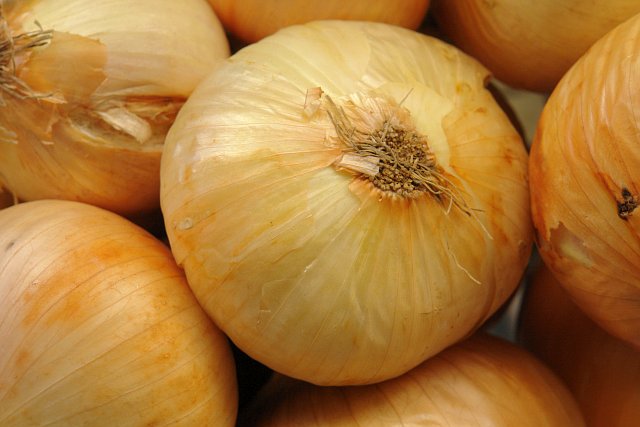
A tearless onion would be awesome. I'd pay extra for that trait!
Image from Wikimedia Commons
[Biochica's note: An Iron Chef challenge using onions, where the challenger uses a GM onion and wins due to the time saved from not sobbing would show the true value of the crop]


Q: You seem to have mixed feelings about GMOs. You mention that some GMOs are hard to support when they're made mostly to generate profit for big Ag. But if they sucked, then farmers wouldn't buy them. So what do you think of current GMOs on the market? Do you think they're safe? What do you think of the next generation of transgenic crops, that are designed to benefit the end consumer?
The world of commercial GMOs is complex and there is no ‘one-size-fits-all’ answer.  We need to appreciate that the technology in and of itself is not the risk, it is how it is used that should be paid attention to.  Some uses are just fine and others may come with unintended consequences that have to be evaluated and understood in the same way all new technologies bring risk as well as value. So my opinion is that each one needs to be evaluated and accepted or rejected on its own risk-reward profile not in a dissimilar way to how we treat chemistries, after all we don’t believe all chemistry is bad and ban it all from our world.


Q: Do you miss plant genetics? Would you recommend it as a career path?  
I do miss plant genetics - it is a really fascinating technical area.  You get to tinker with a genome in a much more accessible way than with mammalian genomes and the understanding that is generated about how genes work is incredibly interesting.  A lot of the gene editing technologies that are emerging now for mammalian systems probably would not have come about without the learnings gleaned from the plant world.  The problem with it as a career path seems to be still the same - there are few jobs that would provide the ability to do positive work and provide a decent income.


[Biochica's note: recent articles suggest that the times are changing with respect to the demand for agricultural/plant researchers. See here and here]


Q: Last question: my readers here know that I dream of a peelable pomegranate. You and I have also chatted about my plans for early retirement, where I go back to school somewhere between the age of 42-45 to do a post-doc in plants. Or somehow I become CTO of a corporation. I still haven't decided which. But do you realize that by not doubling my salary annually, you're delaying my retirement and consequently depriving the world of a peelable pomegranate? How do you respond?
Apologies to the world for the deprivation….   That’d be one cool fruit. If you ever find a job with a doubling salary, let me know, I want one of those too!

[Biochica's note to POM: if you're reading this, contact me in 10 years when I retire, and you can sponsor my project]

Wednesday, November 5, 2014

Microbiomes and GMOs

What's up everyone? This post reviews an article that I stumbled upon on Twitter. I don't think that I ever anticipated that joining Twitter would cause me to read more papers, but it's been a very pleasant surprise. The paper has a freakishly long title, way longer than 140 characters: "High-Throughput Sequence-Based Analysis of the Intestinal Microbiota of Weanling Pigs Fed Genetically Modified MON810 Maize Expressing Bacillus thuringiensis Cry1Ab (Bt Maize) for 31 Days" and is publicly available. The jargon-free title of the paper would be "DNA sequencing analysis of the bacteria in the gut of baby pigs fed an insect-resistant-GM-corn for 31 days". The study is independently funded and its authors claim no conflict of interest.

The reason I wanted to read this paper is that a) it combines two trendy topics: GMOs and microbiomes (hence the buzzword-laden title to this blog), and most importantly, b) I wanted to find out if this paper lent credibility to the Institute for Responsible Technology's hypothesis that GMOs are to be blamed for poor gut health. Here's a quote from their website, which I'll explain further below:

"A recent analysis of research suggests that Bt-toxin, glyphosate, and other components of GMOs, are linked to five conditions that may either initiate or exacerbate gluten-related disorders:


  • Intestinal permeability
  • Imbalanced gut bacteria
  • Immune activation and allergies
  • Impaired digestion
  • Damage to the intestinal wall"

  • As you may know, trillions of bacteria live in our gut. These little critters help digest our food, generate vitamins for us, and breakdown many different compounds. The collection and distribution of these bacteria is known as our "microbiome". There's a lot of research going on right now exploring different aspects of our microbiomes, but it's a fairly new field: we don't know what constitutes a "good" or "healthy" microbiome or if such a thing exists at all. We know that the composition of the bacteria in our gut fluctuates a lot and very quickly (as examples, this study suggests that microbiomes change very quickly when you eat meat; this study suggests that jet lag impacts your microbiome, possibly causing metabolic imbalances). Odds are, your microbiome is changing at this very moment to account for many different factors, particularly if you had to deal with the ridiculous daylight savings time change this weekend. 

    So what does this have to do with GMOs? One of the many arguments made by the Institute for Responsible Technology and other anti-GMO groups is that the Bt-toxin, which is a bacterial protein introduced into specific crops such as corn and cotton to make them insect resistant, negatively impact our gut. Here's an overview on how the Bt-toxin (or protein) works from UCSD: "The Bt toxin dissolve in the high pH insect gut and become active. The toxins then attack the gut cells of the insect, punching holes in the lining. The Bt spores spills out of the gut and germinate in the insect causing death within a couple days." Basically, if a bug that is sensitive to Bt eats a crop that has the Bt-toxin transgene, then it will die pretty quickly.

    The reason why this same pathway doesn't work in humans is because a) our guts don't have high pH (our stomach has low/acidic pH), and b) we don't have the receptors in our gut that recognize Bt. 

    So, that's why I was curious to read this paper. Would a single statement from the Institute for Responsible Technology finally be correct/accurate? Aren't you excited??? Let's get started!!

    The paper starts by outlining the importance of this field of research (my comments/thoughts in brackets): any change in the microbiome caused by a GM-plant could impact the host [i.e. the person], particularly if the individual is immunocompromised; the European Food Safety Authority guidelines recommend examining the impact of GMOs during animal feeding trials, but most research examining the Bt-toxin has examined the impact of the protein on bacteria of the soil [which is also important from an ecological standpoint]; in vitro [in a petri dish] tests suggest that the Bt toxin has anti-bacterial properties and that it doesn't actually get completely degraded in the intestine, so it's important to figure out what it does in vivo [in a living organism]. 

    The paper also reviews results of previous Bt-corn feeding studies that have examined the microbiome: 2 feeding studies in cows found no impact, a study in sheep also found no impact, but a feeding study in rats found a difference in the distribution/location of a bacteria after feeding Bt for 90-days (I've said it before and I'll say it again: if you read that there are no studies about GMOs and their safety, you are being misled). The authors explain that their study is important because a) the pig's digestive system is similar to that of humans and b) the DNA sequencing analysis that they perform is far superior to that used in previous studies. 

    We interrupt this post for BioChica's shameless self-promotion: please read my previous post on DNA sequencing if you need an introduction to the technology.

    The experiment seems pretty well designed: once the pigs were weaned, they were randomly split into two groups of nine pigs each (i.e. n=9/treatment). One group was given feed that was made from Bt-corn and the second group was given feed that was made from the non-genetically modified strain of the corn (i.e. the non-GM isogenic parent line). The pigs weren't given antibiotics at any point and were allowed to eat and drink freely. It would have been good to have the numbers of how much they ate/drank to determine if there was any difference.
    
    The Bt-corn and the control corn were grown in neighboring plots to ensure that they had the same environmental conditions (this is an important aspect to the study since previous papers that I've reviewed suggest that the environment plays a bigger role in differences between GM and non-GM crops than whether the crop is a GMO). The Bt-corn and its corn were tested to determine if there were any differences in their nutritional composition (i.e. does the GM-corn have more/less sugars, carbs, amino acids, etc. than the non-GM corn?) and there were no alarming differences. The authors made feed for the pigs out of the Bt-corn, making sure that the ONLY GM ingredient was the Bt-corn. For the control pigs, they made the exact same feed using the control corn. The pigs were fed the corn for 31 days and then euthanized. Fecal samples (i.e. pig poop) were collected on day 1 and day 31. Once the pigs were euthanized, samples were collected from different points along the intestine. Then, DNA was collected from all the stool samples.

    
    Apparently, this cute little mammal's
    digestive system is quite similar to our own
    Once they had the DNA, they performed a specific analysis which allows you to determine what species were in the sample (including bacteria), as well as their distribution (for the science-y people, they amplified the v4 portion of the 16S rRNA using universal primers, sequenced on a 454 and then BLASTed against a 16s-specific database). They included a negative control throughout the DNA analysis. They compared the results from the two groups of pigs and did the necessary stats.

    So... after all that work, what did the data say?

    The authors go through the different families of bacteria found in each area of the intestine and any differences seen between the two treatments. There were no differences in the abundance of the most prevalent types of bacteria between the two treatment groups. There were differences in the abundance of some of the minor families of bacteria, most of which the authors attribute to sampling (for example, the bacteria was found in 5 pigs in one treatment and only 2 pigs in the other treatment). Other differences in the abundance of the less prevalent bacteria were primarily attributed to differences in the amount of fiber between the corn leading to differences in the amount of food ingested (which points again to the fact that the authors really should have measured the amount of food and water that the pigs were taking in). It's important to note that the differences observed were within the "normal" amount for corn.

    The authors conclude by stating that the biological importance of these small differences remains to be seen, but that, in any case, they didn't cause any issues in the intestines of the pigs examined. The authors point out that they didn't observe any anti-bacterial effects caused by the Bt-toxin, possibly due to the fact that the amount of Bt-toxin in the feed was approximately 4000x lower than the amount used in the in vitro studies where the anti-bacterial effect had been observed/measured.

    I'd like to take a moment to say "Holy Crap!! 4000x lower?? No wonder the real world relevance of in vitro studies is always an important question!!"

    The final paragraph of the study reads (my explanations in [brackets]): "In conclusion, 31 days of Bt maize consumption had only minimal impact on microbial community structure in the ceca [gut] of pigs, resulting in statistically significant differences in abundance of only 2 of 39 bacterial families and 2 of 54 genera [subfamilies] detected. However, the low abundance and frequency of detection of some taxa [types of bacteria], as well as the lack of information on their role within the intestine, make interpretation of some of the data difficult. Nonetheless, results from the present study indicate that dietary Bt maize [corn] is well tolerated at the level of the intestinal microbiota following 31 days of exposure, as the differences observed are not believed to be of major biological importance and were not associated with any adverse health effects."

    So there you have it. The paper suggests that Bt corn doesn't cause a leaky gut, doesn't kill the bacteria in your gut, and doesn't have a negative impact on your intestine. Next time you're bloated and gassy, you won't be able to blame the GMOs :P

    I have no doubt that some will read this and point to the small differences observed and yell "Aha!! There ARE differences!" The paper clearly questions the biological relevance of these differences, and as I mentioned earlier in this post, the paper adds more evidence to an existing body of data suggesting that Bt causes no harm in the gut. Some will say "31 days isn't enough!!", but again, as I mentioned at the beginning of this post, evidence suggests that changes in our microbiome take place quickly and that it's always in flux. If I were an academic scientist, I wouldn't want to investigate the question of Bt impact on microbiomes any further because of the high likelihood that I wouldn't find anything new. We hear a lot about the shortage of grant money and funding in science. Can you honestly tell me that it's the best use of your tax dollars to do yet another study on this topic with all the data that already exists? Anyhoo, that's my rant for this evening...

    Till next time!

    Update 11/6/2014: I got the following comment about the article that is worth noting "They also didn't use very strict p-values or do multiple test corrections - pretty amazing how few significant hits they found without it!"

    Saturday, May 31, 2014

    Rebuttal to "Genetically Modified DNA transfers from food to blood" (or "How Bt corn can cause the Zombie Apocalypse")

    This is part 2 of a series looking at papers that have used next generation sequencing (NGS) technology, which are used as examples of how eating DNA from a GMO could be harmful. If you missed the previous post, you have to go back and read it. There are a lot of cookie analogies in here that will be completely lost on you unless you've read it. If you HAVE read it, make sure that you have some chocolate chip cookies in the house. You may find yourself craving some.

    The first paper that we’ll examine is entitled "Complete Genes May Pass from Food to Human Blood". The paper was published in July 2013 in PLoS One, and is highlighted in this article from Collective Evolution entitled "Confirmed: DNA from Genetically Modified Crops can be Transferred Into Humans Who Eat Them" (the graphic in that article is nightmare-inducing). In this paper, they examined the content of DNA outside the human cell, known as "cell free DNA" or cfDNA. As a reminder, the DNA we inherit from both our parents is packed up nicely and tucked away within the nucleus of the cell. The paper outlines that the source of DNA in our plasma (i.e. the stuff that's in the space between our cells) is thought to originate from cells that have died. However, there are also foreign sources of DNA in plasma from bacteria, viruses, and from our food. Fetal DNA can also be detected in maternal plasma and is the basis for non-invasive prenatal testing (NIPT).

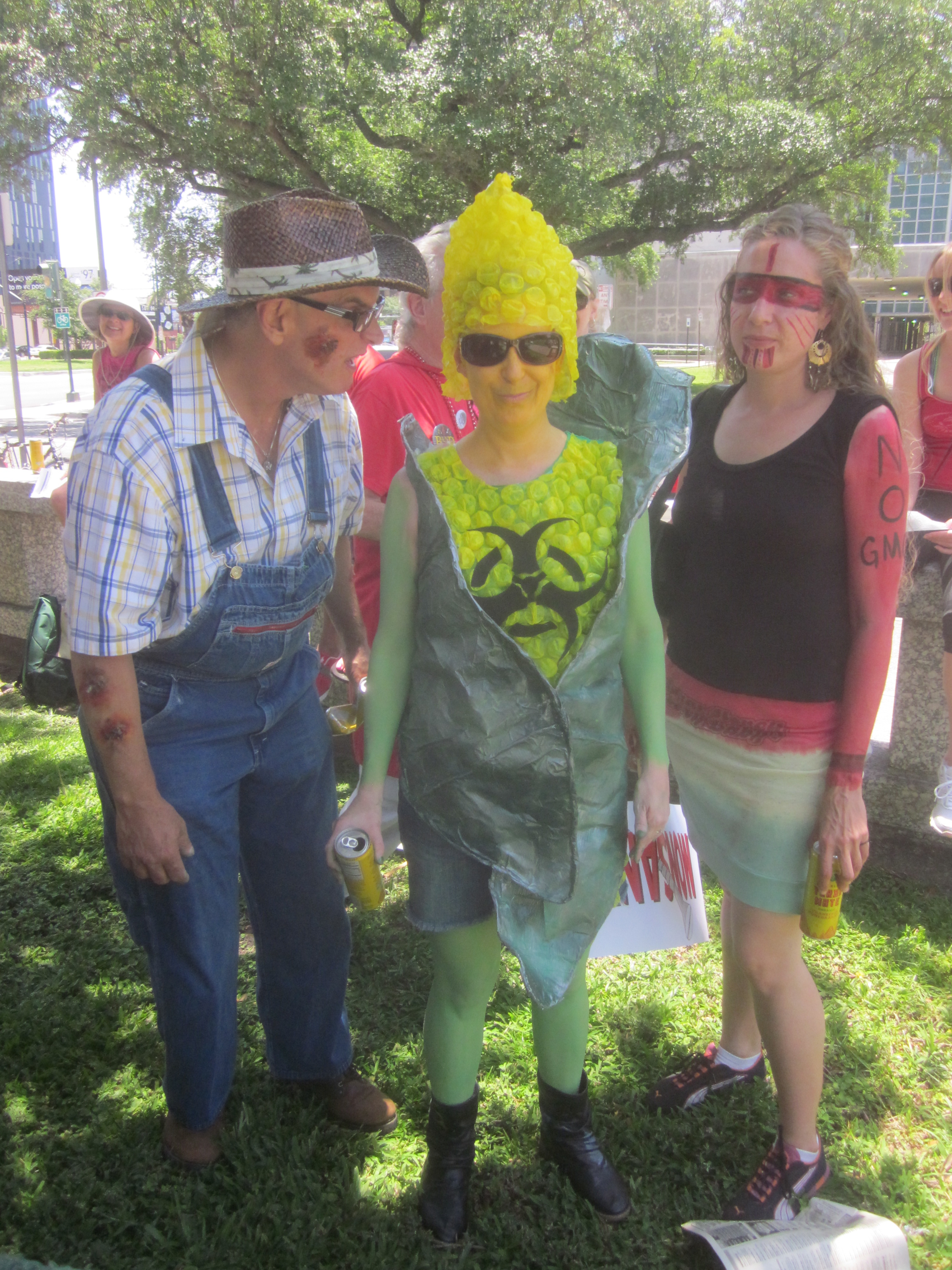
    File:AntiMonsanto March GMO Corn.jpg
    March Against Monsanto
    New Orleans, May 2013
    The authors of the paper took 200 blood samples from 4 different types of patients who had different intestinal diagnoses, and included patients with no symptoms (i.e. negative control). They separated the blood from the plasma, they extracted the DNA and they pooled the DNA from each group. So, for example, if there were 50 patients with irritable bowel syndrome and 50 control patients, each group of 50 was pooled into a single tube so that there were only 2 samples at the end: one sample representing the irritable bowel syndrome patients and another representing controls. I can only think of two reasons why they'd do this: 1) sequencing each individual patient was too expensive (next generation sequencing is pretty pricey) or 2) they didn't have enough DNA since there's so little floating around in the plasma. I'm leaning towards #2, because they also concentrated the sample (i.e. removed water content so that there was more DNA in less liquid). Then, they sequenced the pools of samples using next-generation sequencing technology (for the NGS gurus, they used SOLiD with 50nt reads).

    The authors threw out all the DNA sequences from vertabraes because a) they weren't interested in human DNA sequences and b) it would be difficult to tell what organism the DNA came from due to similarities in DNA sequences (after all, we're more similar to chickens that we'd like to believe). Then they took the remaining DNA samples and compared them to a database of sequences of chloroplast DNA. Chloroplast DNA is unique because it is separate from the DNA found in the nucleus of the cell. It is circular and there are multiple copies of chloroplast DNA in each plant cell (sounds a bit like mitochondrial DNA, if you're familiar with that from 23&Me and other ancestry DNA sequencing services). The authors found that there were quite a few sequences that matched chloroplast DNA, particularly the DNA sequences for potato and tomato chloroplast, and actually got more data of tomato DNA than human DNA in some regions.

    Then, they wanted to determine the original size of the DNA fragment. It is generally thought that most DNA gets fragmented during the digestion process, so if they could demonstrate that the DNA that was sequenced was long, then you might be able to make a case that entire genes could be floating around. However, this is pretty difficult to do because during the process of preparing a sample for next-generation sequencing, you generally chop up the DNA into bits and pieces. If we go to a cookie analogy, imagine that you make chocolate chip cookies with walnuts. You buy a bag of walnut pieces, which may contain a few whole walnuts. The recipe calls for throwing the walnut pieces into the food processor before you add them to the cookie batter. So it's pretty tough to figure out how many whole walnuts were in the bag by eating the cookies.

    To get around this conundrum, the authors physically filtered the DNA according to size. They had 3 filtration sizes which became 3 different samples. Each sample was then chopped up and when it was sequenced, you could infer that the DNA's original size was larger than the filtration cutoff (for the science-y people, they ran a gel and cut three bands from the smear: >10kb, 10kb-200bp, and ~200bp). If we go back to our walnut analogy, imagine that you take the bag of walnut pieces and pass it through a 1/2 inch sieve. Everything that gets caught goes in one bowl. Then you take the stuff that went through and you pass it through a 1/4 inch sieve. You repeat the process with a 1/8 inch sieve. Then you take the 3 bowls of walnuts and you put each one of them through the food processor, make the cookie batter, and end up with 3 batches of cookies. All 3 batches will have roughly the same walnut size, but you can infer that the original starting size of the walnut pieces was >1/2", 1/2-1/4", and 1/4"-1/8" (BTW, I honestly don't understand this whole Imperial measurement system. The Canadian AND Venezuelan parts of me are shuddering as I write this).

    The authors infer that a lot of DNA sequence came from the largest filter size from patients diagnosed with irritable bowel syndrome (IBS). The filter size that they used was 10 kilobases. If you consider that the average size of a human gene is 10-15 kilobases, then this implies that most of the cell-free DNA in patients with IBS is large enough to have a gene in it.

    The authors then wanted to confirm their findings. They searched publicly available DNA databases and found 909 samples of cell-free DNA, representing 907 individuals. They also found non-human DNA in the electronic data, but noted that the amount that was present had "large variations" from person to person. They followed the same data analysis workflow as before. The DNA in the public databases came from 2 projects: one project was studying patients with an autoimmune disorder and the second was trying to detect fetal DNA in pregnant women. Here's the breakdown of the DNA from the two studies.
    1. Autoimmune disorder: The most common matches were to chloroplast DNA from Brassica rapa, as well as orange. The machine used to sequence these samples was not the same as the one used by the authors. The authors state that there's a lot of plant DNA in these samples when compared to control. Since this is the same observation noted in the patients with irritable bowel syndrome, the authors state that high levels of plant DNA circulating in plasma may be associated with inflammation. I'm holding my tongue on all criticisms of this paper till I'm done with the description, but I can't help myself from saying "wha-aaaat? how did you jump from here to there???"
    2. Pregnant women: There wasn't much sequencing data from these samples, but the authors were able to determine that the most common match to chloroplast DNA were from soybean. Additionally, since these samples weren't actually pooled together (i.e., each sample was sequenced independently), the authors were able to identify differences in the abundance of plant DNA in these samples, which represents differences in the diets of the pregnant women. For example, if I had been a participant in this study, I have no doubt that the authors would have identified an abnormally high level of chloroplast DNA from pomegranates. This finding suggests that the plant DNA detected in these samples are not actually contaminants.
    The authors conclude that the presence of foreign DNA in the plasma is not unusual, that its concentration is highest in patients with inflammation, and that these findings should lead us to revisit our views on the degradation and absorption of DNA/RNA in our bodies.

    I think that the finding that there is plant DNA circulating in our bodies isn't a big deal. The paper provides several references for studies that have examined this issue and have found DNA from our food in our organs and tissues (see here and here). However, it's always been chopped up. This paper suggests that full genes are floating about, which is what raised the alarm flags for activists. So I'm going to focus on this unique finding from the paper. 

    Getting back to the paper. I have several issues with the experiment the authors performed in their lab (i.e not the data analysis work on the plasma samples from autoimmune disorder patients or pregnant women):
    1) Contamination. As I stated at the beginning of this piece, the authors are sequencing the DNA in the space between our cells. There's very little DNA in there so the risk of sequencing a contaminant is high. To recap from last week's piece, it's a matter of abundance: if you had actual cellular material, all that plant DNA would get drowned out by the vast amount of human DNA that you'd end up sequencing. As mentioned last week, like having 1 cup batter of chocolate chip-raisin cookies with a handful of cranberries that your kid threw in versus 1 gallon batter of chocolate chip-raisin cookies with the same amount of cranberries. Since the authors probably had very little DNA when they started, any DNA from the environment or from their equipment could be mistaken for DNA from their samples.
    Since the risk of contamination is higher, the authors should have included a negative control. Going back to the cookie analogy, to determine if the cranberries are part of the chocolate chip-raisin mix in the cookies or not, there's a very simple test: make a batch of cookies with no chocolate chips or raisins. If you end up with cranberries in there, then you can conclude that the cranberries are a contaminant (i.e. your kid walked by and threw a handful in there). If there are no cranberries, then you can conclude that the cranberries were part of the chocolate chip-raisin mix. The authors failed to do this simple test.
    I was happy to see that this point is also noted in the comments section by a scientist who has published a rebuttal. I'll review this further below. 
    2) The authors find high levels of tomato and potato DNA in all their samples. This doesn't make much sense to me. Why would the authors find the same two DNA samples to be of highest abundance in all the different patient types and filtration sizes? As seen in the study with pregnant women, there should be variation between the different groups. I know that tomatoes definitely don't make up the biggest part of my veggie/fruit diet, so this is really weird.
    3) The authors find abnormally high levels of plant DNA in the irritable bowel syndrome patients, but only for the largest filtration size. The authors conclude that foreign DNA in plasma is elevated in patients with inflammation. As such, you'd expect to see increased levels of foreign DNA in every filtration size. However, the medium and small filtration sizes have plant DNA levels equivalent to the patients with no symptoms. There's one thing that I think you can agree with: concluding that "plant DNA is elevated in patients with inflamation" is a HUGE conclusion to draw from a single sequencing run.
    4) Ummmmm... Filtration controls? Where are you? The authors infer DNA size based on physical separation of DNA. However, they have no controls. It would be fairly simple to just spike in DNA of different, but known, sizes (the use of a "ladder" in DNA size separation is very, very, very, very, very common, so it would have been trivial to do). This size control would have also helped determine contamination: if you find some of the large DNA control in the small DNA results, then you know that some sort of contamination may have occurred during the filtration process. It would be similar to placing a brazil nut, a hazelnut, and a peanut whose sizes you've measured into the walnut size separation. The brazil nut should filter out with the large walnut chunks, the hazelnut with the medium chunks and the peanut should end up in the small bits and pieces. If any pieces of these nuts appear in the "wrong" cookie batch, then you could conclude that there was contamination. Maybe you didn't wash the blade on your food processor well enough. Or maybe you got carried away by the music you were playing in the kitchen and made an inadvertent mistake. Seriously. Anything is possible, and if you don't have controls, you'll never know. 
    5) Choice of NGS technology. As I mentioned in the first installment in this series, different NGS companies have different chemistries, all of which have pros and cons. The technology that the authors of this study chose required the DNA to get chopped up to small bits and pieces, leading them to infer that the DNA was long, but not measuring the length directly. They didn't have to use that specific chemistry. I would have chosen a technology that would have allowed them to sequence longer lengths of DNA (for the NGS geeks, I think that PacBio might have been a better fit). It depends on how much DNA they had to start with, and they don't really elaborate this point. However, given the fact that they pooled together DNA from 50 patients, I think it might have been possible.
    6) Why chloroplast DNA? I think it's odd that they focused exclusively on the  analysis of DNA from the chloroplast, and not the DNA from the nucleus of the plant cell. Is this truly reflective of all the DNA in the cell? Is it possible that due to the circular nature of chloroplast DNA, it can avoid degradation more readily? Since there are more copies of chloroplast DNA in each cell, how does this affect their findings?

    But, let's imagine that the findings of the paper are not an error and that someone else actually replicated these findings. What does it mean?

    • This has little to do with GMOs. I feel the need to reiterate that if a full gene for a transgenic food is floating in our system, so is a full gene from a traditionally bred crop. Additionally, scientists haven't gotten smart enough to invent new genes/proteins, so whatever gene is in a transgenic crop, also comes from nature. The only difference is what you ate in order to get that gene into your system. This fact alone should debunk titles of articles such as "Genetically Modified DNA transfers from food to blood" (also, now that you've gone through this post, you know that it's not actually blood that was studied here)
    • As I said at the beginning of this post: then what? Somehow these whole genes that are floating about have to make their way through the outermost layer of the cell (cell membrane), avoid getting degraded by proteins that chop up foreign DNA, and make their way into the nucleus. Within the nucleus of our cells, it would then somehow have to "trick" regulatory proteins so that they think that the foreign gene has to be turned on, so that it gets made into RNA. An alternate option is for the foreign DNA to get integrated into the cell's DNA (i.e. act like a virus), even though it doesn't have any of the viral proteins/genes. But let's say that somehow one of these scenarios were to play out, and the gene that was floating about was the transgenic gene from a GMO corn (the odds of this alone are 1 or 2 in 32000, since there are only 1-2 transgenic genes added to corn, which has 32000 genes), and that this DNA somehow managed to defy all odds and get made into RNA. The RNA will then be made into a protein. And let's pretend that this happens stably: meaning that this protein keeps getting made. That's 1 cell out of the 46-68 trillion in our body that is making a foreign protein. The two most likely fates for this protein produced by this single cell in your body is a) your immune system will take care of matters or b) the protein will just fade away (all proteins have a half life; they don't just float around forever). If you want to lose sleep over that, go right ahead.  I'm more worried about the zombie apocalypse, and the CDC thinks you should be too.
    There has been a rebuttal paper written to the PLoS paper, however, it is in peer review and has not yet been published, so I'm hesitant to add its findings. I'll update this post once the paper is accepted.

    Well, that's paper #1. Next week, we'll review a controversial paper that found that small RNA from rice can regulate a protein in our bodies and all the subsequent papers that attempted to replicate the findings.

    Friday, May 23, 2014

    An Intro to Next-Generation Sequencing (NGS) - Part 1

    A few months back, I wrote a post about the alleged dangers of eating DNA from a GMO. In summary, our bodies don't know the difference between DNA derived from a transgenic crop or a traditionally bred crop. We've been eating cellular material for quite some time now and we haven't become green from eating veggies. (I wonder if the Creation Museum has a display of a caveman chomping down on some delicious dinosaur ribs.)

    However, I still see many arguments about how we've now found DNA from our food circulating in our blood or how we've found RNA from rice inside us. Many of these studies have been enabled through a technology known as Next-Generation Sequencing (NGS). In the spirit of full disclosure, this is my field of work: I've worked in companies that develop NGS technologies for 6 years: the last 4 have been in internal product development, and this last year has been in the R&D lab itself. In this series of posts I'm going to explain the controversies about a few papers that have used NGS technologies and are used as examples of how eating DNA from a GMO is dangerous.

    This post gives an overview of the technology and the considerations in experimental design. Next week (or sometime after), I'll post reviews of the papers.

    Let’s begin with a brief history of DNA sequencing: prior to NGS, you generally had to know what you were going to sequence. You couldn't just randomly take a DNA sample and tell a lab: “tell me what's in here”. You had to know what you were looking for in order to do your experimental design. Even in forensics, which has yet to adopt NGS, they look at very specific and well characterized regions of the genome. There were ways around this to allow for discovery, but the processes were long and very expensive, which was why the sequencing of the human genome took 13 years (1990-2003) and cost 2.7 billion dollars. The most popular technologies behind next-generation sequencing follow the same general principle: you take your DNA, you chop it up, you amplify it so that the machines have enough to work with and detect, then you put it on a machine that “reads” each DNA base and tells you what’s there. There are several different chemistries for sequencing, each patented by a different company, and each of which has its pros and cons. With the advent of NGS, scientists found that they could virtually sequence anything. There have been a lot of exploratory experiments going on in the past decade based on this technology. Not only that, but you aren’t necessarily restricted to the analysis of DNA. You can indirectly sequence RNA, DNA modifications and structures, as well as DNA bound to proteins.

    Here are some examples of the amazing things that have been done with NGS (and why):

    Pretty awesome, eh? The possibilities are seemingly endless. I actually want a sequencer in my garage, but I’ve been deterred by the thought that my employers would notice if one went missing… (and a shout-out to the spouse for cleaning out the garage for Mother’s Day!! Don’t worry. I won’t turn it into a lab. For now).

    Hopefully, you can imagine the applications and experiments that could be performed in agricultural biotechnology, as well as studies pertaining to transgenic organisms. As I've mentioned before, companies use NGS to determine if there were any unintended consequences of the transgenic event. Studies could also be performed to determine the impact of glyphosate on the gut microbiome or on bacteria in the soil, or to determine what happens to the DNA of the food we eat. In another possible application, the mysterious pathogenic organism that Dr Don Huber claims to be enriched in GMOs could also be sequenced, if he were to release the organism (outlined eloquently by Dr Kevin Folta in this change.org petition).

    There are a few more concepts that require explanation. One of the key questions in an NGS experiment is “how much sequencing do I have to do”? Here’s an analogy: imagine you’re baking oatmeal cookies with chocolate chips and raisins. You make a big batch of cookie dough. Your kid walks by and throws in a very small handful of dried cranberries. Then you bake cookies. For the sake of this analogy, we have to imagine that the number of cookies you could bake was infinite (i.e. you had an endless amount of cookie dough).

    How many cookies do you have to bake and eat in order to determine the ratio of chocolate chips to raisins? If you bake 10 of them, you probably get a good enough idea, right? What if you want to know if there are any raisins at all. You might be able to get away with baking a single cookie. But what if you want to know how many cranberries your kid threw in. Do you bake 20? 30? 100? The number of cookies that you bake depends on the question that you’re asking.

    The same is true in the world of NGS. If you’re looking for a mutation that you inherited from your mom and is present in all your cells, you can do a “standard” amount of sequencing for the technology you’re using. But what if you suspect that you might be HIV positive, and the event that led to this suspicion occurred very recently? How much DNA do you have to sequence in order to detect the presence of the virus? The answer will be very different. It's basically a question of abundance. Looking for something that is present in every cell will require much less sequencing than looking for something that is much more rare.
    File:Chocolate Chip Oatmeal Cookies detail.jpg
    Oatmeal chocolate chip cookies.
    Beware! You may become a chocolate chip
    oatmeal cookie by absorbing its DNA!
    From Wikimedia commons.
    But I wish it was from cookies in my pantry.
    Alas...
    The next concept is that of input material vs contaminant. In our cookie analogy, imagine that you make 2 batches of cookies: a 1 cup batch and a 1 gallon batch. Since the toddler in this analogy is of the “up-to-no-good-variety”, he manages to throw the same amount of cranberries in both batches without you noticing. For the small batch, odds are that you’ll have a cranberry in every cookie you bake. You might even conclude that the cookies weren’t chocolate-raisin, but were chocolate-raisin-cranberry. However, for the second and larger batch, you could probably eat a full dozen without coming across a single cranberry. If you do come across a cranberry, you’d probably say “Huh… What’s that doing in there?”

    In the world of NGS, the same is true. If you start with a lot of DNA, you can exclude contaminants more easily/readily than if you start with a small amount, and the inclusion of appropriate controls is a key element. Contamination does happen, however, its impact on your experiment depends on the amount of sequencing you perform and the question you're trying to get answered. For example, the world's first next-gen sequencing diagnostic assay actually allows for 10% contamination before the experiment is deemed a failure. However, the assay's accuracy is still incredible because it does a lot of sequencing and is asking a simple question (i.e, it's only looking for chocolate chips and raisins, not cranberries).

    So you see that there are many considerations on how to use the technology depending on the experiment, and every experiment needs to use different controls even though the technology used may be the same. However, such considerations can be often overlooked.

    Make sense? Alrighty! I hope to see you here next week when we start reviewing the papers.

    BTW, my husband wanted me to change cranberries to walnuts. But I pointed out that walnuts belong in a cookie and would never be mistaken for a contaminant, whereas cranberries don't belong in there. He has seen the error in his views and now agrees.