Showing posts with label secret. Show all posts

Sunday, December 14, 2014

Quit asking me to prove that GMOs are safe

So I'm writing this article out of frustration and it's probably going to be a long rant. It's inspired by several of the comments that I've received for articles I've written for the Genetic Literacy Project.

Quit asking me to prove to you that GMOs are safe. That's a ridiculous request which I won't be able to do. To explain why, we're going to do an exercise and try to prove that water is safe. The first thing to keep in mind is that there are many aspects to safety. In our example, we have to select an aspect of water safety that we want to examine: health impact, water transportation, water treatment, proper water storage, etc. For our example, we're going to select "health impact".

Then, we have to come up with a null hypothesis. Spouse, I know that it's counter-intuitive and the double negatives in these statements suck, but unfortunately, it's a key aspect of this whole article. The baseline for much of research is that there's no impact or no difference. It's the researcher's responsibility to disprove that hypothesis, ie. to show that there is a difference or that there is an impact. So for our exercise, our hypothesis will be "Drinking water does not cause cancer".

Next step, narrow down the hypothesis to a question, i.e what we're actually going to test. For our study, we're going to say "Individuals who have lived in the Alameda County of the San Francisco Bay Area for 10-20 years and drink 2-4 cups of tap water daily do not have a greater incidence of breast cancer than the national average".

We conduct our study and gather data which will probably take a few years. Then we apply the proper statistics. If our study finds a difference, then we've disproven our null hypothesis and much hoopla will be made. If there's no difference, then our null hypothesis still stands and our study will be published in a not-so-important journal and we won't win the Nobel prize.

So, let's say that we find no difference in breast cancer incidence in water drinkers. Have we "proven" that water is "safe"? No. All we've done is add data to the body of evidence that suggests that drinking water does not cause cancer and that it's safe to drink it. But you haven't "proven that it's safe". In fact, water can be considered downright dangerous. Drink too little and you die; drink too much and you die; if it's not properly purified you can diet; etc. The experiments that have been performed have helped identify the possible dangers inherent in water and how to minimize the risks.

Here are a few other examples of a broad hypothesis along with a more narrow question of what will be tested:

Broad: The MMR vaccine does not cause autism. Narrow: There is no significant difference in the incidence of autism between African-American children who have received Merck's MMR vaccine in the San Jose Bay Area and controls.

Broad: Eating transgenic crops does not harm the gut. Narrow: There is no significant difference in the relative abundance of X bacteria in the intestinal flora of pigs fed a diet consisting of 30% genetically modified Bt-corn for 30 days compared to a control diet.

Again, let's say that you are unable to disprove your null hypothesis. Does that mean that you've proven that the MMR vaccine doesn't cause autism? No. Have you proven that GMOs do not impact the bacteria in the gut? No. What you've done is add data to a body of evidence that suggests that the MMR vaccine doesn't cause autism and that GMOs don't cause harm.

Until someone comes up with a study showing that A causes B, then the null hypothesis is what we turn to: A does not cause B. Otherwise you can hypothesize that when you drop something, it's caused by a ghost who pushed it off your counter, or that earthquakes are caused by invisible dragons jumping all at the same time, and people have to "prove you wrong".... That's not the way it works. Dragons didn't cause the earthquake and ghosts didn't cause the bottle to fall, until you can prove otherwise.

So when you ask me to prove to you that GMOs are safe or to provide a paper that has this evidence, that is absolutely the wrong thing to be asking. Ask a specific question and then try to find the data showing that it DOES cause harm. And I can't provide you with that either because I haven't read a well-designed, well-executed study demonstrating that GMOs cause harm or have a negative health impact. If you have a study at hand, by all means, send it my way.

THIS is why scientists stress the number of studies that have examined GMOs. THIS is why scientists stress the statements made by academic and scientific societies about GMOs. Because no single study proves safety: its the sum of the studies, the body of data, the totality of research that's been done which suggest that the current GMOs on the market are safe.

My last point is this: as I noted above, negative data or being unable to disprove your hypothesis is not sexy. It doesn't really build a career for a research scientist in the current academic system, nor do you get big grants. So many researchers will not pursue a path where they don't see fruitful results. I don't agree with the system and think that it needs to change and its one of many reasons why I'm in the private sector. But for now, this is what scientists in the public arena have to deal with. So if you don't see a study being conducted, maybe that's why. Instead of thinking that it's because the big-fluoride cartel is paying off scientists, it's more likely that a scientist doesn't want to waste her time to figure out if fluoridation of water causes breast cancer when there's no logical way she could see that happening. Maybe the reason why no one has published a paper examining a link between Round-Up Ready corn and Alzheimer isn't because Monsanto is breaking scientists' kneecaps; rather, it's because the experts in the field have seen no reason to pursue that path based on the evidence at hand. Maybe the reason why you can't find data comparing the incidence rate of autism in African-American children in a population of vaccinated children vs a population of controls isn't because big-Pharma is paying off the big journals, but it's probably because such a study would never be approved by an ethics board because you're putting the un-vaccinated population at risk. 

If you want to see that data, by all means: spend 10 years of your life in school earning less than minimum wage, and then try to find a granting agency that will fund your study based on whatever evidence and reasoning you have. Best of luck to you in your future career path!!

Sunday, March 9, 2014

Getting E. coli poisoning from GMOs

I can't sleep. It's 1:00AM, and instead of tossing and turning and keeping my husband awake, I've opted for exhausting myself by writing.

This week's post is brought to you courtesy of Twitter. It all started when my twitter feed linked me to a doozy of a story, about how you can get E. coli poisoning from GMOs. The author outlines that E.coli is used during the course of genetic engineering to replicate DNA since it is highly prolific. But, the author highlights, it is also able to transfer DNA laterally to and from other species. Then the author says: "It is possible that a mutated form of e-coli resulting from the cloning process used in creating GMOs could get into the gut of a person or animal that eats a transgenic plant." The author then highlights that Dupont has partnered with the USDA in "identifying hard-to-identify strains of E.coli". The theory comes full circle with the statement: "with this convenient partnership, even if harmful strains of e-coli relating to GMOs are discovered, it is likely that the public will never hear it from the USDA or DuPont."

I feel like the author of this post missed out on an opportunity to write for the X-files a few years back.

I then spent two days with the individuals posting these articles trying to discover how this could happen, but it never when beyond "the YUK factor" of using E.coli in generating our food. I even offered a 1 hour tutorial to share information on E.coli's use in genetic engineering, which got turned down (I wonder how my previous customers would feel if they knew that I was offering consulting services FOR FREE on the interwebz). What I did notice was that there were a couple of comments that probably made great memes for someone which got retweeted a whole bunch of times. They were mostly about how our babies are being exposed to E.coli and how our GMO corn is contaminated with E.coli. YUK.

To quote one of my colleagues, "my biggest concern is the unpredictability of evolutionary mutability, and the off-target effect of E. coli-mediated GMO excrutabilation likely resulting in contamination/Monsantinization of our 1.21 gigawatt-phase diarrhea chute." Doesn't make sense? Well, neither does the spontaneous mutation of E.coli from GMOs.

Since my tutorial was turned down, I will write down a few facts about E.coli's use in genetic engineering here.
  • E.coli is used in the lab specifically because the strain used IS NOT HARMFUL. The non-virulent nature of the bacteria isn't due to a mutation that might spontaneously arise to make it virulent again. There are entire genes that are different between virulent and non-virulent strains of E.coli. In fact, this paper that looked at 61 different strains of E.coli found that only 80% of their genomes are in common. That's much less than the >95% that we share in common with chimps.  
  • E.coli is used in the lab because it grows like crazy. When it replicates it also copies its DNA.
  • If you add the DNA that you're interested in studying to E.coli's DNA, then that will also replicate.
  • Why would you do this? Well, many procedures in the lab require a lot of DNA (by "a lot", I actually mean microgram or nanogram quantities. But for a molecular biologist, that's a lot). So how else can you get that much DNA that you're interested in? The issue of amplifying and copying DNA is not unique to the process of making GMOs. So the technique of adding/removing DNA from E.coli, also known as cloning, is very common.
  • Here's an extremely simplistic overview of E.coli cloning: to add/remove DNA, you add an enzyme that cuts your gene of interest (enzyme is known as "restriction enzyme"). Then you purify the piece that was cut. The way that your gene was cut will be in a specific pattern, similar to that of a puzzle piece. Then, you cut the bacterial DNA with the same enzyme so that the two puzzle pieces will fit together. The pieces get "glued" together with yet another enzyme known as a "ligase". The glued piece of DNA goes into the bacteria, which then replicates. A few hours later... voila!! You have lots of bacteria that have lots of your DNA of interest.
  • But then, and here's the part that the authors of the lovely article above fail to mention, you have to get your DNA out of the E.coli. To get the DNA out of the bacteria, by definition, involves killing the bacteria. You pop the bacteria open, you clean up the goop, and you have bacterial DNA. THEN, you have to cut the DNA again so that you can get that piece of DNA that you were trying to amplify all along. So you leave the E.coli DNA behind, which again, was inconveniently left out in the article above. I've even made a pretty picture :)

  • If you add DNA for entire genes to bacteria, sometimes they can actually produce that protein. This is the life-saving technology used to generate insulin, many synthetic vitamins, and drugs. In the case of insulin, the strain of bacteria used is E.coli. And despite my searches on the web, I've been unable to find a case of someone getting E.coli poisoning from insulin. Try telling a diabetic that there's a YUK factor when it comes to their insulin.

So, today (which, at 4AM is actually yesterday) is International Women's Day and I'm going to end with a very personal comment here: To my fellow women. To all the brave moms out there doing their best, just like me. You do the groundbreaking women in science an immense disservice by willingly choosing to remain ignorant on a topic and then perpetuating erroneous information. We women in science do what we do only because there was a Rosalind Franklin and a Nettie Stevens who paved the way for us. And you're dropping shards of glass on that path. I kid you not. When you're up-in-arms about babies being exposed to E.coli through GMOs, you spread misinformation, perhaps even prey on the susceptibilities of other moms, and you perpetuate decade-old stereotypes about gender. The specific one I refer to is depicted in this oft-used clip from the Simpsons, where Mrs Lovejoy appears in town-hall meetings where progressive topics are addressed screaming "Think of the children!" and pulling her hair out. The specific stereotype I refer to is that we are emotionally driven creatures who sacrifice logic and common-sense when it comes to the safety of our children. Aren't we supposed to be helping each other out? Aren't we supposed to be part of a brighter generation of women who can be moms AND be smart? So why is it that you willingly turn down knowledge and choose to spew gibberish about how "GMOs are changing our evolution"? To paraphrase a recent interview I saw with Neil deGrasse Tyson, I can't blame you if you are unaware of scientific facts and truths. That is probably just a factor of the education system that exists today. However (and this part is my own opinion, not Dr. Tyson's), I can blame you if someone tries to correct you and educate you on these scientific truths and you choose to ignore them.

So let me make this abundantly clear: there is NOTHING, let me repeat that: NOTHING, written in that article about the risks and dangers of E.coli's use in genetic engineering that is accurate. If you want to argue against GMOs, please use arguments that are evidence based and do not propagate scientific illiteracy. Think of the children!

Saturday, February 22, 2014

GMOs and toxins leach through your skin


Last week, the tweets were flying furiously in a "Right to Know" campaign regarding fem care products (for more information, see here). Apparently, there's concern over the fact that feminine hygiene products are not labelled, we do not know what's in them, and that may include GMO cotton. Two "experiments" were performed:


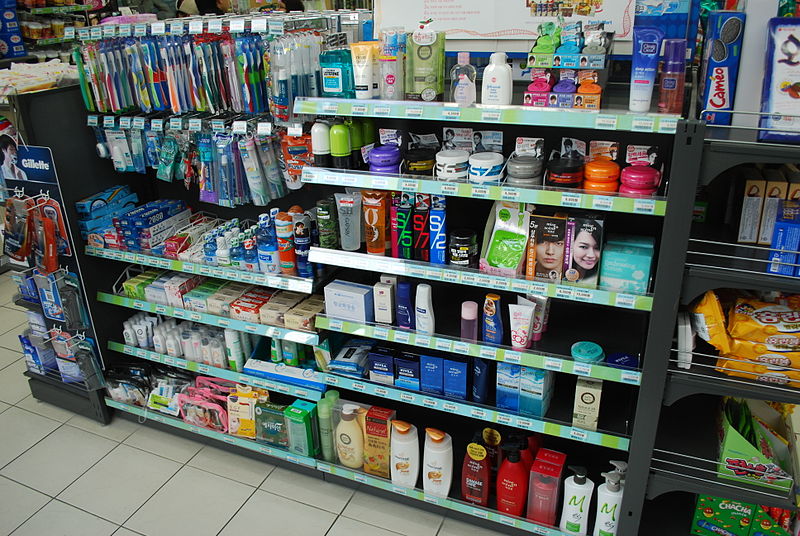
File:Familymart sunc^n.eko 02.JPG
Every item here is potentially toxic
Wikipedia Commons
1) Two pads were incinerated in someone's backyard: one was Always and one was organic cotton. The Always pad burned differently and released a lot of "toxins".
2) Two tampons were submerged in ultra-purified water on someone's kitchen table: one was O.B and one was organic cotton. The O.B tampon supposedly released a lot more fibers, which are assumed to be rayon, and the O.B tampon also developed spots, which are assumed to be mold.

Based on these experiments, there's a petition to Procter & Gamble to disclose the make up of their fem care products.

The concern is that the contents of the fem care products will leach into our systems, since "our skin is the largest and most absorbent organ in our body" (that's from Dr Mercola's site, highlighting the dangers of inorganic fem care products).

I'll begin with the fact that there's no evidence for the causation or even association between synthetic fem care products and health issues. Let me outline the steps I took:
With 1337 studies performed, the alleged toxicity of fem care products is not an issue to our doctors or to the FDA. Instead of speculating that it's due to payoffs from big corporations like P&G or Unilever, I will propose that it's because it's not a problem.  

There are several issues at hand. One is that the team or individual behind this whole movement has not done their homework. If I was able to find this information during my lunch break at work, then so could they. This is perhaps best highlighted by the fact that O.B tampons are not made by P&G and that their petition on change.org is to the incorrect person. As to the burning of the products, I hate to say it but that experiment is up there with putting salt water fish in fresh water to see if they'll die. Always products contain glue, plastic liners, and other oil-based compounds which anyone would expect to burn differently from an organic cotton pad. As for the mold, if you look at the pictures those brown specs are present even at 2 hours. But even at 24 hours, the likelihood that it's mold is pretty low, and it's probably just cotton fibers. 

Second is that if you are going to argue that toxins from GMOs and from hygenic products leach into your system through your skin, here's a list of items that you should be aware of:
  • The cotton clothes you wear are probably made of GM cotton
  • The natural baby care products may contain ingredients from GM crops. 
  • The fabric in your car and child's car seat might contain GM cotton
  • The production of many types of fabrics and plastics require alcohol, which might be ethanol made from GM corn or soybeans
  • Your wool clothes might be from animals that are fed GM alfalfa 
  • Your leather furniture might be from animals that are given GM feed
  • The taxi that you take might be running on ethanol gas from GM corn, as well as the municipal vehicles in your area. All that GM DNA might be in the air...
And then there's all those toxins from all the other things that come into contact with your skin and how they might impact your health:
  • Your cell phone cover is in your hand or in your pocket for most of the day, and probably contains "toxins" that make the plastic durable and robust
  • The mouse on your computer has a rubber wheel, which may contain natural rubber from a farm that douses its trees with pesticides
  • Your desk and table are probably made of composite wood that release tons of formaldehyde that you're breathing and is entering your pores
  • and a million different things
There is no evidence that any of this is true. In the past, I've shown how we might create a sharknado or a zombie apocalypse, in similar hypothetical statements. At this point, we're beyond sharknados. We're at sharktopi (is that the plural of a sharktopus?). 

My next point is regarding your "right to know". I am willing to bet Baby-Boy's two chubby cheeks that in the highly unlikely scenario that P&G responds to your request, the list of ingredients in their feminine care products will include compounds with words like "poly-X" or "ethyl-Y" or "nitro-Z" and you will be displeased because they won't sound "natural". Someone out there will do a bit of research and will probably discover that those compounds are also present in other ominous things like trash bags or the sole of your shoes, and you will panic. So instead of making a ruckus and trying to get a giant corporation to disclose trade secrets which they are not legally obliged to provide, why don't you just buy organic fem care products and be done with it?

Finally, the video with the fem care product bonfire was put together by a company that sells "100% natural fem care products". So isn't there a possibility that you're being duped by a company that's trying to sell their product into believing that there's an issue when there really isn't one?

I'd like to close with a personal note. My sister, the mother of two phenomenal kids, is a chemical engineer and has been working for P&G for over 5 years. She started as an intern and has worked with them in two different countries, so I've met a few of her friends and colleagues. And she worked in their fem care product lines. I've always felt that the mark of a good product is brand loyalty, especially from its own employees. And I have never seen a company with employees as loyal to their products as P&G, with the possible exceptions of Google and Apple. So if you think that they put products out there without proper testing, you're wrong. If you think they'd create products that would knowingly endanger you, you're outta whack.

I've said this before and I'll say it again: yes, big corporations (correction: ALL corporations including companies that make "100% natural tampons") are in the business of making money and to create a crummy product or a product that would be recalled would not be conducive to their goals.

Also, P&G makes awesome commercials for the Olympics :)

YAY TEAM CANADA!!!!


Monday, February 10, 2014

Whether or not Round-Up Kills

This post is going to look into the topic of Round-Up.

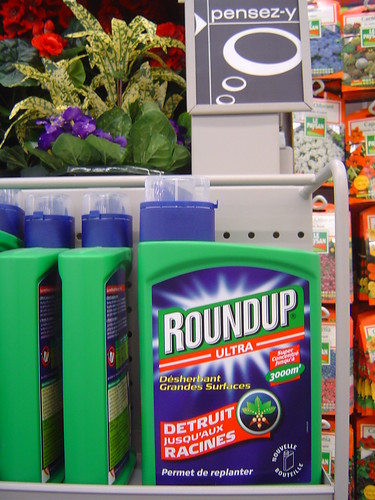
You may have seen bottles of Round-Up at Home Depot and other retail stores. It's a weed and grass killer that many people use to get rid of weeds/grass on driveways, pathways or flower beds. The active ingredient in the herbicide is glyphosate.

So how does glyphosate kill weeds and other plants (source is here)? It basically interferes with a biochemical pathway which plants need in order to make 3 crucial amino acids (in case you were curious, the name of the pathway is the shikimate pathway). It messes up one of the enzymes needed in the pathway, the amino acids never get made, and the plant dies. The enzyme that gets inhibited by glyphosate is called 5-enolpyruvylshikimate-3-phosphate synthase, but it's been wisely abbreviated as EPSP (phew!). I could only find evidence that this enzyme exists in plants, fungi, and microbes. So it does not seem to be present in animals.

There is a bacteria whose EPSP enzyme is not affected by glyphosate. The EPSP synthase gene from that bacteria has been inserted into specific crops, thereby creating glyphosate resistant crops. As a consequence, growers can spray their fields with glyphosate/Round-Up. Most plants/weeds will die because the EPSP synthase enzyme will be inhibited. But the transgenic crop will continue to grow because it has the bacterial version of EPSP synthase, whose activity is unaffected by glyphosate.

Round-up Resistant crops have been growing long enough that Monsanto's patent on Round-up has expired (note that the patent on the GMO seeds has not expired, so I think that growers who use Monsanto Round-up Resistant crops have to use Monsanto's Round-up). (I've been corrected on that last comment. Growers who use Monsanto seeds to not have to use Monsanto's Round-Up).

This week I received requests from two people to review papers that look at glyphosate causing cell death. The most recent paper published on the topic came out last month in the International Journal of Toxicology (as a side-note, it took me forever to get a copy of this paper. We scientists should be more vocal in our demands for open-access journals). Due to this paper, there has been a flurry of articles/blogs highlighting the dangers of GMOs. So what did they do in the paper? Basically, they took liver cell lines and grew them under different conditions. As treatments, they used diluted Round-Up, as well as several components of Round-Up. Then they examined cell death both directly, as well as biochemically (they looked for the presence/absence of proteins associated with cell death). To summarize their results, the cells treated with Round-Up died.

Similar studies had been performed by other groups. A study published in 2009 (which I do not have access to and could only read the abstract) reported similar findings. What was unique about the more recent paper is that they used less Round-Up for their study.

I bet you're wondering if I will stop feeding my family Round-Up Resistant GMOs over this. There are several thoughts going through my head over this.

1) How much glyphosate are you really eating? When I first read these papers, my gut reaction was "hmmm... I should do a better job washing my fruits and veggies". But then it hit me: none of my fruits and veggies are glyphosate-resistant GMOs. Round-Up Ready seeds are cash crops: canola, corn, cotton, etc. Our bananas, apples, delicious peaches, and succulent pomegranates are not GMOs (although I've previously argued for a GMO pomegranate... I'd buy that sucker in a heartbeat). By the time any components from glyphosate-resistant GMOs enter my food, they've been washed, stripped, boiled, pressed and reduced to a compound. So how much glyphosate is actually there? I tried to do a web search to find out how much glyphosate is in processed food, and I had a tough time with that search. Thanks to twitter, it was suggested that I review a report put together by the USDA's Agricultural Marketing Service (thank you @geneticmaize!). This annual report examines the amount of pesticide in our food and water, including items such as baby food. For the analysis, all items are prepared in the way we normally eat them; for example, tangerines are peeled, bell peppers are gently washed under cold water, etc. They examine both imported and national produce, and one of the items they examined in their 2011 report (released in 2013) was the amount of glyphosate in soybean. The results state: "Of the 300 samples tested, 271 (90.3 percent) of samples contained glyphosate at levels ranging from 0.26 parts per million (ppm) to 18.5 ppm." The tolerance of glyphosate is set at 20 ppm, so none of the samples tested exceeded the maximum allowable levels. So we're not eating any more than we should in our food supply. However, one may argue that perhaps the "amount we should be eating" is not set correctly, which is what the papers I originally cited above will argue.  That brings us to point #2.

2) In vivo and in vitro studies are vastly different. Spouse: I know you just read that and said "what??" In vitro means tissue culture or lab work. In vivo means live rats, mice, or other model organisms. So what does my statement mean? Here's an example: we use Windex every once in a while (no where near as much as we should, according to My Big Fat Greek Wedding). You probably don't think twice about it. Now, would you ever consider spraying it directly in your eye? Would you consider spraying it on an open wound, even if you water it down? If you were to design an experiment to test the toxicity of Windex, which one is more accurate: to spray Windex, use it as instructed, and measure what it does to you over a period of time? Or would you spray it on an open wound in diluted form and measure what it does over a period of time? You could argue that you should do both. However, scenario #2 is not what happens in the real world.  In vitro studies (which are tissue cultures in the lab), are basically cells out in the open. It's difficult to work with them and I'm sure you heard me whine and complain about my cells "dying" when I was back in grad school. They're finicky and they die when you don't shower them with loving care. They're excellent models for many things. But I'm not sure if they're a good model for measuring toxicity, because it's like spraying something directly onto an open wound, but with the effect amplified x1000. Which is why toxicity for EVERY COMPOUND I USE IN THE LAB is measured with in vivo models (that means rats and mice). Check out the Material Safety Data Sheet for water: they tested it on rats. If we are to begin measuring the toxicity of compounds using in vitro assays, then we have to go back and do this for everything we use and eat in our daily lives. I am willing to bet a trip for two to Morocco (which is the next place on my list of places to visit... hint, hint Spouse), that the majority of the compounds we use in our daily lives will kill cells in vitro.

Even the use of in vivo studies can be argued as being too rigorous. I remember that one of the post-docs that did my training would seldom wear gloves in the lab, even when working with Ethidium Bromide, which is a known carcinogen. When I asked him what the hell he was doing, he said that to replicate the rat studies which demonstrate the carcinogenic behaviour of Ethidium Bromide in humans, you'd have to take a syringe-full of the compound and inject it directly into your bloodstream. Of course, I use gloves and goggles when working with that crap because I believe that safety recommendations are put in place for a reason, but I thought that it was an interesting argument (although I don't agree with it). Which brings me to point #3.

3) No one ever said glyphosate was good for you. Dude, it's an herbicide. People have committed suicide by drinking it. As such, you have to wear protective gear and use it carefully, as outlined in the instructions for use and the Material Safety Data Sheet. Check out all the warning messages and icons on the instructions for use (yeah... they're in Spanish, but I'm testing to see if icons are universal :) ). So am I surprised that in vitro cells will die with glyphosate? Hellz to the no. But, that brings us to an important point: these studies may highlight the fact that it's important to review maximum limits of exposure for workers who work with these chemicals and that employees should be properly trained. This 2013 story from the Associated Press highlights what can happen when glyphosate is improperly used and when proper safety standards are not in place (although it's been spun by many to be about the evils of Monsanto and glyphosate). But that also brings me to my final point.

4) Is it safer than the alternative? If you believe that there's a lot of glyphosate residue in processed food and that glyphosate in our food supply will harm you, but that it's being covered up Monsanto, then the alternative is to eat certified organic foods. Keep in mind that if you believe that story, then you have to believe that this is a massive cover-up involving hundreds of scientists who want to kill you (in which case, you've uncovered the Oath of all Scientists). Then the question becomes: is it any better? A very common misconception is that organic food crops do not use pesticide/herbicide. They do. I think that the only way to make sure that absolutely no pesticide/herbicide is used is to grow your own food, but it would be incredibly naive to believe that everyone could grow their own foods. The full list of substances that are allowed under US Organic Certification is listed here. For example, if you scan through the list you'll see that hydrogen peroxide is an allowable substance for plant disease control. Here's the MSDS sheet for hydrogen peroxide. If you've ever had it applied to a wound as a disinfectant, I probably don't need to tell you that if you dilute it and put it on cells in tissue culture, they'll probably die.

So, what's my conclusion? I don't think there's enough evidence that sufficient glyphosate is in our food supply to merit any alarm or that there's enough glyphosate in our food supply to be toxic to us. I think that the revision for limits of exposure of chemicals is a good idea if there's any new data suggesting that it should be re-examined. I don't think that the papers on cells dying in tissue culture are enough evidence to merit this re-examination. I think that glyphosate is a chemical that is dangerous at certain limits, but I also don't think that glyphosate should be treated any differently than any other chemical and compound that we're exposed to. I'm of the opinion that there's no global conspiracy to poison us: that scientists are out there doing their job just like you and me. As a consequence, I believe that Material Safety Data Sheets and EPA guidelines are drafted and implemented with a body of data that has been gathered after proper testing. Otherwise, I'm truly SOL given the stuff I work with in the lab all day.

3/23/2015: The International Agency for Research on Cancer recently updated their categorization for glyphosate based on existing research, suggesting that it's a possible carcinogen (group 2A classification). I have to read the papers that they reviewed to determine exactly what studies placed the compound in this category. However, it's important to note that their categorization was extremely specific: risk for non-Hodgkin lymphoma in agricultural exposure, and evidence in animal models, so it meshes with what I've already written above. I'll write up a new post after I've reviewed the papers.

Sunday, November 17, 2013

The Secret Oath of Scientists

This week's blog is a departure from my usual format. Because I have something to confess. To all my fellow scientists: the jig is up. It's time. I hate to be the first person to say something, but I think that people are on to us and it's better for us to come out with our hands up.

For me, it all started when I was a teen. I wanted to become a scientist because I wanted to increase the rate of cancer in our population. Not only cancer, but I wanted to make something that would cause autism amongst children. You heard me right. At first, this dream was a small flickering of a flame, but during grad school it became a full blown bonfire. The thousands of dollars that I made during my 10 years of education only fanned these flames and pushed me onward towards my goal. Soon I learned that I wasn't the only one with such hidden secrets: while chatting with my professors in 3-star Michelin restaurants, I learned that my fellow grad-students all had similar goals. Some were trying to figure out how to extend the life of the rich and famous in wealthy countries. Others had less lofty goals like figuring out how to cause irritable bowel syndrome in adults. I signed the Oath, which is signed by every scientist throughout the world, where we solemnly swear to maintain the secrecy of our true natures and passions.

We fooled our friends and families into believing that we were working long hours and that our careers were toilsome. But in truth, we made tons of money mostly by reviewing papers. Reviewing papers was a cash-cow. Reviewing a paper that the government or a company didn't want published was a dream come true: not only would you get paid by the journal, but you'd also get paid by the government/company for rejecting the paper!! My professor bought his first Porsche when he rejected a paper that conclusively proved that an herbal supplement cured cancer. My supervising post-doc bought his first apartment in Paris for burning a paper that showed how GMOs cause some weird leaky gut disease. Why on Earth would we want to get that knowledge out!??! Oh, the naïveté of some people is just plain cute.

Once I graduated, I started working for big biotech companies because I thought it would be the best way to accomplish my goals. I have a few friends in big pharma and we all agree that it's been a really interesting experience! We've learned that if we make bad products, no one really cares. In fact, our shareholders just buy more and more stocks and the media never reports on it. Also, all the big pharma and biotech companies don't compete against one another; if one company manages to make a vaccine that causes autism, not only do all the other companies stay quiet about it, but they all share the knowledge with one another. It's all part of the Oath. And an additional dream of mine has finally come true: I have the enormous blessing of never being allowed to quit or to take advantage of the federal whistleblower laws. Even if I disagreed with all the cover-ups that these companies do or disapproved of all these untested drugs that get released, there's nothing I could do about it. It's so great working for companies where every employee shares your vision of world domination and control.

Some day I hope to work for a company that slaughters puppies to fuel our manufacturing systems, where we make drugs to remove arm flab, test it on the homeless in Panama, and have a survival rate of 30%.

So there you have it. It feels real good to get this off my chest. I really want to thank everyone who has recently posted articles about the evils of vaccines and GMOs. It has made me realize that there's now a critical mass of people who are aware of what we scientists do, so we'd better quit while we're ahead.