picked him/her up a few days later fully potty-trained, they'd be gazillionaires.
.JPG) |
| Anti-GMO protest at BIO international conference 2014 in San Diego Taken by a friend who attended. |
1) Multiple Toxins From GMOs Detected In Maternal and Fetal Blood.
I first reviewed this paper last year. The authors identified Bt protein Cry1Ab in maternal and fetal blood. This protein is found in some GMOs, but is also commonly used as a pesticide in organic farming. The biggest issue I had with the paper was the "so what" factor. We lack the receptors for the protein, so it has no impact on us. Did you know that chocolate is toxic to dogs? Are you concerned that it might be toxic to you? Probably not (if you are concerned, then you've missed out on the greatest source of joy known to human taste buds...) Some chemical compounds behave differently between species, and both Bt's Cry1Ab and chocolate are examples of this.
Since my original review last year, I've learned that the paper is deeply flawed due to the fact that the researchers' measurements were based on an experiment/assay that was designed to detect Bt in plants, not in humans. This post in Biofortified.org eloquently outlines that the pregnant women in the study would have had to eat several kilos of corn in order to get the Bt measurements that were detected in their blood.
2) DNA From Genetically Modified Crops Can Be Transferred Into Humans Who Eat Them
Ummmm... No. That's not the paper's findings. I reviewed this one fairly recently. The paper found that whole genes from our food can be detected in our plasma. That does not mean that it's been integrated into our DNA: it means that it's been found floating in the space between cells. And that's any food, not just GMOs. I also outlined how the paper's findings are most likely due to contamination, since they did not include a negative control. However, even if the findings are accurate, DNA from GMOs behave no differently than DNA from organic or conventional foods. If you aren't concerned about the DNA from blueberries "transferring" into you, then you should not be concerned about DNA from GMOs either.
3) New Study Links GMOs To Gluten Disorders That Affect 18 Million Americans
The article states that this was a study from the Institute for Responsible Technology (IRT). There is no such study. There's a post on a webpage, but there isn't a peer reviewed article. I wrote about gluten allergies and GMOs last year, and it's a case of association with no causation (i.e the incidence of gluten allergies have increased over the past decade and the amount of GMOs we eat have increased too. But, so have the number of plasma screens manufactured). Additionally, GMO wheat has not been commercialized. The Celiac Disease foundation has spoken out against the IRT's report (Note that the IRT is an NGO which advocates for the elimination of GMOs from our food supply. It's not a university, college, or research institution). Recent studies have shed doubt on the existence of non-Celiac gluten sensitivity. So this "study" is blaming GMOs for something that may not even exist.
4) Study Links Genetically Modified Corn to Rat Tumors
This is the infamous Seralini paper, which was retracted, and recently republished in a different journal. This was the very first paper I reviewed, and frankly, I'm surprised it was ever published (which explains the retraction). The paper identified tumors in rats who were fed GMOs long-term, but the strain of rat used was predisposed to tumors. The paper did not perform statistical analyses and used too few rats, so it was not possible to determine if the tumors were due to the food or were due to the fact that the rats would get tumors regardless of what they were fed. A recent, fantastic re-analysis of their data suggests that their findings are due to chance. Finally, the findings from Seralini's paper are contrary to other long-term feeding studies (you can find a journal review here and a BioChica review here).
5) Glyphosate Induces Human Breast Cancer Cells Growth via Estrogen Receptors
This paper was interesting and here's the breakdown: as this Wikipedia article highlights, approximately 80% of breast cancer cases are hormone sensitive, meaning that they need estrogen in order to proliferate and spread. In this paper, they took 2 breast cancer cell lines: one was estrogen sensitive and one was not, and they examined the impact of increasing amounts of glyphosate on cell growth. They found that glyphosate has similar impact to breast cancer growth as estrogen, although not as strong, and did not have an impact on the proliferation of the non-hormone sensitive breast cancer cell line.
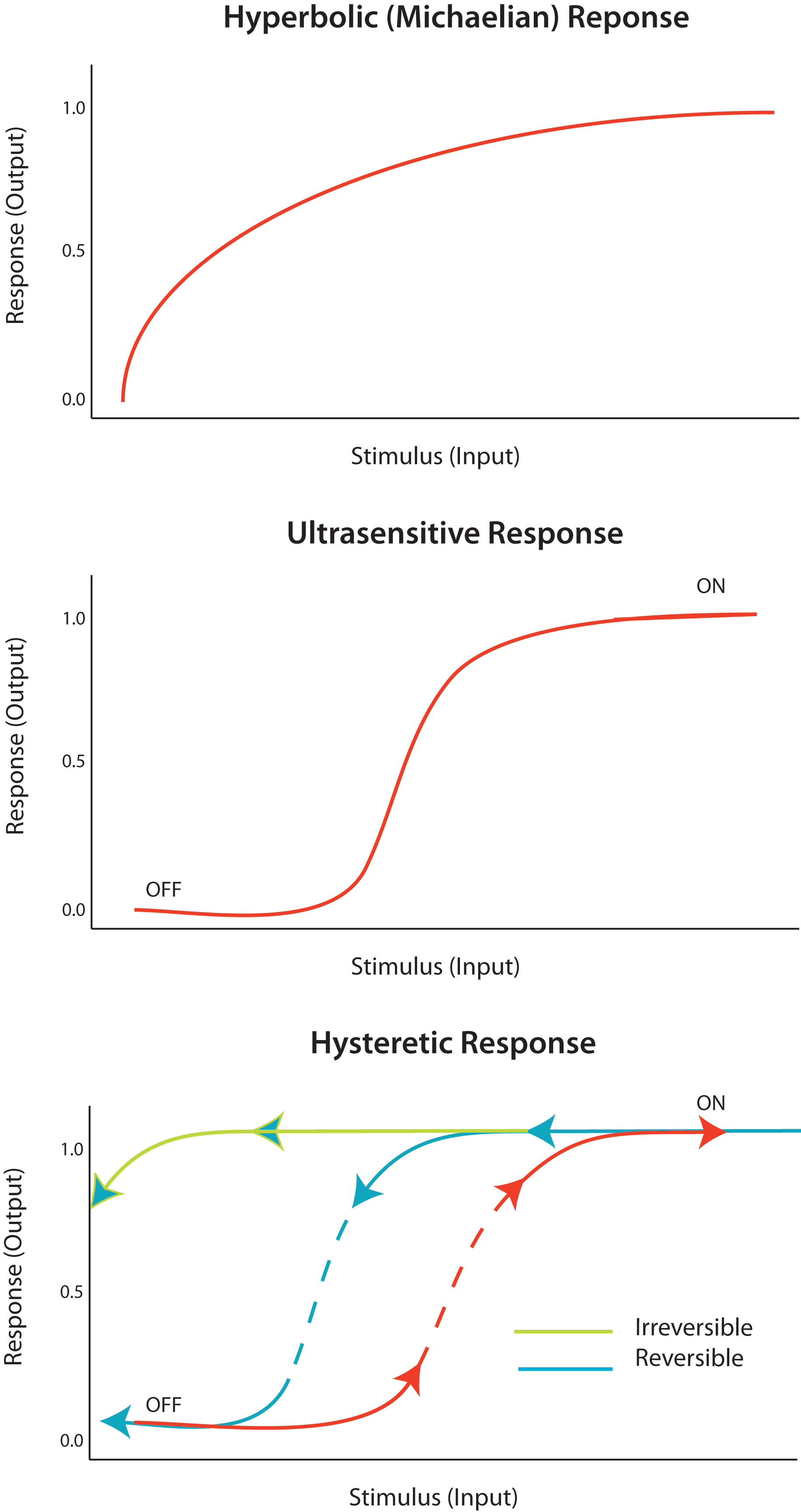
They did a series of experiments which suggest that this growth is mediated through estrogen receptors (suggesting that glyphosate is probably mimicking estrogen). I thought that it was an OK paper. The #1 issue I had with it were the dose-dependent effects. At high concentrations of glyphosate, the cell growth starts to dip back down to the level seen in controls. Here's the issue: often times, there's a saturation point when you're looking at dosage effects of a compound, meaning that at a certain point you won't get an effect no matter how much more of that compound you add. But based on my understanding, you shouldn't really get a decrease in the curve; it should just level out. Like the top two graphs:
 |
| From Wikimedia Commons |
In the past, I've highlighted the many issues that surround the use of in vitro assays. The authors of the paper highlight some of these issues, along with the fact that their data doesn't mesh with previous studies that have examined the impact of glyphosate on cell proliferation (this paper that suggests that glyphosate protects against cell proliferation in vitro in 8 different cancer cell lines and even states that it be developed into an anti-cancer drug...). They suggest that it may be due to a) the specific cell-line they used, b) their use of raw glyphosate (i.e. not a formulation, such as Round-Up) and c) the concentrations of glyphosate used.
Monsanto wrote a response to the paper stating that there are many studies that have examined the carcinogenicity of glyphosate and have found that the compound does not cause cancer. Many articles took this study to mean that glyphosate causes cancer when that is not the study's findings: their findings suggest that glyphosate may cause breast cancer to proliferate. Monsanto points out that this finding is contrary to the body of evidence that exists on the topic. As I previously mentioned, the authors admit to this fact and discuss that the next step should be to examine this issue in mice/rats models for breast cancer. I think that that's a great next step. I'd also look at this in a few more breast-cancer cell lines.
So, am I concerned about GMOs based on this paper? I think that this is probably the most compelling research paper that I've read about a potential health risk surrounding glyphosate, but my conclusion is that the study must be reproduced and its issues ironed out. The paper isn't really about GMOs: keep in mind that not all GMOs are glyphosate resistant (i.e. Round-up Ready) and the use of glyphosate is not limited to GMOs (I've said it before and I'll say it again: lumping crops into bins based on the method used to generate them does not make sense). Even a labeling law wouldn't help with that. Additionally, the paper does several experiments with a compound in soybeans that is known to be estrogen-like, and glyphosate's impact is very similar. Meaning that there are "natural" compounds in our food that seem to have the same impact on breast-cancer proliferation that this paper's findings suggest for glyphosate. In learning about this topic, I found quite a few publications that have examined soy food intake in patients with breast cancer (examples here, here, and here) and I couldn't find a study that had found a positive correlation. So more research is needed.
6) Glyphosate Linked To Birth Defects
Ummmmm... No. This is not a peer reviewed, published scientific study which the post claims. This is a publication by Earth Open Source, whose bias I have highlighted here.
7) Study Links Glyphosate To Autism, Parkinson’s and Alzheimer’s
The paper, doesn't constitute research. It's a hypothesis. I tried reading it several times and it didn't make sense. But I felt a lot better when I learned that I wasn't the only one who scratched my head at it: it was reviewed by Keith Kloor over at Discover Magazine who reported an apt comparison between the article and one of Glenn Beck's chalkboard drawings.
So how did it get published? The paper is printed in a pay-for-play journal (also known as predatory journal), meaning that for a fee, you can get nearly anything published. Spouse, I can hear you now... "What do you mean?? Isn't that against research?" Yes. It is. It sucks. There have been several exposés on pay-for-play journals, and many (including myself) believe that it's eroding the quality of science (here's an overview from Nature.com). In this exposé, the journalist cut-and-pasted two articles together: one was a geology paper and the other was a medical paper. For added effect, he added graphs about Mars and the footnotes were about wine chemistry. Yet the paper was accepted in several journals.
Spouse, I know your next question is "then why aren't you submitting tons of articles??". Well, there's the ethics thing, but it costs about $1800 to publish in these crummy journals. Hence the "pay-for-play" label. The important point is that it is often difficult for individuals to determine if the research is any good, unless they're an expert in the field. And, as outlined in the link to Discover Magazine, experts in the field have stated that this particular study is junk.
8) Chronically Ill Humans Have Higher Glyphosate Levels Than Healthy Humans
This paper is published in the Journal of Environmental and Analytical Toxicology, owned by the Omics publishing group. This publisher tops the list of predatory journals, and there's even a Wikipedia entry about the quality of their journals.
Notwithstanding, I read the paper and now my brain hurts from how painful it was to read. They examined glyphosate levels in humans and different animals. There's no indication of what was fed, how much was fed, how the animals were kept, or a million different variables for which there is no information. Any of these should invalidate the study. Their information about humans is even worse. It doesn't say anything about age, sex, weight, height, genetic background, how much food they ate, if they washed their food, how long they had been eating organic/conventional diets and, most mind-blowing of all, there's absolutely no definition for "chronically ill". I really don't know how you can draw any sort of conclusion from this study. Any single issue that I've listed here would be considered a fatal flaw that would exclude the paper from publication in a more prestigious journal, let alone having all of them combined in one hot mess.
9) Studies Link GMO Animal Feed to Severe Stomach Inflammation and Enlarged Uteri in Pigs
I read this study a while ago, but never wrote anything about it. The findings of the paper are pretty much in the title: they gave pigs GMO feed and non-GMO feed and identified differences between the two groups. I never wrote about it because to this day, the paper still isn't in PubMed, which is the NIH's database for scientific publications. It was because of this paper that I learned that PubMed doesn't index journals of low caliber or newly established journals. I felt like the NIH was weeding out the worst of the worst for me.
However, the paper has been thoroughly criticized by many. Here's a brief list of a few of the issues:
- This post, by Mark Lynas, highlights the degree to which the data is cherry-picked. The difference in "inflammation" between the GM-fed and non-GM-fed pigs is apparent only when you break down the degree of inflammation into subcategories, but there's no difference if you view it as a single category. Overall, there's a high rate of inflammation for both groups, which is not explained in the paper. At the same time, there are several parameters where GM-feed could be argued as having a protective effect (there's 50% fewer heart-abnormalities in pigs fed GM-grain), but this isn't discussed.
- As explained by Dr Anastasia Bodnar, the authors do not analyze the compositional differences in the feed between the two groups. Previous studies have determined that the environment (i.e., water, soil, geography) of a crop has a greater impact on proteins and metabolites than whether or not the crop is a GMO [my review of the topic is here]. As such, the differences seen in the pigs may not be due pesticides or presence/absence of the transgenic protein, rather, they may be due to differences in composition of the feed.
- The study is a fishing expedition. Meaning that they're looking for something, no matter what it may be. As outlined by Dr David Tribe, if you take 2 groups of things and measure ~20 parameters, one of them is bound to be different. The authors do not perform the proper statistics nor do they examine the relevance of the findings. Does it matter that certain variables are different between the groups? Why are they different?
- This interview with Val Giddings highlights that the animals had abnormally high rates of pneumonia, which points to the possibility that something wonky was going on.
10) GMO risk assessment is based on very little scientific evidence in the sense that the testing methods recommended are not adequate to ensure safety.
There are three papers associated with this bullet point. The first is a review and I agree with a few of the points it makes. It highlights the need for standardized tests and statistics in animal feeding studies for GMOs, and anyone who followed the Seralini debacle would probably agree. It summarizes papers that have performed feeding studies and their results. The biggest issue I have with the paper is that it doesn't remove flawed papers from their review list and it also doesn't distinguish between feeding studies for GMO crops that have been commercialized vs crops that have never been submitted for regulatory approval. However, the paper does not conclude that "GMO risk assessment is based on very little scientific evidence". The second paper is also a review/opinion, and the first author is affiliated with "Friends of the Earth". Skip! (Spouse, to clarify, the reason I'm skipping is a) it's not novel research, it's a review with an editorial slant and b) it's like reading an editorial by Syngenta advocating for looser regulation on GMOs. Of course that's what they'd advocate for! You don't even need to read it to know what they'll say). The third paper, is not even a review. It's an opinion/commentary published in 2002 in Nature Biotechnology (a high caliber journal). It outlines possible unintended consequences that could happen with a GMO, none of which have ever been documented/identified to the best of my knowledge.
My conclusion: none of these studies prove anything about GMOs. At best, they might suggest something and follow-up is needed. But, many are duds. Actually, to bring this article full-circle, a few are turds. Get it? Because of potty-training? Hilarious, right???

