Tuesday, January 21, 2014

GMOs resistant to viruses. How does that work?

During a nerdy web-surfing episode, I stumbled upon a database that listed commercial GMOs, the regions where they've been approved, and a description of the genetic modification. Pretty handy. While scrolling through the list, I observed that one of the more common modifications is to confer viral resistance or immunity to the plant. The transgene that is added to the plant is a protein from the virus itself. And then I wondered, "how does that work? How does a protein from the virus give the plant immunity?" I knew that plants didn't have antibodies, but that was about it. During my bachelor's degree, I took quite a few plant courses ("Plants as Human Resources" was really popular), including plant biochem courses in later years to meet the requirements for my biochemistry major. But thinking back on everything I learned, I don't think that the topic of the plant immune system ever came up.

As usual, the interwebs didn't let me down. I found a very confusing 2006 review in Nature entitled "The plant immune system". Plants don't have "mobile defender cells". Despite the fact that Google will try to convince you that these are accessories for your cell phones, the role of these defender cells (which include our white blood cells) is to swoop in and "zap" foreign cells. Instead of this highly effective mobile defense system, plants have an "innate immune system" where proteins on the surface of cells and within them recognize signals from pathogens and microbes. One study found that the Arabidopsis plant turns on over 1100 genes in less than 1 hour when it recognizes bacterial pathogens. Successful pathogens either manage to suppress the plant's immune response or dodge it altogether.

The next paper I read was a fantastic review written in 1999 by one of the scientists who made the first transgenic plant with a virus protein. Before I continue, the spouse-like voice in my head is telling me that I'll need to explain the structure of a virus.

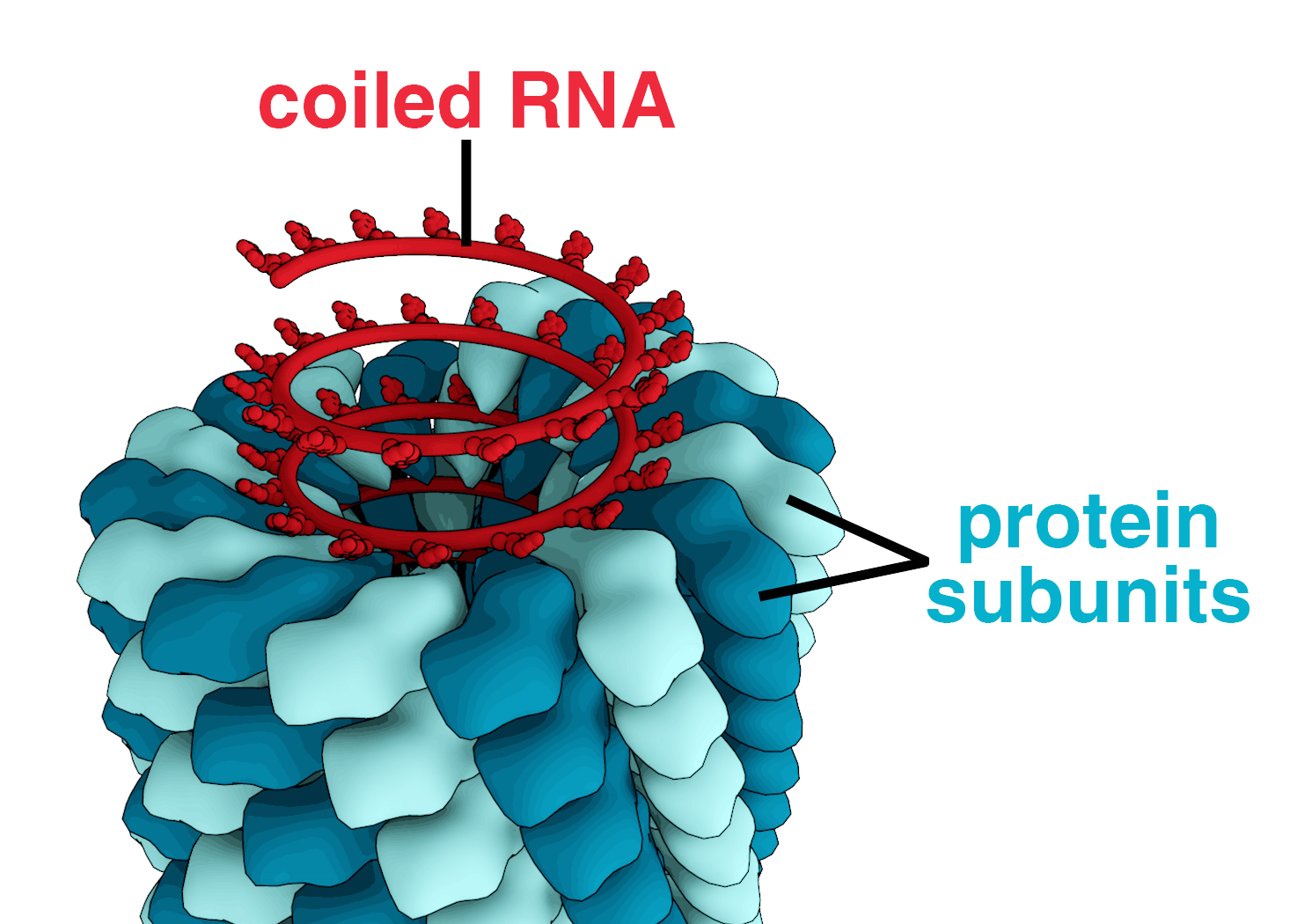
File:TMV structure simple.png
From Wikimedia Commons
Viruses are weird because it's hard to classify them as "living". They need a host cell so that they can replicate and spread, which is why they infect other organisms. They have several components and I'll focus on two of these in this article: the genetic material which is generally RNA, and a protein coat that protects the genetic material. In order to replicate and spread, the virus uses the host cell's machinery to make more of its protein components. Pretty sneaky, eh? Sort of like a thief breaking their way into your house and taking advantage of your lovely plumbing by taking a dump in your bathroom, on top of stealing all your stuff. That last analogy was inspired by my kid, who is currently pointing at his diaper and saying "Poop". I wonder what he needs?

Getting back to plant viruses. And yes... I did change his diaper.

So the review outlines that the first proposal to create a transgenic plant with a virus coat protein was made in 1981, when the author suggested creating plants resistant to the tobacco mosaic virus. The tobacco mosaic virus was the first virus ever discovered, is one of the most thoroughly studied viruses, and infects species other than tobacco (including tomatoes). The study was a joint collaboration between Monsanto and WashU in St Louis. It took several years until a tobacco plant was successfully made that was resistant to the virus, and where the next generation of plants were also resistant to infection by the virus.  Some plants were not resistant altogether, but it took longer for these plants to develop symptoms when compared to controls. The data were published in the journal Science in 1986 and the process was dubbed "coat-protein-mediated resistance" or CP-MR.

To understand how CP-MR works, several experiments were conducted. In the first, they infected the tobacco plants with the genetic material from the virus, meaning that the virus was missing the protective protein coat. They found that the genetically modified plants were more susceptible to infection by the genetic material when compared to control plants. That suggested that there was something in the coat-protein that had been added to the plant that interfered with the infection process early on. As an analogy, think of the virus as the pulp of an orange, as infection as the mess you leave on your counter when you squeeze out the juice, and the protein coat as the rind. In order to squirt the orange juice all over your kitchen counter, you have to remove the rind or at least cut through it. If there's something preventing you from cutting open the orange or removing the rind, then you'll never make a mess on your counter (i.e. infection will never happen). In this experiment, they handed over a pre-peeled orange for your squeezing pleasure, and found that a mess was easily made. So the results suggest that CP-MR doesn't have to do with the "squeezing" or infection process, rather, something prevents the removal of the rind. In the late 80's, several different studies were performed whose results backed up the hypothesis that the coat-protein transgene interferes with viral disassembly.

A few other interesting studies have been performed over the years, in attempts to better understand CP-MR. Some pretty cool experiments were the infection of the transgenic plants with different viruses that were similar to the tobacco virus, but not identical. They found that it's important for the coat proteins on the virus be similar to the coat protein genes in the transgenic plant, but that the sequence of the RNA in the virus doesn't really matter. In thinking about this, I thought it was an important finding because it would imply that the virus could mutate, but that CP-MR would continue working, although it may be to a lesser extent.

So, I like this whole story about CP-MR for many reasons. I think it's a cool, quirky oddity from nature. But I also think that it's a nice success story for the joint funding of research by public and private funds. Of course, the patent for CP-MR belongs to Monsanto and WashU, but apparently they've been working with different global institutions to create disease resistant crops. I have no doubt that Monsanto is making kajillions of dollars off of this, but it has led to the understanding of plant viruses, as well as the creation of some important crops. Some crops that use CP-MR are squash, papaya, and potato, and there are a few others approved in different countries.

Feel free to suggest future topics below.


Thursday, December 26, 2013

A look into Golden Rice

File:Golden Rice.jpg
http://commons.wikimedia.org/wiki/File:Golden_Rice.jpg
This week's blog is a look into the numerous claims about the properties of the controversial "Golden Rice".

So, I first learned about Golden Rice a few months ago, when I saw a viral video where a 14-year old girl who stood against GMOs was interviewed on CBC news (I'm going to miss CBC's coverage of the Winter Olympics this year... I don't think I'll be able to get it in CA). When the host asked her about the promise of Golden Rice, she said "Golden rice was scrapped because it didn't work. And in order for the average 11-year-old boy to get enough Vitamin A from rice he would have to eat 27 bowls of rice per day... The reason there is blindness isn't because there is a lack of Vitamin A in the rice, it's because their diets are simply rice."

So, what is "Golden Rice"? It's a grain of rice made by an eccentric food magnate as part of a contest, and if you get one, then you get to visit his biotech company. Hilarious! (I crack myself up sometimes...) Actually, Golden Rice is a genetically modified strain of rice that is not yet commercially available. It has been modified to produce beta-carotene, which is a precursor to vitamin A. Rice plants have beta-carotene in their leaves, but the endosperm (the white stuff that we eat) doesn't have any. Golden Rice has been modified with two genes that help the endosperm make beta-carotene: one gene is from the daffodil and the second is from a soil bacterium (all this information is brought to you courtesy of Wikipedia). The beta-carotene in the rice grain gives it a yellowish hue, which is why it's called "Golden Rice". In 2000, a paper was published in Science describing the grain of rice and mentions that Vitamin A deficiency is a serious health problem in at least 26 countries. WHO's numbers (World Health Organization) are much more staggering: Vitamin A deficiency is a public health issue in half of all nations. It leads to visual impairment and blindness, and significant increased risk for infection. Pregnant mothers are also at high risk during the third trimester when the demand for Vitamin A from the fetus and the mother are highest. As such, Vitamin A deficiency has been labelled by the WHO as the leading cause of preventable blindness in children: 250,000 to 500,000 vitamin A deficient children become blind every year, and half of them die within the first year of becoming blind. The purpose behind Golden Rice is to help improve diets by providing a rich source of beta-carotene for vitamin A biosynthesis, particularly since many regions with high rates of Vitamin A deficiency have rice as their primary staple.

Despite what is mentioned in the quote in the first paragraph, Golden Rice was never scrapped. A new strain of the rice (Golden Rice 2) was introduced in 2005, with 23x more beta-carotene. Golden Rice 2 replaced the daffodil gene with one from corn. So the project is alive and in full progress: the Golden Rice network has partners in numerous countries, and is supported by the International Rice Research Institute (IRRI). The partners work on performing field trials in their respective countries and work with local farmers to transfer knowledge and technology.

Sounds like a delightful project, right? Might even make scientists reconsider their Oaths. Next section focuses on arguments against Golden Rice and their validity.

A September 2013 opinion piece in Huffington Post raised numerous issues, and I'll go through them. But there are three primary concerns regarding the grain's efficacy in combating Vitamin A deficiency (the following section is quoted directly from the article, including the links):
  1. "After storing and cooking, will there be sufficient carotenoid levels left in Golden Rice to have an impact?
  2. How much remaining carotenoid will actually be "bioavailable" for already malnourished bodies to convert?
  3. And are there likely, unintended health and safety risks associated with consuming Golden Rice?

    We don’t know the answers to these questions, in large part because the necessary studies have not been completed (two flawed and controversial studies notwithstanding). Or if they have been conducted, they have not been published or released for public and independent scientific scrutiny."

Point #1:

Storage:
I found a paper from 2006, published in a journal of a rice research institute in Vietnam. They found that the amount of beta-carotene decreased between 5-10% after 5 months, and that the beta-carotene was more stable at 4ÂșC. The paper is pretty basic and I had a few issues with it: first, they dehusked the rice right before using it. I'm pretty sure that in the "real world" that's not what will happen. I think most people worldwide buy their rice dehusked/milled. Second, the significance was fairly weak (but still there) and they should have really looked beyond 5 months. So I definitely agree that more studies are needed about the proper storage of the rice. (In discussing this with my boss, she pointed out that even if the amount of beta-carotene in the rice decreases by 50% in 6 months, isn't it better than nothing?)

Cooking:
There have been a few human trials that have been published where they had to cook the rice in order to eat it (duh). I was able to find two feeding trials, and most recent one was from 2012, where they fed Golden Rice to 68 children from China. The study found that the beta-carotene in Golden Rice was as effective as pure beta-carotene oil, and better than spinach, at providing vitamin A to children. So why does the article from HuffPo call the study "flawed and controversial"? Apparently, the researchers cut corners and didn't fully inform the parents of the children or Chinese regulatory agencies about the fact that the rice was genetically modified. But as sleazy as the researchers may have been, many believe that the conclusions of the paper remain valid. The scientists have since been sacked. So, I'd say that this one has been semi-demonstrated, although not under the best circumstances. Also, the findings indicate that the response given by 14-year-old Rachel Parent to CBC's Kevin O'Leary was highly inaccurate.

So why do I say "semi-demonstrated"? The two feeding trials that I found have both consisted of providing the subjects with cooked meals that had been steamed, frozen until use, and then heated in a microwave. Prior to cooking the rice was stored at -80oC, so it isn't exactly a "real world" scenario, although it was necessary for these particular studies to maintain uniformity amongst all subjects. As such, there's no data on what happens when the rice is fried, or the countless other ways of preparing rice, including rice pudding (yummmmm... BTW, if you've never tried Iranian rice pudding, you definitely should).

It's also important to note that these feeding trials could not be performed on animals since the metabolism of beta-carotene in animals is different. So an animal feeding experiment would not answer questions about vitamin-A conversion in humans, and a whole slew of different animal trials would need to be performed in order to get a vague understanding of the numerous aspects of beta-carotene metabolism.

Point #2:

The reason why this point is raised is that individuals convert beta-carotene into vitamin A at different efficiencies depending on a variety of different factors, including malnutrition and intestinal health (parasites, infections, etc). I imagine that human feeding trials (such as the one performed in China) will help answer these questions. But differences in the conversion of beta-carotene into vitamin A between different individuals would be an issue with any source of beta-carotene, whether it's from a GMO or not, right?

ADDITION SEPT 4, 2014: Note that this is an instance where a human feeding trial is actually needed, because the goal of the crop is to address a human nutritional deficiency. The argument against human feeding trials for current GMOs is that animal trials provide us with the answers we need, which have to do with safety.

Point #3:

According to the Golden Rice project's webpage, they will comply with the regulatory requirements of each nation where the rice will be used. Since it isn't available yet, it makes sense that the tests haven't been done/completed. According to the same webpage, standard allergenic tests have also been done (bioinformatic prediction). They also state that gene expression profiling has been performed, and I think it would go a long way if that data were made available (for more information on this test, please view this previous post). Additionally, the Golden Rice Project webpage notes that the rice has been backcrossed with local varieties of rice from different countries, so that the rice is adapted to each location. I'd speculate that it makes sense to perform these tests using the local variety that will be submitted for approval in each country.  Maybe the authors are waiting to publish a huge paper at the end of their studies, who knows? However, if Point #3 is about GMOs in general, then there really are no grounds for the concern. As outlined previously, there are numerous long-term feeding studies in animals showing that there are no health impacts in eating GMOs (please read every entry in this blog for more details :) ).


Other concerns/complaints:

-This is just another way for Monsanto to make tons of money: the seed is not developed by Monsanto. The private partner in the endeavor is a company named Syngenta, who is making the seeds available for use freely, on humanitarian grounds. There's no Golden Rice-specific fertilizer or pesticide that needs to be used. Additionally, you can save seeds from one season to the next.

-There are better ways to address vitamin A deficiency: I'm sorry, but this is the lamest excuse ever. If the popular belief is that "the reason there is blindness isn't because there is a lack of Vitamin A in the rice, it's because their diets are simply rice" (quoted from the first paragraph), are you seriously going to change the diet of millions of people around the world? My rant on this is below.

My conclusion:

I think that Golden Rice has the potential to be a fantastic product. Potentially. It has the potential to benefit those who suffer from vitamin A deficiency, those who are at risk of developing it, as well as local farmers and traders. I think that there's still a ways to go, but that's understandable. I've always felt that the time and effort that science takes is grossly underestimated. For example, one of the projects I just completed consisted of a one month test to change an identical plastic consumable from one vendor to another. 1 month. For a piece of plastic. Now that I have the initial dataset, I have to start the project all over and go out till 3 months. In the end, the project will have lasted 5 months. For a piece of plastic from a highly reputable vendor. Keep in mind that this is a piece of plastic being used in a research environment where no humans/animals are at risk. So imagine how long it would take if my work were clinical in nature or subject to regulations. This powerpoint presentation by Syngenta (the private partner in the Golden Rice Project) outlines all the delays they've experienced in their research, including 2 years to transfer seeds from the Philippines to Vietnam. So I think it makes sense that they're still working on things. Yet according to numerous articles I've read, many feel that it's time to put Golden Rice aside because it has yet to deliver anything.

I have a few serious issues with the outrage over Golden Rice. A few months ago, anti-GMO activists vandalized a field of Golden Rice in the Philippines, allegedly setting back the study by a few months. Here's my beef: you can't complain that GMOs aren't tested thoroughly enough, and then destroy the progress being made in their testing. You can't state that Golden Rice has failed to deliver anything since its conception and that after many years of research it's "still stuck in the lab", and then hold-up its research or complain about the lack of thorough tests. Yes, there are many socio-economic factors involved in vitamin A deficiency and you can definitely argue that bio-enriching rice is not the best way to address the problem. If that's your argument, then go ahead and work on an alternative solution, but don't try to sabotage the ideas and potential improvements that others are working on. Alternative ideas that I've read about include providing vitamin supplements and teaching farmers how to grow leafy greens. Those sound like fantastic ideas. Go ahead. Start working on them. There's no reason why these efforts can't work in parallel to one another. Providing leafy greens and vitamin supplements would probably help prevent a whole slew of additional vitamin deficiencies. I'd like to believe that if Baby Boy and I were living in poverty and that we both suffered from malnutrition, that people looking into vitamin A deficiency would be trying any means at their disposal to help us out. So now it's my turn to ask: why hasn't it been done already? The alternative measures suggested are items that you could be working on right now or for the last 5 decades. If it's lack of funds and your argument is that Golden Rice is a "flashier" project with strong endorsements from the likes of the Bill and Melinda Gates Foundation, then perhaps there's a reason for that. Perhaps it's because, sadly enough, many realize that private funds are required for such endeavors and Golden Rice is the right fit to garner those funds. But as an individual raised in a developing nation, I can envision the logistical nightmare of getting vitamins into the hands of those who need it most or trying to convince populations to eat spinach when they aren't familiar with it. In general, products are most successful if they can be easily integrated into one's daily life and Golden Rice fits in this category.

According to the HuffPo article, the message we're being fed by the Golden Rice Project is to "swallow our technical fix, despite its failure to deliver on its promises, or you consign millions to misery and death." I don't think those are the two choices being offered. I think that the options are to keep quiet, embrace the Golden Rice Project's work, or to find an alternative solution and to work on it. I think that the message that the Project is also trying to convey is that roadblocks and baseless complaints won't help anyone. At least that's what I think they're trying to convey.

Biochica out.
Sunday, December 1, 2013

The Seralini saga continues

Well, I'm probably the last person writing about this. Tweets are flying and articles are being furiously typed about the latest in the Seralini scandal. Dear readers, if you've been following this blog since its inception, you'll know that the Seralini article and its retort by Monsanto were the first two items I ever reviewed (links here to the original article review and here to the review of Monsanto's response). This Thursday, the paper was retracted from the journal.

Unfortunately, I don't think this will die down. If anything, it will only make matters worse, because there are already conspiracy theories about how the paper was retracted due to the fact that one of the members of the journal's board is a former Monsanto employee. I've seen petitions and articles about how the biotech industry is attacking Dr Seralini and how we should ask the journal to reconsider their decision to retract the paper.

According to the most popular letter that I've seen circulated on this topic, there are only 3 reasons why an article should get retracted which based on the guidelines of the Committee of Publication Ethics (COPE):
• Clear evidence that the findings are unreliable due to misconduct (eg data fabrication) or
honest error
• Plagiarism or redundant publication
• Unethical research

COPE actually has a whole slew of guidelines and recommendations for unethical conduct and honest error, and I think the paper falls in the category of "honest error" as grounds for its retraction. But in speaking about this whole thing with the spouse, I think that it would have been better if the journal had admitted that the article should not have been published in the first place, and stated that the journal and its reviewers made a mistake. I know that it's wishful thinking. I know that it would never happen. But if the journal came out and stated, in an honest manner, the real reason why the article is being retracted then there would be no doubts and there could not be claims of secrecy or non-transparency, as reported by GM Watch's statement on the matter. The Editor did issue a statement, but fell short on accepting responsibility. I think the Journal's editorial staff should take some of the blame, because they definitely are not innocent by-standers in this matter. Let's face it: if I was able to find fatal flaws in the very first paper related to GMOs that I ever read, then their experienced reviewers should have definitely been able to do the same.

Actually, the real solution to this whole this is to redo the study properly...

Wednesday, November 27, 2013

Death Match: Transgenesis vs Traditional Breeding

For this week's blog, I wanted to learn and read papers about a common claim made by the pro-GMO scientists: that creating a crop by transgenesis is better than traditional methods for creating plants. I'll explain a bit more, but we'll have to start with the very basics: as this paper outlines, there are three broad categories of plant breeding, and for the sake of simplicity, we'll be focusing on only two of these:
  • Transgenics: when you take a gene from an organism and stick it into another organism that it traditionally could not breed with. These new species are popularly known as GMOs, and are subject to regulations.
  • Traditional breeding: every other method of creating a plant and are not subject to regulations. This includes mutagenesis through chemicals or through radiation, which brings about random mutations creating new traits. Reminds me of X-Men, the first movie, where they zapped the senator and made him a mutant. But that was in the good 'ol X-Men movie days... 
So, the pro-GMO parties state that creating a new strain of a plant through transgenesis can be better than mutagenesis, where you get random mutations, or even cross-breeding, where two genomes with thousands of genes integrate (although I wonder where Napoleon Dynamite would be if he didn't have a hybrid Liger). A few recent news articles have reported that plant breeders are turning more frequently to radiation and mutating chemicals to create new strains because there are fewer regulations, so this topic is all the more relevant.

Before you read on, I feel the need to clarify a few things. I've been working on this blog article for over one week, because the spouse is stuck on one fact: "How can nuking a plant be OK, but a GMO isn't? Do you mean to tell me that if a pomegranate with grape-size seeds appears in Fukushima, that's OK?" Spouse: you'll be reading this again in a few hours when I ask you to review. Don't get stuck on that. Read on. The whole point of this is to find out whether it is OK or not. (Addendum: it's important to note that plants derived through mutagenesis are not excluded from the "Certified-Organic" label. Transgenic crops, however, are excluded).

So this week, it's the battle of the methods thunderdome-style: traditional breeding vs transgenesis. Two methods enter, one method leaves... Or maybe neither one leaves. Or maybe both leave a little
bloody. We'll see. (BTW, I'm pretty proud of my little image here.)

Round 1: Mutagenesis vs Transgenesis

To get started, I reached out to the folks at Biofortified.org. I had tried finding a review on the topic, but I couldn't find a good comprehensive paper that summarized the different methods. Someone should get on that :) Anyway, they sent me a paper from the Proceedings of the National Academy of Sciences (PNAS), which served as a great starting point, because then I could start cross referencing.

This paper, released in 2008, looked at the expression of thousands of genes to find out if there were any unintentional changes in gene expression in transgenic crops (I can hear the spouse now saying "huh?"). Gene expression refers to how much of a gene is turned on or turned off, and is measured by amounts of RNA. If you remember high school biology, DNA is transcribed into RNA which is then translated into protein, and the protein is generally considered to be the final goal. Now, proteins generally do not work independently and often regulate one another. For example, if protein A and protein B work together in the cell and you change the amount of protein A, you might also affect protein B. That consequence is often easier to identify, particularly if you know that protein A and B work together. But sometimes, you see a change in protein C and then you scratch your head and try to think of how protein C could possibly be affected by protein A. So, in this study, they wanted to determine if there were any unintended changes in gene expression when you add a gene in a transgenic plant (i.e. GMO), and compare it to the unintended changes in gene expression when you create a plant by the more "traditional" mutagenesis route, such as by gamma-irradiation. Yes... Gamma-radiation is real and is not confined to creating the Hulk or other super-heroes (BTW, don't scientists in comic books seem incredibly error-prone?)

The study seemed pretty straightforward and included the appropriate controls (although the plants were grown in the lab). The authors compared transgenic rice strains (i.e. GMOs) and strains of rice generated through mutagenesis, to the closest non-modified strain (i.e control). The authors found that in all the strains, there were unintended changes in the expression of genes that are related to plant stress or defense, and the paper spends a lot of time breaking down these genes into various categories. There are also changes in gene expression in certain genes that might be related to the transgene or mutant gene itself (i.e. changes in protein B in my previous explanation). The authors draw several conclusions:
  • Although there were unintended consequences in gene expression using both methods, transgenic strains had fewer changes.
  • Changing a plant through mutagenesis or transgenesis creates stress in the plant and leads to changes in gene expression, which are carried through several generations.
  • The authors recommend that food safety assessments should be carried out on a case-by-case basis and not just limited to foods obtained through genetic engineering.
Round 1 Results: advantage to transgenics


Round 2: Hybrids vs Transgenics

So, at first I was a bit disappointed. I couldn't find a paper that had done a battle between hybrids created by cross-pollination/cross-breeding and GMOs. But then when I thought about it, a head-to-head battle didn't really make sense. What would you use as a control? What would be the GMO equivalent of a broccoflower? As a consolation, there were plenty of papers that had examined genetically modified strains of corn vs their non-GM control strains.

The most comprehensive paper I found was a 2010 paper that had looked at changes in gene expression, as well as proteins and metabolites, in Round-Up Ready corn and Bt corn, compared to the closest unmodified control. They used seeds from the same location over several years, as well as different locations in the same year, to make sure that they had accounted for geographical and year-of-harvest effects. Their conclusions are:
  • Year-to-year variation can account for more differences in gene expression, protein levels and metabolites than whether the plant is genetically modified.
  • Geographic location can account for more differences in gene expression, protein levels and metabolites than whether the plant is genetically modified.
  • The authors also reiterate that food safety assessments should be carried out on a case-case basis, rather than just lumping all genetically modified foods into one category.
There are many other papers that have done assessments on changes in gene expression in plants, and this freely available 2011 review does a really nice job categorizing the studies based on crop. If you quickly scan through it, you will see that it's a topic that has been studied quite a lot. So why is any of this important? Well, "substantial equivalence" is the starting point for food safety assessment. That means that you have to show that the food item is equivalent to conventional food in several different categories including nutrients, toxins, allergens, etc. So examining changes in gene expression is a different way (and I'd argue that it's a more rigorous way) of determining "substantial equivalence". There are a few conclusions from the review that are worth highlighting:
  • There doesn't seem to be a single, consistent method for assessing changes in gene expression. Each paper looks at different variables and factors, different number of plants, and with plants grown in different conditions. It would be nice to have some consistency.
  • Environmental effects consistently play a bigger role in gene expression than the transgene.
  • None of the large scale studies examining thousands of proteins, genes, and metabolites have raised any food safety concerns.
  • Since transgenics has less of an impact than other breeding methods, the regulatory standards on transgenics should be lowered (the authors highlight that the more likely scenario is that conventionally bred plants will be regulated).
I agree.  I fail to see how mutagenic technologies are any safer than transgenesis. I agree with the fact that food safety should be regulated and determined based on the trait and not based on the method used to generate that trait.

So, unfortunately, there was no clear victor in today's thunderdome because there haven't been enough head-to-head battles. What is clear is that stringent regulations against all forms of transgenics don't make sense considering their history of safety and substantial equivalence.

Sunday, November 17, 2013

The Secret Oath of Scientists

This week's blog is a departure from my usual format. Because I have something to confess. To all my fellow scientists: the jig is up. It's time. I hate to be the first person to say something, but I think that people are on to us and it's better for us to come out with our hands up.

For me, it all started when I was a teen. I wanted to become a scientist because I wanted to increase the rate of cancer in our population. Not only cancer, but I wanted to make something that would cause autism amongst children. You heard me right. At first, this dream was a small flickering of a flame, but during grad school it became a full blown bonfire. The thousands of dollars that I made during my 10 years of education only fanned these flames and pushed me onward towards my goal. Soon I learned that I wasn't the only one with such hidden secrets: while chatting with my professors in 3-star Michelin restaurants, I learned that my fellow grad-students all had similar goals. Some were trying to figure out how to extend the life of the rich and famous in wealthy countries. Others had less lofty goals like figuring out how to cause irritable bowel syndrome in adults. I signed the Oath, which is signed by every scientist throughout the world, where we solemnly swear to maintain the secrecy of our true natures and passions.

We fooled our friends and families into believing that we were working long hours and that our careers were toilsome. But in truth, we made tons of money mostly by reviewing papers. Reviewing papers was a cash-cow. Reviewing a paper that the government or a company didn't want published was a dream come true: not only would you get paid by the journal, but you'd also get paid by the government/company for rejecting the paper!! My professor bought his first Porsche when he rejected a paper that conclusively proved that an herbal supplement cured cancer. My supervising post-doc bought his first apartment in Paris for burning a paper that showed how GMOs cause some weird leaky gut disease. Why on Earth would we want to get that knowledge out!??! Oh, the naĂŻvetĂ© of some people is just plain cute.

Once I graduated, I started working for big biotech companies because I thought it would be the best way to accomplish my goals. I have a few friends in big pharma and we all agree that it's been a really interesting experience! We've learned that if we make bad products, no one really cares. In fact, our shareholders just buy more and more stocks and the media never reports on it. Also, all the big pharma and biotech companies don't compete against one another; if one company manages to make a vaccine that causes autism, not only do all the other companies stay quiet about it, but they all share the knowledge with one another. It's all part of the Oath. And an additional dream of mine has finally come true: I have the enormous blessing of never being allowed to quit or to take advantage of the federal whistleblower laws. Even if I disagreed with all the cover-ups that these companies do or disapproved of all these untested drugs that get released, there's nothing I could do about it. It's so great working for companies where every employee shares your vision of world domination and control.

Some day I hope to work for a company that slaughters puppies to fuel our manufacturing systems, where we make drugs to remove arm flab, test it on the homeless in Panama, and have a survival rate of 30%.

So there you have it. It feels real good to get this off my chest. I really want to thank everyone who has recently posted articles about the evils of vaccines and GMOs. It has made me realize that there's now a critical mass of people who are aware of what we scientists do, so we'd better quit while we're ahead.

Sunday, November 10, 2013

IRT - GM food supplement caused deadly epidemic

Before I get started, I have a confession to make: I love pomegranates. Love probably isn't a strong enough word. I ate 2-3 a day while I was pregnant, to the point that the hubby planted two trees for me (one of which had it's first fruit this year). But it's a "work food". Like crab legs. Or pumpkin seeds. You have to put in a good amount of effort before you can eat the stuff. Anyway, since it's pomegranate season, I've been eating them all the time and I woke up thinking "someone should make a pomegranate that's easier to clean". And I'm guessing I'm not the only one who wishes for this: Wikipedia has a good section dedicated to suggestions on cleaning out pomegranates (including my preferred method of cracking them open under water). Well, according to this review, a genetically modified pomegranate tree is possible because one has already been made to express GFP (green fluorescent protein). It's probably what Sheldon used to make his goldfish glow in the dark. The authors recommend making pomegranate crops that are stress tolerant or have other horticulturally-beneficial genes, but none have been made (although that hasn't stopped people from marketing GMO-free pomegranate juice). None of the suggestions in the review included recommendations on making the fruit easier to eat...

Now, getting onto juicier topics (no pun intended!)

If you've been following this blog, you'll know that I started reviewing the "Health Risks" section on the Institute for Responsible Technology's webpage several months ago. This was due to the fact that numerous anti-GMO webpages were using it as a resource, so I thought I should look into it. Today, I finish its review by covering a section entitled "GM food supplement caused deadly epidemic". I'll be honest here: I started out upbeat and open minded when I started reviewing the IRT's site, but I haven't come across a single valid statement. Consequently, every time I sit down to read from this webpage, I feel the same way as when I think about Jar Jar Binks. Or just Episode 1 in general. A sense of dread and gloom. Consequently, it's only this bowl of pomegranate that I'm currently eating that will get me through this last section.

The segment would have been more aptly entitled "Dietary supplement produced using recombinant DNA technology was associated with a deadly epidemic". Here's the first section directly from the IRT: "In the 1980s, a contaminated brand of a food supplement called L-tryptophan killed about 100 Americans and caused sickness and disability in another 5,000-10,000 people. The source of contaminants was almost certainly the genetic engineering process used in its production." It goes on to state that it took years to "find" the disease and that an investigation only took place because the symptoms were so dire. The IRT argues that there is no monitoring of GMO-related illnesses - particularly long-term effects - and it may take decades, if ever, to identify the source of a problem. I've already reviewed the topic of long term effects of GMOs, so I'll focus on the first part of their argument.

Unfortunately, there are only two citations. The first is to an article on the IRT's webpage and the second is to a book written by one of the founders of the IRT. So neither one are peer reviewed sources. However, Wikipedia has a pretty good entry about this event, with several citations. The disorder is known as eosinophilia-myalgia syndrome (or EMS) and the outbreak took place in 1989, leading to an eventual ban of tryptophan dietary supplements by the FDA. I started by reading a few abstracts for papers that investigated the cause of the EMS outbreak:
  • The abstract for the first paper simply states that they traced the bad lot of L-tryptophan to a single manufacturer from Japan.
  • The second abstract says the same thing (a different population was tested) and hypothesizes that a contaminant was introduced in the manufacturing process.
  • The third abstract says the same thing, adding the point that the incidence of EMS decreased drastically once the product was recalled.
So far, there's nothing about a mysterious genetic engineering contaminant. There's reference to a contaminant, but no mention of when/where/how it could have been introduced.

If I were to magically design the perfect pomegranate, I think it would peel like a tangerine.

The next item I read was a 2001 report by the FDA (I thought it was odd that the IRT article did not mention the FDA's involvement). The FDA report was written up to clarify their position on tryptophan supplements. The report stated that 37 people died as a result of the bad batch of tryptophan. They state that there were numerous impurities in the batch, several of which were associated with EMS, but no one really knows how. They pointed out that not everyone who took the contaminated supplements got EMS, so there may be a genetic predisposition/factor involved as well. Again, nothing about a contaminant from the genetic engineering process.

I'd also magically make that white fluffy stuff disappear so that the seeds would just drop out. I looked it up and the white fluffy membrane doesn't have a specific name. You'd think it would have an uber-geeky scientific name.

Next, I found a New England Journal of Medicine article that looked into the whole tragedy. The article points out the fact that the manufacturer in Japan had switched to a new bacterial strain for the synthesis of tryptophan in 1988. In 1989, they made another change in their manufacturing process: instead of starting with 20kg of one of the starting materials, they cut it down to 10kg. During that same time period, some of the batches of tryptophan that they were making skipped one of their filtration steps. The authors find statistical significance between the amount of starting material used with EMS. They also find correlation between the bacterial strain used and EMS. However, they highlight numerous times that they cannot disassociate the bacterial strain used from the amount of starting material used, so they cannot tell the impact of the bacterial strain alone. Then they state: "For this reason, it is possible that strain differences were unrelated to the production of the etiologic [disease causing] agent." They also mention that the manufacturer's tests had shown no difference in the biological and physiological properties of the old and new bacterial strains. So the New England Journal of Medicine does not point to a weird by-product of the genetic engineering process. Also, article sheds a lot of light on the timeline: the first cases of EMS were identified in October 1989 and by early November 1989 the link between tryptophan and EMS had been found. It didn't take months or even years for this to be identified.

I only have two pomegranates left in the fruit basket... I'd better add 'pomegranates' to the shopping list. I wish I could write 'peel-able pomegranates'. I'd pay extra for those suckers.

So here's why I think that this is, by far, the most ridiculous "health impact" on the IRT's webpage and the molecular geneticist in me cringes at the thought that this is even considered a GMO, as defined in the GMO debate. In 1922, the first human patient received an injection of insulin isolated from a calf pancreas, and patients had to rely on insulin isolated from animals until the 1980's. To make human insulin, the DNA sequence of insulin is inserted either into bacteria or yeast, which then start making the protein. It is isolated, purified, and sold to millions of patients worldwide who rely on this lifesaving technology. Patients are not exposed to the bacteria or the yeast. These organisms are just used in the manufacturing process of insulin to make it scalable and, often, easier.

Statistically, insulin is a drug that me or someone I love and care for will probably end up taking in our lifetimes. And insulin isn't the only drug produced this way. Countless other drugs and dietary supplements,  including tryptophan, are produced using recombinant DNA technology (this article highlights that malarial drugs are being made this way). So why is the IRT focusing on this story about tryptophan and EMS? I really can't explain it.

In my perspective, the EMS outbreak highlights another issue altogether: the need to have more stringent regulations in the world of dietary supplements. The quick sequence of changes introduced in the manufacturing process of tryptophan and their immediate rollout to the market would have never even been contemplated if it were regulated as strictly as pharmaceuticals. Or if they wanted to make the changes, they would have had to perform rigorous testing to demonstrate that there's no change in the function of the product. Cutting back on starting material by 50%?? Changing the strain of bacteria used once the product is in the market? Utter craziness!! Please do not misconstrue this and think that I'm implying that the pharma/clinical world is perfect. Far from it. I worked on my first project in regulated markets this year and learned first-hand of the craziness that exists. But at least the regulations and trials that they have to go through put a few checks and balances in place.

Whew! With that rant I finish the review of the IRT's health risks. My conclusion: they focus on fear-mongering. Most statements were misleading or misrepresented the studies, and several statements were outright lies.

Till my next post, I'll continue enjoying pomegranate season and keep my fingers crossed that someone out there is working on a peel-able version of the fruit.

PS: After reviewing this, the spouse thought that the pomegranate seeds should be the size of grapes. Pure genius!

Sunday, November 3, 2013

GMO DNA and your health

I'm behind on my blog: I've been on vacation. My new job also has a longer commute time, so I've been falling asleep in front of the TV every night, instead of diligently reading papers. Someone
should really start working on that teleporter.

A reoccurring statement that I've read time and time again on anti-GMO webpages is about the dangers of eating GMO DNA. I've always just glossed over these claims, because they seemed a bit too science-fiction-y. But before I proceed, a voice in my head (which sounds like my husband's) is reminding me to give a bit of an intro on why I've glossed over these claims. Here are my top two reasons:
  • Nearly every cell-type in the body of every living creature has DNA. Whether that cell is from the organic beef of a cow or a pesticide-infested fruit, they all have DNA. And your digestive system does not know the difference between the two. So if GMO DNA is going to "sneak into your body", so will the DNA of that delicious bacon you ate this morning. As well as the DNA from those pork-chops. And ham. (Those are all from the same animal you say? That's preposterous!)
  • Even if DNA from your food got into your body, then what? The DNA would have to hijack your body's cellular processes in order for anything to happen, similar to how a virus operates. 

So that's why I've ignored these statements, which really seemed like fear mongering when I read them. However, I've read a few articles that claim that the DNA doesn't necessarily have to transfer into you. It might just transfer into the healthy-bacteria that lives in your gut. Due to this possibility, I decided to look into matters. In fact, taking a look at the Institute for Responsible Technology's section on "Health Risks", there's a whole section on "Functioning GM genes remain inside you".

The most commonly cited paper tied to these statements is from a  2004 Nature publication entitled "Assessing the survival of transgenic plant DNA in the human gastrointestinal tract". Apparently, the publication of this paper was quite the coup for the anti-GMO field. The paper looks at the survival of GMO DNA in the intestinal tract, because in order for the DNA of a GMO to transfer into bacteria from the gut, then it has to survive the digestive process. The authors looked at DNA from GMO soy and native soy, in ileostomists (basically, individuals who do not have a lower intestine) and individuals with intact digestive systems. Here's the summary:
  • GM soy and regular soy were fed to participants. DNA from soy and GM soy was detected in the "digesta" of the ileostomists, but it was not detected in regular individuals. The authors conclude that the DNA can survive in the upper intestine, but not lower intestine.
  • GM soy and regular soy DNA were degraded at similar rates.
  • The authors identified fragments of GM soy DNA in bacteria from the intestinal flora in ileostomists at very low concentrations (probably existed before the study started). The authors were unable to isolate the bacteria. Additionally, they were unable to reproduce this experiment in individuals with intact digestive systems.
I'd like to take the liberty of copying the conclusion from this paper (my clarifications are in brackets): "In conclusion, we have shown that a small proportion of the transgenes [GM DNA] in GM soya, like the native soya DNA, survives passage through the human upper gastrointestinal tract but is completely degraded in the large intestine. Although we found some evidence of preexisting gene transfer between the GM soya and the human small intestinal microflora, the bacteria containing the transgene represented a very small proportion of the microbial population, and there was no indication that the complete transgene [full gene from the GMO] had been transferred to the prokaryotes [bacteria]. Thus, it is highly unlikely that the gene transfer events seen in this study would alter gastrointestinal function or pose a risk to human health. Nevertheless, the observed survival of transgenic DNA from a GM plant during passage through the small intestine should be considered in future safety assessments of GM foods."

Note the sentence that I highlighted. Contrast this with the health risk from the Institute for Responsible Technology's webpage that refers to this paper: "The only published human feeding experiment revealed that the genetic material inserted into GM soy transfers into bacteria living inside our intestines and continues to function. This means that long after we stop eating GM foods, we may still have their GM proteins produced continuously inside us." For the first time in this blog's history, I will use the phrase: 'that is a blatant lie'. First of all, the genetic material wasn't found in bacteria of individuals with intact digestive systems (i.e. the overwhelming majority of people on the planet). Second, the whole gene was never found in bacteria, which makes it impossible for an intact protein to be produced, much less for that protein to "function".  #EpicFail #IRT

The next three statements on the IRT's webpage are:
  • "If the antibiotic gene inserted into most GM crops were to transfer, it could create super diseases, resistant to antibiotics.
  • If the gene that creates Bt-toxin in GM corn were to transfer, it might turn our intestinal bacteria into living pesticide factories.
  • Animal studies show that DNA in food can travel into organs throughout the body, even into the fetus."
Let's start with the first two statements. Note that there's no evidence for them, they're "if" statements. Let me make a few "if" statements:
Do I have any evidence? Well, I provided a few links and citations there, didn't I? And they're all to legitimate sources. Note that that is more evidence than the IRT provided for their two hypothetical scenarios.

There's one final statement: "Animal studies show that DNA in food can travel into organs throughout the body, even into the fetus." This is tied to a slew of articles and a quick scan through the titles and abstracts indicates that it's accurate. However, as I pointed out earlier, "then what"? DNA in food can travel into organs throughout the body, even into the fetus, whether that DNA is GMO or not. So DNA from our food has been circulating through our systems ever since we started eating.

If your argument is "Mother Nature never intended for us to eat foreign DNA", then what about when you eat a broccoflower? Or a pluot? In fact, if you eat any fruit or vegetable that is exotic, then Mother Nature never intended for you to ingest the DNA from that plant. For example, if you're Northern European and you eat a banana, or a mango, or a dragon fruit, isn't that DNA foreign to your system?

There's one final argument in my head that puts a nail in the coffin of this whole deal: humans aren't the only species that have bacteria in their gut. Mammals have been eating plants for millions of years. If any sort of absorption of genetic material were to happen between gut bacteria and plants, wouldn't it have happened by now? We've been part of this "human feeding experiment" ever since mammals starting eating plants, and even birds and fish before that (birds also have bacteria in their guts, as do little Nemos). If you consider that the most abundant protein on the planet is thought to be RuBisCO (a plant protein), then throughout the course of evolution, the bacteria in the gut of some animal would have taken up RuBisCO DNA. But that has not been identified (however, my husband wisely points out that this may have been the origin of the Ents in LOTR).

There are dozens of papers that have looked at the absorption of DNA in our food. All of them have the same conclusions: DNA from our food behaves the same, whether its GMO or not. Our digestive system breaks down the vast majority of the DNA (although this paper did find that complete genes may make their way through, but I reiterate: then what?). That DNA can be detected in feces and our organs.

Well, that's all I've got. If you have any questions, please comment below.