Hi Peeps,
I'm giving a talk at this year's Association for Baha'i Studies. My talk is about the importance of setting aside biases, prejudices, and preconceived ideas before exploring a topic. This is particularly important for gauging the validity of information about science & tech that is presented in social media where information is not vetted and anyone can post anything. It also explores the idea that targeted marketing and the nature of social media don't expose us to different ideas that force us to consider different perspectives. Rather, we're exposed to more of our own perspective. I'll try to provide overviews of various studies that have analyzed the science of changing minds and the importance of practicing slow, conscious thinking when considering information, so that we do not come to the unconscious conclusions that our biases lead us towards. This will be supported with quotes from Baha'i literature that reinforce the principle of the independent investigation of the truth.
I put together a handout for the participants and here it is. All the information is from other websites, and I've provided the citations in the document:
https://docs.google.com/document/d/10Bi-jntXzxIkuaq6d2mnNKYbqH1A06qNIWRm7FKCNqQ/pub
Remember: before you post it, Snope it!!
If you want a copy of my talk, please email me.
Thursday, August 7, 2014

Tuesday, July 22, 2014
Review of "10 Scientific Studies Proving GMOs Can Be Harmful To Human Health"
As you may know, Mr Chubby-Cheeks is getting potty trained. What I never expected is how exhausting the whole ordeal is. If someone set up a service where you dropped your kid off and
picked him/her up a few days later fully potty-trained, they'd be gazillionaires.
Let's get down to business (no pun intended)... A story popped up in my Facebook feed that I have to take the time to address. It is entitled "10 Scientific Studies Proving GMOs Can Be Harmful To Human Health". Really caught my eye. It's actually a pretty good at bringing together the top health concerns that the anti-GMO movement has about the technology. I've reviewed most of them, so there will be a lot of links here to previous reviews and to the studies themselves. I'll go in the exact order as the article.
1) Multiple Toxins From GMOs Detected In Maternal and Fetal Blood.
I first reviewed this paper last year. The authors identified Bt protein Cry1Ab in maternal and fetal blood. This protein is found in some GMOs, but is also commonly used as a pesticide in organic farming. The biggest issue I had with the paper was the "so what" factor. We lack the receptors for the protein, so it has no impact on us. Did you know that chocolate is toxic to dogs? Are you concerned that it might be toxic to you? Probably not (if you are concerned, then you've missed out on the greatest source of joy known to human taste buds...) Some chemical compounds behave differently between species, and both Bt's Cry1Ab and chocolate are examples of this.
Since my original review last year, I've learned that the paper is deeply flawed due to the fact that the researchers' measurements were based on an experiment/assay that was designed to detect Bt in plants, not in humans. This post in Biofortified.org eloquently outlines that the pregnant women in the study would have had to eat several kilos of corn in order to get the Bt measurements that were detected in their blood.
2) DNA From Genetically Modified Crops Can Be Transferred Into Humans Who Eat Them
Ummmm... No. That's not the paper's findings. I reviewed this one fairly recently. The paper found that whole genes from our food can be detected in our plasma. That does not mean that it's been integrated into our DNA: it means that it's been found floating in the space between cells. And that's any food, not just GMOs. I also outlined how the paper's findings are most likely due to contamination, since they did not include a negative control. However, even if the findings are accurate, DNA from GMOs behave no differently than DNA from organic or conventional foods. If you aren't concerned about the DNA from blueberries "transferring" into you, then you should not be concerned about DNA from GMOs either.
3) New Study Links GMOs To Gluten Disorders That Affect 18 Million Americans
The article states that this was a study from the Institute for Responsible Technology (IRT). There is no such study. There's a post on a webpage, but there isn't a peer reviewed article. I wrote about gluten allergies and GMOs last year, and it's a case of association with no causation (i.e the incidence of gluten allergies have increased over the past decade and the amount of GMOs we eat have increased too. But, so have the number of plasma screens manufactured). Additionally, GMO wheat has not been commercialized. The Celiac Disease foundation has spoken out against the IRT's report (Note that the IRT is an NGO which advocates for the elimination of GMOs from our food supply. It's not a university, college, or research institution). Recent studies have shed doubt on the existence of non-Celiac gluten sensitivity. So this "study" is blaming GMOs for something that may not even exist.
4) Study Links Genetically Modified Corn to Rat Tumors
This is the infamous Seralini paper, which was retracted, and recently republished in a different journal. This was the very first paper I reviewed, and frankly, I'm surprised it was ever published (which explains the retraction). The paper identified tumors in rats who were fed GMOs long-term, but the strain of rat used was predisposed to tumors. The paper did not perform statistical analyses and used too few rats, so it was not possible to determine if the tumors were due to the food or were due to the fact that the rats would get tumors regardless of what they were fed. A recent, fantastic re-analysis of their data suggests that their findings are due to chance. Finally, the findings from Seralini's paper are contrary to other long-term feeding studies (you can find a journal review here and a BioChica review here).
5) Glyphosate Induces Human Breast Cancer Cells Growth via Estrogen Receptors
This paper was interesting and here's the breakdown: as this Wikipedia article highlights, approximately 80% of breast cancer cases are hormone sensitive, meaning that they need estrogen in order to proliferate and spread. In this paper, they took 2 breast cancer cell lines: one was estrogen sensitive and one was not, and they examined the impact of increasing amounts of glyphosate on cell growth. They found that glyphosate has similar impact to breast cancer growth as estrogen, although not as strong, and did not have an impact on the proliferation of the non-hormone sensitive breast cancer cell line.
They did a series of experiments which suggest that this growth is mediated through estrogen receptors (suggesting that glyphosate is probably mimicking estrogen). I thought that it was an OK paper. The #1 issue I had with it were the dose-dependent effects. At high concentrations of glyphosate, the cell growth starts to dip back down to the level seen in controls. Here's the issue: often times, there's a saturation point when you're looking at dosage effects of a compound, meaning that at a certain point you won't get an effect no matter how much more of that compound you add. But based on my understanding, you shouldn't really get a decrease in the curve; it should just level out. Like the top two graphs:
However, they saw a dip in cellular proliferation at higher concentrations (it was more bell shaped). Their measurements were made based on a comparison to controls, but the data for the controls wasn't provided, so I'm not sure if perhaps the controls were behaving wonky or if there's actually a "protective" effect once glyphosate concentrations reach a certain point. Given the nature of the experiments they were performing, I'm surprised this was omitted. The second issue I have is that their negative controls don't have error bars, despite the fact that they had 3 replicates. My understanding of the statistical test they performed is that the standard error for the negative control is pretty dang important, but it isn't shown in any of their analyses.
In the past, I've highlighted the many issues that surround the use of in vitro assays. The authors of the paper highlight some of these issues, along with the fact that their data doesn't mesh with previous studies that have examined the impact of glyphosate on cell proliferation (this paper that suggests that glyphosate protects against cell proliferation in vitro in 8 different cancer cell lines and even states that it be developed into an anti-cancer drug...). They suggest that it may be due to a) the specific cell-line they used, b) their use of raw glyphosate (i.e. not a formulation, such as Round-Up) and c) the concentrations of glyphosate used.
Monsanto wrote a response to the paper stating that there are many studies that have examined the carcinogenicity of glyphosate and have found that the compound does not cause cancer. Many articles took this study to mean that glyphosate causes cancer when that is not the study's findings: their findings suggest that glyphosate may cause breast cancer to proliferate. Monsanto points out that this finding is contrary to the body of evidence that exists on the topic. As I previously mentioned, the authors admit to this fact and discuss that the next step should be to examine this issue in mice/rats models for breast cancer. I think that that's a great next step. I'd also look at this in a few more breast-cancer cell lines.
So, am I concerned about GMOs based on this paper? I think that this is probably the most compelling research paper that I've read about a potential health risk surrounding glyphosate, but my conclusion is that the study must be reproduced and its issues ironed out. The paper isn't really about GMOs: keep in mind that not all GMOs are glyphosate resistant (i.e. Round-up Ready) and the use of glyphosate is not limited to GMOs (I've said it before and I'll say it again: lumping crops into bins based on the method used to generate them does not make sense). Even a labeling law wouldn't help with that. Additionally, the paper does several experiments with a compound in soybeans that is known to be estrogen-like, and glyphosate's impact is very similar. Meaning that there are "natural" compounds in our food that seem to have the same impact on breast-cancer proliferation that this paper's findings suggest for glyphosate. In learning about this topic, I found quite a few publications that have examined soy food intake in patients with breast cancer (examples here, here, and here) and I couldn't find a study that had found a positive correlation. So more research is needed.
6) Glyphosate Linked To Birth Defects
Ummmmm... No. This is not a peer reviewed, published scientific study which the post claims. This is a publication by Earth Open Source, whose bias I have highlighted here.
7) Study Links Glyphosate To Autism, Parkinson’s and Alzheimer’s
The paper, doesn't constitute research. It's a hypothesis. I tried reading it several times and it didn't make sense. But I felt a lot better when I learned that I wasn't the only one who scratched my head at it: it was reviewed by Keith Kloor over at Discover Magazine who reported an apt comparison between the article and one of Glenn Beck's chalkboard drawings.
So how did it get published? The paper is printed in a pay-for-play journal (also known as predatory journal), meaning that for a fee, you can get nearly anything published. Spouse, I can hear you now... "What do you mean?? Isn't that against research?" Yes. It is. It sucks. There have been several exposés on pay-for-play journals, and many (including myself) believe that it's eroding the quality of science (here's an overview from Nature.com). In this exposé, the journalist cut-and-pasted two articles together: one was a geology paper and the other was a medical paper. For added effect, he added graphs about Mars and the footnotes were about wine chemistry. Yet the paper was accepted in several journals.
Spouse, I know your next question is "then why aren't you submitting tons of articles??". Well, there's the ethics thing, but it costs about $1800 to publish in these crummy journals. Hence the "pay-for-play" label. The important point is that it is often difficult for individuals to determine if the research is any good, unless they're an expert in the field. And, as outlined in the link to Discover Magazine, experts in the field have stated that this particular study is junk.
8) Chronically Ill Humans Have Higher Glyphosate Levels Than Healthy Humans
This paper is published in the Journal of Environmental and Analytical Toxicology, owned by the Omics publishing group. This publisher tops the list of predatory journals, and there's even a Wikipedia entry about the quality of their journals.
Notwithstanding, I read the paper and now my brain hurts from how painful it was to read. They examined glyphosate levels in humans and different animals. There's no indication of what was fed, how much was fed, how the animals were kept, or a million different variables for which there is no information. Any of these should invalidate the study. Their information about humans is even worse. It doesn't say anything about age, sex, weight, height, genetic background, how much food they ate, if they washed their food, how long they had been eating organic/conventional diets and, most mind-blowing of all, there's absolutely no definition for "chronically ill". I really don't know how you can draw any sort of conclusion from this study. Any single issue that I've listed here would be considered a fatal flaw that would exclude the paper from publication in a more prestigious journal, let alone having all of them combined in one hot mess.
9) Studies Link GMO Animal Feed to Severe Stomach Inflammation and Enlarged Uteri in Pigs
I read this study a while ago, but never wrote anything about it. The findings of the paper are pretty much in the title: they gave pigs GMO feed and non-GMO feed and identified differences between the two groups. I never wrote about it because to this day, the paper still isn't in PubMed, which is the NIH's database for scientific publications. It was because of this paper that I learned that PubMed doesn't index journals of low caliber or newly established journals. I felt like the NIH was weeding out the worst of the worst for me.
However, the paper has been thoroughly criticized by many. Here's a brief list of a few of the issues:
10) GMO risk assessment is based on very little scientific evidence in the sense that the testing methods recommended are not adequate to ensure safety.
There are three papers associated with this bullet point. The first is a review and I agree with a few of the points it makes. It highlights the need for standardized tests and statistics in animal feeding studies for GMOs, and anyone who followed the Seralini debacle would probably agree. It summarizes papers that have performed feeding studies and their results. The biggest issue I have with the paper is that it doesn't remove flawed papers from their review list and it also doesn't distinguish between feeding studies for GMO crops that have been commercialized vs crops that have never been submitted for regulatory approval. However, the paper does not conclude that "GMO risk assessment is based on very little scientific evidence". The second paper is also a review/opinion, and the first author is affiliated with "Friends of the Earth". Skip! (Spouse, to clarify, the reason I'm skipping is a) it's not novel research, it's a review with an editorial slant and b) it's like reading an editorial by Syngenta advocating for looser regulation on GMOs. Of course that's what they'd advocate for! You don't even need to read it to know what they'll say). The third paper, is not even a review. It's an opinion/commentary published in 2002 in Nature Biotechnology (a high caliber journal). It outlines possible unintended consequences that could happen with a GMO, none of which have ever been documented/identified to the best of my knowledge.
My conclusion: none of these studies prove anything about GMOs. At best, they might suggest something and follow-up is needed. But, many are duds. Actually, to bring this article full-circle, a few are turds. Get it? Because of potty-training? Hilarious, right???
picked him/her up a few days later fully potty-trained, they'd be gazillionaires.
.JPG) |
| Anti-GMO protest at BIO international conference 2014 in San Diego Taken by a friend who attended. |
1) Multiple Toxins From GMOs Detected In Maternal and Fetal Blood.
I first reviewed this paper last year. The authors identified Bt protein Cry1Ab in maternal and fetal blood. This protein is found in some GMOs, but is also commonly used as a pesticide in organic farming. The biggest issue I had with the paper was the "so what" factor. We lack the receptors for the protein, so it has no impact on us. Did you know that chocolate is toxic to dogs? Are you concerned that it might be toxic to you? Probably not (if you are concerned, then you've missed out on the greatest source of joy known to human taste buds...) Some chemical compounds behave differently between species, and both Bt's Cry1Ab and chocolate are examples of this.
Since my original review last year, I've learned that the paper is deeply flawed due to the fact that the researchers' measurements were based on an experiment/assay that was designed to detect Bt in plants, not in humans. This post in Biofortified.org eloquently outlines that the pregnant women in the study would have had to eat several kilos of corn in order to get the Bt measurements that were detected in their blood.
2) DNA From Genetically Modified Crops Can Be Transferred Into Humans Who Eat Them
Ummmm... No. That's not the paper's findings. I reviewed this one fairly recently. The paper found that whole genes from our food can be detected in our plasma. That does not mean that it's been integrated into our DNA: it means that it's been found floating in the space between cells. And that's any food, not just GMOs. I also outlined how the paper's findings are most likely due to contamination, since they did not include a negative control. However, even if the findings are accurate, DNA from GMOs behave no differently than DNA from organic or conventional foods. If you aren't concerned about the DNA from blueberries "transferring" into you, then you should not be concerned about DNA from GMOs either.
3) New Study Links GMOs To Gluten Disorders That Affect 18 Million Americans
The article states that this was a study from the Institute for Responsible Technology (IRT). There is no such study. There's a post on a webpage, but there isn't a peer reviewed article. I wrote about gluten allergies and GMOs last year, and it's a case of association with no causation (i.e the incidence of gluten allergies have increased over the past decade and the amount of GMOs we eat have increased too. But, so have the number of plasma screens manufactured). Additionally, GMO wheat has not been commercialized. The Celiac Disease foundation has spoken out against the IRT's report (Note that the IRT is an NGO which advocates for the elimination of GMOs from our food supply. It's not a university, college, or research institution). Recent studies have shed doubt on the existence of non-Celiac gluten sensitivity. So this "study" is blaming GMOs for something that may not even exist.
4) Study Links Genetically Modified Corn to Rat Tumors
This is the infamous Seralini paper, which was retracted, and recently republished in a different journal. This was the very first paper I reviewed, and frankly, I'm surprised it was ever published (which explains the retraction). The paper identified tumors in rats who were fed GMOs long-term, but the strain of rat used was predisposed to tumors. The paper did not perform statistical analyses and used too few rats, so it was not possible to determine if the tumors were due to the food or were due to the fact that the rats would get tumors regardless of what they were fed. A recent, fantastic re-analysis of their data suggests that their findings are due to chance. Finally, the findings from Seralini's paper are contrary to other long-term feeding studies (you can find a journal review here and a BioChica review here).
5) Glyphosate Induces Human Breast Cancer Cells Growth via Estrogen Receptors
This paper was interesting and here's the breakdown: as this Wikipedia article highlights, approximately 80% of breast cancer cases are hormone sensitive, meaning that they need estrogen in order to proliferate and spread. In this paper, they took 2 breast cancer cell lines: one was estrogen sensitive and one was not, and they examined the impact of increasing amounts of glyphosate on cell growth. They found that glyphosate has similar impact to breast cancer growth as estrogen, although not as strong, and did not have an impact on the proliferation of the non-hormone sensitive breast cancer cell line.
They did a series of experiments which suggest that this growth is mediated through estrogen receptors (suggesting that glyphosate is probably mimicking estrogen). I thought that it was an OK paper. The #1 issue I had with it were the dose-dependent effects. At high concentrations of glyphosate, the cell growth starts to dip back down to the level seen in controls. Here's the issue: often times, there's a saturation point when you're looking at dosage effects of a compound, meaning that at a certain point you won't get an effect no matter how much more of that compound you add. But based on my understanding, you shouldn't really get a decrease in the curve; it should just level out. Like the top two graphs:
 |
| From Wikimedia Commons |
In the past, I've highlighted the many issues that surround the use of in vitro assays. The authors of the paper highlight some of these issues, along with the fact that their data doesn't mesh with previous studies that have examined the impact of glyphosate on cell proliferation (this paper that suggests that glyphosate protects against cell proliferation in vitro in 8 different cancer cell lines and even states that it be developed into an anti-cancer drug...). They suggest that it may be due to a) the specific cell-line they used, b) their use of raw glyphosate (i.e. not a formulation, such as Round-Up) and c) the concentrations of glyphosate used.
Monsanto wrote a response to the paper stating that there are many studies that have examined the carcinogenicity of glyphosate and have found that the compound does not cause cancer. Many articles took this study to mean that glyphosate causes cancer when that is not the study's findings: their findings suggest that glyphosate may cause breast cancer to proliferate. Monsanto points out that this finding is contrary to the body of evidence that exists on the topic. As I previously mentioned, the authors admit to this fact and discuss that the next step should be to examine this issue in mice/rats models for breast cancer. I think that that's a great next step. I'd also look at this in a few more breast-cancer cell lines.
So, am I concerned about GMOs based on this paper? I think that this is probably the most compelling research paper that I've read about a potential health risk surrounding glyphosate, but my conclusion is that the study must be reproduced and its issues ironed out. The paper isn't really about GMOs: keep in mind that not all GMOs are glyphosate resistant (i.e. Round-up Ready) and the use of glyphosate is not limited to GMOs (I've said it before and I'll say it again: lumping crops into bins based on the method used to generate them does not make sense). Even a labeling law wouldn't help with that. Additionally, the paper does several experiments with a compound in soybeans that is known to be estrogen-like, and glyphosate's impact is very similar. Meaning that there are "natural" compounds in our food that seem to have the same impact on breast-cancer proliferation that this paper's findings suggest for glyphosate. In learning about this topic, I found quite a few publications that have examined soy food intake in patients with breast cancer (examples here, here, and here) and I couldn't find a study that had found a positive correlation. So more research is needed.
6) Glyphosate Linked To Birth Defects
Ummmmm... No. This is not a peer reviewed, published scientific study which the post claims. This is a publication by Earth Open Source, whose bias I have highlighted here.
7) Study Links Glyphosate To Autism, Parkinson’s and Alzheimer’s
The paper, doesn't constitute research. It's a hypothesis. I tried reading it several times and it didn't make sense. But I felt a lot better when I learned that I wasn't the only one who scratched my head at it: it was reviewed by Keith Kloor over at Discover Magazine who reported an apt comparison between the article and one of Glenn Beck's chalkboard drawings.

So how did it get published? The paper is printed in a pay-for-play journal (also known as predatory journal), meaning that for a fee, you can get nearly anything published. Spouse, I can hear you now... "What do you mean?? Isn't that against research?" Yes. It is. It sucks. There have been several exposés on pay-for-play journals, and many (including myself) believe that it's eroding the quality of science (here's an overview from Nature.com). In this exposé, the journalist cut-and-pasted two articles together: one was a geology paper and the other was a medical paper. For added effect, he added graphs about Mars and the footnotes were about wine chemistry. Yet the paper was accepted in several journals.
Spouse, I know your next question is "then why aren't you submitting tons of articles??". Well, there's the ethics thing, but it costs about $1800 to publish in these crummy journals. Hence the "pay-for-play" label. The important point is that it is often difficult for individuals to determine if the research is any good, unless they're an expert in the field. And, as outlined in the link to Discover Magazine, experts in the field have stated that this particular study is junk.
8) Chronically Ill Humans Have Higher Glyphosate Levels Than Healthy Humans
This paper is published in the Journal of Environmental and Analytical Toxicology, owned by the Omics publishing group. This publisher tops the list of predatory journals, and there's even a Wikipedia entry about the quality of their journals.
Notwithstanding, I read the paper and now my brain hurts from how painful it was to read. They examined glyphosate levels in humans and different animals. There's no indication of what was fed, how much was fed, how the animals were kept, or a million different variables for which there is no information. Any of these should invalidate the study. Their information about humans is even worse. It doesn't say anything about age, sex, weight, height, genetic background, how much food they ate, if they washed their food, how long they had been eating organic/conventional diets and, most mind-blowing of all, there's absolutely no definition for "chronically ill". I really don't know how you can draw any sort of conclusion from this study. Any single issue that I've listed here would be considered a fatal flaw that would exclude the paper from publication in a more prestigious journal, let alone having all of them combined in one hot mess.
9) Studies Link GMO Animal Feed to Severe Stomach Inflammation and Enlarged Uteri in Pigs
I read this study a while ago, but never wrote anything about it. The findings of the paper are pretty much in the title: they gave pigs GMO feed and non-GMO feed and identified differences between the two groups. I never wrote about it because to this day, the paper still isn't in PubMed, which is the NIH's database for scientific publications. It was because of this paper that I learned that PubMed doesn't index journals of low caliber or newly established journals. I felt like the NIH was weeding out the worst of the worst for me.
However, the paper has been thoroughly criticized by many. Here's a brief list of a few of the issues:
- This post, by Mark Lynas, highlights the degree to which the data is cherry-picked. The difference in "inflammation" between the GM-fed and non-GM-fed pigs is apparent only when you break down the degree of inflammation into subcategories, but there's no difference if you view it as a single category. Overall, there's a high rate of inflammation for both groups, which is not explained in the paper. At the same time, there are several parameters where GM-feed could be argued as having a protective effect (there's 50% fewer heart-abnormalities in pigs fed GM-grain), but this isn't discussed.
- As explained by Dr Anastasia Bodnar, the authors do not analyze the compositional differences in the feed between the two groups. Previous studies have determined that the environment (i.e., water, soil, geography) of a crop has a greater impact on proteins and metabolites than whether or not the crop is a GMO [my review of the topic is here]. As such, the differences seen in the pigs may not be due pesticides or presence/absence of the transgenic protein, rather, they may be due to differences in composition of the feed.
- The study is a fishing expedition. Meaning that they're looking for something, no matter what it may be. As outlined by Dr David Tribe, if you take 2 groups of things and measure ~20 parameters, one of them is bound to be different. The authors do not perform the proper statistics nor do they examine the relevance of the findings. Does it matter that certain variables are different between the groups? Why are they different?
- This interview with Val Giddings highlights that the animals had abnormally high rates of pneumonia, which points to the possibility that something wonky was going on.
10) GMO risk assessment is based on very little scientific evidence in the sense that the testing methods recommended are not adequate to ensure safety.
There are three papers associated with this bullet point. The first is a review and I agree with a few of the points it makes. It highlights the need for standardized tests and statistics in animal feeding studies for GMOs, and anyone who followed the Seralini debacle would probably agree. It summarizes papers that have performed feeding studies and their results. The biggest issue I have with the paper is that it doesn't remove flawed papers from their review list and it also doesn't distinguish between feeding studies for GMO crops that have been commercialized vs crops that have never been submitted for regulatory approval. However, the paper does not conclude that "GMO risk assessment is based on very little scientific evidence". The second paper is also a review/opinion, and the first author is affiliated with "Friends of the Earth". Skip! (Spouse, to clarify, the reason I'm skipping is a) it's not novel research, it's a review with an editorial slant and b) it's like reading an editorial by Syngenta advocating for looser regulation on GMOs. Of course that's what they'd advocate for! You don't even need to read it to know what they'll say). The third paper, is not even a review. It's an opinion/commentary published in 2002 in Nature Biotechnology (a high caliber journal). It outlines possible unintended consequences that could happen with a GMO, none of which have ever been documented/identified to the best of my knowledge.
My conclusion: none of these studies prove anything about GMOs. At best, they might suggest something and follow-up is needed. But, many are duds. Actually, to bring this article full-circle, a few are turds. Get it? Because of potty-training? Hilarious, right???
Thursday, June 26, 2014
Scientist for sale!
Every graduate student is faced with the seemingly eternal dilemma of “academia vs industry”. Which one do you pick? I struggled a lot with this false dichotomy throughout my studies and would switch camps from one day to the next as I tried to decide.
As I “grew up”, I saw the antsy-ness in the spouse at wanting a family, and I myself had an incredible need to feel “settled-down”. I wanted a life whose furnishings weren’t selected based on how easy they are to take apart and reassemble for the next move. I started leaning towards a career in industry. I made up my mind sometime in the 4th year of my PhD, after I recovered from the “why on God’s green earth did I get into this mess”-phase? (This phase is experienced by every grad student I know, somewhere in their 4-5th year, where they want to quit and question their poor life choices. I only got through my slump because the spouse drove me to work everyday and forbade me to quit. Literally). I noticed at that point that my supervisor’s primary role was to write grants. I only saw him in the lab when a big paper was about to be published, and journalists came into the lab to take his picture. I decided that I loved lab-work too much and that grant-writing wasn’t the right career for me. On top of that, I did the math and realized that I’d probably be close to my 40’s by the time I was earning enough money to own a decent place with my own washer and dryer.
I didn’t tell my supervisor nor did I tell my committee members. I knew that there were some in academia who would consider my choice to have been “selling out”. But I always thought that if I had made the “wrong” choice, I could always go back to academia. Never in my wildest dreams did I think that my choice would represent my ethical standards to the world around me.
As I read comments and criticisms about the biotech industry, about how X study cannot be trusted because it came from a company or was funded by such-and-such, it baffles me that the choice that I made has made me less ethical in the eyes of the public. Somehow, I sold my ethical standards to the highest bidder when I started working in a commercial environment.
Universities do not have a litmus test to measure your ethics. Companies do not have a compass that will help them determine the direction of your moral standards. As such, there are unethical individuals in both areas. More importantly, there are many individuals with a clear sense of what is wrong and right. Science is science. Crummy science can be produced in publically funded labs. Amazing studies can be published by individuals affiliated with an industry. There are many examples of both.
There are so many dichotomies around me that I feel are absolutely false and they’re on a very broad range of topics: science vs religion, organic vs GMO, motherhood vs career… In all these cases, I feel that the dichotomies exist because the issues are not well understood. Without understanding GMOs, it’s difficult for some individuals to see that it could be adopted into organic farming. Without understanding what my faith stands for, it’s difficult for some to see that my beliefs make me a better scientist. And because some individuals do not understand the nature of research and its funding, they believe that receiving funding from an organization or company taints that work. But the two can and, I believe, should co-exist, because the two make for better research. There are certain jobs in government and in academia that I would excel at because of the work I’ve done in industry. To dismiss the skills and training of those in industry by virtue of where they were gained and not because of their quality is a loss to the public arena. For example, if there were a commission set up to solve the problem of antibiotic resistance in public hospitals, wouldn’t you think that a person who worked in a company who made the antibiotics might be an excellent candidate for such a commission? Or is that individual’s motivation to be eternally questioned due to their place of employment? So it irks me to no end that Seralini’s recently zombified “GMOs cause tumors” paper would carry the following disclaimer: "The author(s) declare that they have no competing interests, and that, in contrast with regulatory assessments for GMOs and pesticides, they are independent from companies developing these products.”
I’m not going to review the paper, because Dr Kevin Folta’s blog expresses every thought I had about it and much more. The purpose of this post isn’t even to debate whether the statement cited above is accurate. It’s to argue that even if it is, it shouldn’t matter. In biotech, and tech in general, industry sectors are becoming more and more inbred; meaning that everyone has worked everywhere. Try finding someone in Silicon Valley who has worked for a single employer! It’s nearly impossible. Yet somehow, people are under the impression that if you work for someone for 2-3 years at some point in your career, the company owns part of your soul and can summon you to perform dirty work at the drop of a hat. Don’t you want someone who worked at Oracle to fix the database issues at the Veteran’s department? Don’t you want someone who worked at Google to build the next government-funded website? Or do those experiences somehow bring loyalties into question? Then why would someone who worked at Syngenta not be a great candidate to work at the FDA? Or why should I not dream of working at the NIH or Office of Science in the later years of my career?
When my son, Mr Chubby-Cheeks, was around 18 months, he started noticing my absence when I went to work. My husband decided that the best thing to do would be to teach him the value of what I do so that “Mommy’s at work” wouldn’t become some dreaded place that sequesters one of his parents. So my kid has learned to say “Mommy is a scientist. She makes the world a better place”. As cheesy as it is, I remember tearing up the first time he told me that. I know that it’s the mantra for many researchers and scientists, in industry and academia alike. Yet somehow, it is thought that a cold gloom was cast upon me and my mantra changed to “she wants to destroy the world” as I signed my employment documents (which of course, is the Secret Oath of every scientist). And I don’t even work in Big Ag! I can’t imagine the stigmas that they have to deal with!!
As I read papers and note flaws in their design, particularly studies that use technologies I’m very much familiar with, I genuinely wish that there were more collaboration between industry and academia, because they could help each other so much. But so long as this false dichotomy continues to prevail in the minds of the public and the perceived risk of tainting science remains high, then I understand why it doesn’t happen.
As I “grew up”, I saw the antsy-ness in the spouse at wanting a family, and I myself had an incredible need to feel “settled-down”. I wanted a life whose furnishings weren’t selected based on how easy they are to take apart and reassemble for the next move. I started leaning towards a career in industry. I made up my mind sometime in the 4th year of my PhD, after I recovered from the “why on God’s green earth did I get into this mess”-phase? (This phase is experienced by every grad student I know, somewhere in their 4-5th year, where they want to quit and question their poor life choices. I only got through my slump because the spouse drove me to work everyday and forbade me to quit. Literally). I noticed at that point that my supervisor’s primary role was to write grants. I only saw him in the lab when a big paper was about to be published, and journalists came into the lab to take his picture. I decided that I loved lab-work too much and that grant-writing wasn’t the right career for me. On top of that, I did the math and realized that I’d probably be close to my 40’s by the time I was earning enough money to own a decent place with my own washer and dryer.
I didn’t tell my supervisor nor did I tell my committee members. I knew that there were some in academia who would consider my choice to have been “selling out”. But I always thought that if I had made the “wrong” choice, I could always go back to academia. Never in my wildest dreams did I think that my choice would represent my ethical standards to the world around me.
As I read comments and criticisms about the biotech industry, about how X study cannot be trusted because it came from a company or was funded by such-and-such, it baffles me that the choice that I made has made me less ethical in the eyes of the public. Somehow, I sold my ethical standards to the highest bidder when I started working in a commercial environment.
Universities do not have a litmus test to measure your ethics. Companies do not have a compass that will help them determine the direction of your moral standards. As such, there are unethical individuals in both areas. More importantly, there are many individuals with a clear sense of what is wrong and right. Science is science. Crummy science can be produced in publically funded labs. Amazing studies can be published by individuals affiliated with an industry. There are many examples of both.
There are so many dichotomies around me that I feel are absolutely false and they’re on a very broad range of topics: science vs religion, organic vs GMO, motherhood vs career… In all these cases, I feel that the dichotomies exist because the issues are not well understood. Without understanding GMOs, it’s difficult for some individuals to see that it could be adopted into organic farming. Without understanding what my faith stands for, it’s difficult for some to see that my beliefs make me a better scientist. And because some individuals do not understand the nature of research and its funding, they believe that receiving funding from an organization or company taints that work. But the two can and, I believe, should co-exist, because the two make for better research. There are certain jobs in government and in academia that I would excel at because of the work I’ve done in industry. To dismiss the skills and training of those in industry by virtue of where they were gained and not because of their quality is a loss to the public arena. For example, if there were a commission set up to solve the problem of antibiotic resistance in public hospitals, wouldn’t you think that a person who worked in a company who made the antibiotics might be an excellent candidate for such a commission? Or is that individual’s motivation to be eternally questioned due to their place of employment? So it irks me to no end that Seralini’s recently zombified “GMOs cause tumors” paper would carry the following disclaimer: "The author(s) declare that they have no competing interests, and that, in contrast with regulatory assessments for GMOs and pesticides, they are independent from companies developing these products.”
I’m not going to review the paper, because Dr Kevin Folta’s blog expresses every thought I had about it and much more. The purpose of this post isn’t even to debate whether the statement cited above is accurate. It’s to argue that even if it is, it shouldn’t matter. In biotech, and tech in general, industry sectors are becoming more and more inbred; meaning that everyone has worked everywhere. Try finding someone in Silicon Valley who has worked for a single employer! It’s nearly impossible. Yet somehow, people are under the impression that if you work for someone for 2-3 years at some point in your career, the company owns part of your soul and can summon you to perform dirty work at the drop of a hat. Don’t you want someone who worked at Oracle to fix the database issues at the Veteran’s department? Don’t you want someone who worked at Google to build the next government-funded website? Or do those experiences somehow bring loyalties into question? Then why would someone who worked at Syngenta not be a great candidate to work at the FDA? Or why should I not dream of working at the NIH or Office of Science in the later years of my career?
When my son, Mr Chubby-Cheeks, was around 18 months, he started noticing my absence when I went to work. My husband decided that the best thing to do would be to teach him the value of what I do so that “Mommy’s at work” wouldn’t become some dreaded place that sequesters one of his parents. So my kid has learned to say “Mommy is a scientist. She makes the world a better place”. As cheesy as it is, I remember tearing up the first time he told me that. I know that it’s the mantra for many researchers and scientists, in industry and academia alike. Yet somehow, it is thought that a cold gloom was cast upon me and my mantra changed to “she wants to destroy the world” as I signed my employment documents (which of course, is the Secret Oath of every scientist). And I don’t even work in Big Ag! I can’t imagine the stigmas that they have to deal with!!
As I read papers and note flaws in their design, particularly studies that use technologies I’m very much familiar with, I genuinely wish that there were more collaboration between industry and academia, because they could help each other so much. But so long as this false dichotomy continues to prevail in the minds of the public and the perceived risk of tainting science remains high, then I understand why it doesn’t happen.
Thursday, June 19, 2014
Monsanto is suing Vermont?? Part 2
Howdy y'all, if you missed my post earlier this week, it was about the GMO labeling law in Vermont, the lawsuit that has come about as a consequence of the law, and the fundraising campaigns which claim that Monsanto is suing Vermont.
The four plaintiffs in the lawsuit are The Grocery Manufacturers Association, Snack Food Association, International Dairy Foods Association and the National Association of Manufacturers. I could not find reliable information indicating that Monsanto was a member of these organizations. I claimed that fundraising campaigns, particularly the campaign led by SumOfUs.org, is misleading the public by stating that the funds will be used to "lead the fight against Monsanto".
I wrote to SumOfUs.org asking how the money would be fighting Monsanto if the company is not one of the plaintiffs. Today, I received this response:
I'd also flag that in a political fight over labeling that did require disclosure, the Washington state ballot over labeling of GMOs, Monsanto contributed more than $5 million to the campaign to defeat it, while the GMA itself donated more than $7 million. GMA only disclosed their donors (as required under WA law) on that campaign after the WA Attorney General sued them to acquire that information.
Unfortunately, federal disclosure laws governing where GMA's funding comes from are not as strong. It is clear, however, that both Monsanto and the GMA are prepared to spend large sums of money defeating labeling laws that do enjoy public backing, as in Vermont, and that their interest in transparency is minimal.
Hope this is useful.
The four plaintiffs in the lawsuit are The Grocery Manufacturers Association, Snack Food Association, International Dairy Foods Association and the National Association of Manufacturers. I could not find reliable information indicating that Monsanto was a member of these organizations. I claimed that fundraising campaigns, particularly the campaign led by SumOfUs.org, is misleading the public by stating that the funds will be used to "lead the fight against Monsanto".
I wrote to SumOfUs.org asking how the money would be fighting Monsanto if the company is not one of the plaintiffs. Today, I received this response:
"Thanks for the questions.
I wanted to provide you with the membership list from the GMA's website, before it was removed earlier this year, to confirm that Monsanto is a member. It's attached.
I'd also flag that in a political fight over labeling that did require disclosure, the Washington state ballot over labeling of GMOs, Monsanto contributed more than $5 million to the campaign to defeat it, while the GMA itself donated more than $7 million. GMA only disclosed their donors (as required under WA law) on that campaign after the WA Attorney General sued them to acquire that information.
Unfortunately, federal disclosure laws governing where GMA's funding comes from are not as strong. It is clear, however, that both Monsanto and the GMA are prepared to spend large sums of money defeating labeling laws that do enjoy public backing, as in Vermont, and that their interest in transparency is minimal.
Hope this is useful.
They included an attachment with a table of GMA's membership. The list is huge and includes Monsanto, as well as Syngenta. Every food manufacturer that you can think of off the top of your head is probably listed, as well as some members or associates that you wouldn't think of, such as VWR, Oracle, and Microsoft.
I went to the Attorney General's website for the state of Washington to find out how much Monsanto had contributed to the campaign through the GMA to defeat the labeling law in Washington. The list of contributors can be found here. Monsanto's not on the list, but it doesn't really matter since they contributed 5 million dollars separately.
Seriously. The amount of money being spent on all of this is pretty disgusting.
Seriously. The amount of money being spent on all of this is pretty disgusting.
I wrote to Monsanto directly to confirm that it's a member of the GMA. Their response simply stated: "Monsanto is one of the more than 300 member Grocery Manufacturers Association (GMA)."
I'm of two minds here. I absolutely agree with SumOfUs.org that contributions should be disclosed because it's hard to know what all parties are doing. But for that very same reason, we do not know if Monsanto is the primary donor to the GMA for this lawsuit. Consequently, the fundraising campaign that SumOfUs is driving is misleading (I might downgrade the campaign from misleading to sleazy :) ). If one reads the description of the lawsuit on SumOfUs' website, one would think that Monsanto's name would be front and center on the list of plaintiffs.
In chatting about this with the spouse and with friends, none of us have any doubt that the reason why Monsanto's name is touted is to drum up support in fundraising efforts. After all, SumOfUs could equally say that Syngenta is suing Vermont, or even the Texas Department of Criminal Justice (who is also a member of the GMA, according to the list I received... who knew??). But neither of these have the same ring to it or evoke the same feelings as "Monsanto", much less America's beloved companies such as CocaCola or Mars. Someone's train of thought might be "Mars --> Snickers --> Snickers' SuperBowl Ad --> Betty White --> Betty White is suing Vermont? I love Betty White!!"
SumOfUs.org should not be singled out in this tactic. MoveOn.org has several petitions hoping to "block Monsanto from suing Vermont". The Organic Consumers Association is raising funds to "help defeat Monsanto and the GMA". It seems pretty clear that the reason why Monsanto is being used is to play on people's sentiments and biases against the company.
My concluding thoughts here are against Monsanto. I understand why Monsanto is defending its products and its customers. If GMO sales drop, it's not only Monsanto who is impacted, but many farmers as well. So there's a lot at stake and I really get it. But my opinion is that, instead of spending all this money on political campaigns, the money might have been better spent educating the public about the company's technology. Frankly, I don't see the labeling debate going away anytime soon, and Monsanto will continue spending money out the wazoo to defeat these efforts, unless they educate the public about their products and about genetic engineering. The more money Monsanto spends in political campaigns will only entrench the publics' negative views about them. Sponsor an episode of Cosmos!!!
Well, that's all I've got on this story... Feel free to share your thoughts and comments below.
Next week, I'll return to my ongoing series about the use of NGS technology in studies examining if DNA/RNA from our food have any impact on us. I'll also be potty training the kid (looking at these numbers and the money wasted has left me thinking of words associated with 'potty').
I'm of two minds here. I absolutely agree with SumOfUs.org that contributions should be disclosed because it's hard to know what all parties are doing. But for that very same reason, we do not know if Monsanto is the primary donor to the GMA for this lawsuit. Consequently, the fundraising campaign that SumOfUs is driving is misleading (I might downgrade the campaign from misleading to sleazy :) ). If one reads the description of the lawsuit on SumOfUs' website, one would think that Monsanto's name would be front and center on the list of plaintiffs.
In chatting about this with the spouse and with friends, none of us have any doubt that the reason why Monsanto's name is touted is to drum up support in fundraising efforts. After all, SumOfUs could equally say that Syngenta is suing Vermont, or even the Texas Department of Criminal Justice (who is also a member of the GMA, according to the list I received... who knew??). But neither of these have the same ring to it or evoke the same feelings as "Monsanto", much less America's beloved companies such as CocaCola or Mars. Someone's train of thought might be "Mars --> Snickers --> Snickers' SuperBowl Ad --> Betty White --> Betty White is suing Vermont? I love Betty White!!"
SumOfUs.org should not be singled out in this tactic. MoveOn.org has several petitions hoping to "block Monsanto from suing Vermont". The Organic Consumers Association is raising funds to "help defeat Monsanto and the GMA". It seems pretty clear that the reason why Monsanto is being used is to play on people's sentiments and biases against the company.
My concluding thoughts here are against Monsanto. I understand why Monsanto is defending its products and its customers. If GMO sales drop, it's not only Monsanto who is impacted, but many farmers as well. So there's a lot at stake and I really get it. But my opinion is that, instead of spending all this money on political campaigns, the money might have been better spent educating the public about the company's technology. Frankly, I don't see the labeling debate going away anytime soon, and Monsanto will continue spending money out the wazoo to defeat these efforts, unless they educate the public about their products and about genetic engineering. The more money Monsanto spends in political campaigns will only entrench the publics' negative views about them. Sponsor an episode of Cosmos!!!
Well, that's all I've got on this story... Feel free to share your thoughts and comments below.
Next week, I'll return to my ongoing series about the use of NGS technology in studies examining if DNA/RNA from our food have any impact on us. I'll also be potty training the kid (looking at these numbers and the money wasted has left me thinking of words associated with 'potty').
Tuesday, June 17, 2014
Monsanto is suing Vermont? Whaaaaat??
I've seen a whole bunch of articles about how the the "Mighty Monsanto" is taking the "tiny state of Vermont" to court over its labeling laws. To recap, back in April, Vermont passed a law mandating all foods to be labelled if they are made with genetically modified crops. The law is to take effect in July, 2016.
I promised the spouse that I wouldn't write another article about labeling because, as he so eloquently put it, "it's such a divisive topic that it won't be helping matters. Unless you write an article about how a label should be written". As Barney Stinson would say: Challenge accepted!
But this article isn't just about labeling. It's also about the law in Vermont and the fundraising campaigns to "help defeat Monsanto".
But this article isn't just about labeling. It's also about the law in Vermont and the fundraising campaigns to "help defeat Monsanto".
When Vermont's labeling law was enacted into action, there was a section entitled "Genetically Engineered Food Labeling Special Fund" (text of the law is here). If you read the text of this section in the law, they were expecting a lawsuit and many analysts stated that a lawsuit was almost inevitable. The Attorney General stated that "he had advised lawmakers as they deliberated that the law would invite a lawsuit from those affected 'and it would be a heck of a fight, but we would zealously defend the law'."
In fact, this is not Vermont's first experience with a lawsuit surrounding food labels, so one may say that the fund was set up based on "lessons learned".
The lawsuit, whose full text can be found here, describes why the plaintiffs (i.e. the people who are suing) think that the law is illegal. IMHO, these are the two points that standout:
The lawsuit, whose full text can be found here, describes why the plaintiffs (i.e. the people who are suing) think that the law is illegal. IMHO, these are the two points that standout:
- "The act is premised on a legislative finding that some consumers want to avoid food derived from genetic engineering because they distrust the FDA's findings or otherwise object to the use or prevalence of biotechnology in agriculture. The State does not purport to share those views, however, and it has exempted broad categories of foods that contain genetically engineered ingredients from these requirements".
- i.e. The plantiffs are asking "why do I have to label my products, but they don't have to?" I agree here. Doesn't make sense why some categories are exempt if your argument is "right to know".
- "The proscriptions in Act 120 are beyond Vermont's power to enact. The State is compelling manufacturers to convey messages they do not want to convey, and prohibiting manufacturers from describing their product in terms of their choosing, without anything close to a sufficient justification. The State is forcing the costs of this experiment on out-of-state companies and citizens to which it is not politically accountable, and it is undermining and impeding the federal government's interest in uniform, nationwide standards for food labeling prescribed by duly authorized expert federal agencies."
- i.e. The law is in violation of the First Amendment by forcing a company to say something that it doesn't feel like saying. (I guess that means that when I was a kid and my brother used to sit on me until I said that he was awesome was also a violation of my First Amendment rights...). Additionally, the plaintiffs are stating that labeling is regulated at a federal level, and it doesn't make sense for a state to start its own labeling requirements at the expense of everyone else.
The FDA provides guidelines on food labeling, and their website does a good job describing the regulations that genetically modified foods are subject to and the evaluations that the crops undergo. Regarding the labeling of genetically modified foods, their website states that they support voluntary labeling of foods:
"We recognize and appreciate the strong interest that many consumers have in knowing whether a food was produced using genetic engineering. Currently, food manufacturers may indicate through voluntary labeling whether foods have or have not been developed through genetic engineering, provided that such labeling is truthful and not misleading. FDA supports voluntary labeling that provides consumers with this information and has issued draft guidance to industry regarding such labeling."
So that's the outline of the lawsuit. Oh! One important point. Here are the plaintiffs:

I cannot find an unbiased source of information that states whether Monsanto is a member of one of the organizations in the lawsuit, but I think we can assume they are.(Update here). However, if they are, I don't think they'd spend a lot of money on this legal battle because it's not really Monsanto's fight. This lawsuit belongs to Kelloggs, Nestle, CocaCola, PepsiCo, and others, who don't really need help from Monsanto in this one. Because Monsanto makes bags of seeds, such as these, which are brightly labeled and meet regulations. They don't make the cans of soup or Betty Crocker cake mixes, which would be affected by this legislation.
Staff from the Vermont governor's office reached out to us directly before we ran this fundraiser, and we're talking with them about how we can best support the campaign. We're planning to make a very significant contribution to the legal defense fund on behalf of our supporters, but if we have enough funds it might also be strategic for us to continue to campaign outside of the legal process to defend this law and undermine Monsanto's position -- in strong consultation with our partners. Vermont is very aware that they won't be the last fight over GMO labeling in the US or around the world, and that other states need support too.
You can be confident that your gift will go towards fighting Monsanto and defending this law in Vermont, including through the legal defense fund. But if you'd rather donate directly to the fund exclusively, then you can do so here: http://www.foodfightfundvt.
So that's the outline of the lawsuit. Oh! One important point. Here are the plaintiffs:
What the...?? Where's Monsanto?? Every article I've seen in my Facebook feed and twitter feed is stating that Monsanto is suing Vermont? In fact, go ahead and google "Monsanto sues Vermont" and check out the gems you'll find.
Leading the charge behind "Monsanto sues Vermont" is SumOfUs.org, who is raising money to "defeat Monsanto". Here's the text of their fundraising campaign:
"Just hours ago, the world's most hated corporation got even more evil. Monsanto and its allies in the Grocery Manufacturers Association have just announced they're suing the tiny, rural U.S. state of Vermont to stop a new law that simply requires genetically engineered foods to be labeled. In fact, the mere threat of a multi-million dollar lawsuit nearly caused the state to back off the labeling law altogether.
But Vermont is refusing to back down -- and they’re asking for our help. They're getting ready to fight back against Monsanto, and have even created a legal defense fund so people around the world can make donations to help them beat back Monsanto’s lawsuit.
The SumOfUs community is already fighting Monsanto on every front, but we need to show Monsanto now that we won't be intimidated. We won't let Monsanto bully our elected officials into submission. Will you chip in to stand with Vermont and fight back against Monsanto?"
Hellz yeah!! Who wouldn't be frothing at the mouth after reading that??
Except that Monsanto isn't part of the lawsuit.
So I wrote to SumOfUs.org to find out how the money would be spent. I wrote from my personal email account and got an answer four hours later. Here's the full text of their response:
"Thank you so much for your email and your question regarding our recent email to support Vermont as it begins its legal battle against Monsanto and its allies. SumOfUs is committed to helping the State of Vermont fight back, and that's where your donation truly makes a difference. We do not have a breakdown at the moment.
Staff from the Vermont governor's office reached out to us directly before we ran this fundraiser, and we're talking with them about how we can best support the campaign. We're planning to make a very significant contribution to the legal defense fund on behalf of our supporters, but if we have enough funds it might also be strategic for us to continue to campaign outside of the legal process to defend this law and undermine Monsanto's position -- in strong consultation with our partners. Vermont is very aware that they won't be the last fight over GMO labeling in the US or around the world, and that other states need support too.
You can be confident that your gift will go towards fighting Monsanto and defending this law in Vermont, including through the legal defense fund. But if you'd rather donate directly to the fund exclusively, then you can do so here: http://www.foodfightfundvt.
I wrote back to them and asked how this would be helping the "fight against Monsanto" if the company is not one of the plaintiffs. I have yet to receive a response, but if I do, I will update this accordingly. (I received a response several days later. It can be found here.)
So, my theory is that by putting Monsanto's name on this, it will help fuel their fundraising campaign. Because if I were to participate in a survey, and were to be asked, "What image comes to mind when you think of 'Grocery Manufacturers Association'?", I'd say "Mr Hooper from Sesame Street". No idea why, but it's probably the word "grocer" in the phrase that evokes that memory. I'd be willing to bet that for the average American, the amount of money that they'd donate for a campaign against "MonSantan" vs a campaign against "Snack Food Association", would be very different. Additionally, nearly every company that sponsors the NFL is affiliated with the Associations in the lawsuit, so I doubt that they'd raise even half as much money if they listed "Snickers", "Tostitos" or "Cheetos" in this fundraising campaign.
There you have it. I believe that you're being misled by this campaign. In the few hours that's it's taken me to write this, the fundraising campaign has gone from 19,000 individuals who have been misled to 21,000.
In reading about Monsanto and trying to understand what they do, my stance at this moment is that Monsanto is like any other corporation in the world: trying to make good products, trying to maintain customer loyalty, and like any other long standing corporation in the US, they also have made mistakes and are learning from them. I think in this particular instance, Monsanto has done nothing wrong and it's depressing that it's named has to be invoked in order to raise funds under a false statement.
My final thoughts are about labeling itself. The strongest argument that I've read about labeling is "right to know" and "consumers want it". But I still don't get it. So I'm going to follow the spouse's recommendation and give you suggestions. What is it that you want to know? Because the information you desire will drive the labeling information. Here's a list that I can think of:
- Wanting to avoid the trait/protein that has been added. If that's the case, then demand labeling for the protein that has been inserted. Additionally, it doesn't make sense to label things like corn starch or sugar, where there's no trace of the transgenic protein or DNA from the crop left behind.
- Wanting to know the technology being used. If that's the case, then include a requirement to label foods developed through mutagenic entities such as radiation and mutating chemicals. Don't you have a right to know about those? Did you know that these can be labeled as "Organic"? Why do genetically engineered crops get singled out in this argument?
- The concern about allergens or other health impacts. If that's the case, you still need to know what protein/trait has been added. A blanket statement saying that a food may contain genetically engineered materials is too vague.
- Wanting to avoid pesticides/herbicides. If that's the case, then the producer should list the pesticides/herbicides used. That includes pesticides/herbicides used in organic farming.
- A desire to avoid products made by Monsanto and other "Big Ag" companies. Monsanto produces non-GM seeds as well, so a label stating that a foods "may contain GE" won't help.
- Wanting to avoid GE in general. If this is your argument, then just buy organic foods. Because in the end, that's probably what's going to happen: there will be foods labelled as organic, and then there will be everything else. Because producers won't be able to guarantee that GE crops aren't part of the mix. Just take a look at this excellent depiction of all the items that will need to change in the supply chain to make such a guarantee. Even Ben and Jerry's who is striving to go GMO free cannot find a source of milk that is not fed GM grain. Chipotle has had to go to Australia to bring in beef that is not grain fed (I've hypothesized that Chipotle has created a beef-teleportation device, which is why the beef from Australia is local and sustainable).
I've read several arguments about how this debate can be compared to a desire for Kosher labeling or Halal labeling: there's a group of individuals who want a product with specific information or their food prepared a certain way, and then there's everyone else. It makes no sense to demand that everything be labeled. I'm drinking Diet Coke as I write this and the can does not say "non-Kosher", because that would not make sense. I completely agree with this argument and think that voluntary labeling is the way to go, and most importantly, I should not have to bear the cost of labeling for something that has no scientific merit or health concern.
But, if you feel otherwise, feel free to contribute to SumOfUs.org's campaign to "bring down Monsanto". Just know that what you're really contributing towards is the legal fees (i.e paying for lawyers) due to a poorly designed piece of legislation whose legality was questionable from the get-go. As harsh as it sounds, I think that either the lawmakers or the citizens of Vermont should have to bear the burden of this one.
Note: If anyone has information on Monsanto's contribution to the Associations that are part of this lawsuit, please let me know and I'll update the post with the appropriate links. I've written to the GMA to find out more and will update accordingly. (Information on Monsanto's membership in the GMA can be found here).
Saturday, May 31, 2014
Rebuttal to "Genetically Modified DNA transfers from food to blood" (or "How Bt corn can cause the Zombie Apocalypse")
This is part 2 of a series looking at papers that have used next generation sequencing (NGS) technology, which are used as examples of how eating DNA from a GMO could be harmful. If you missed the previous post, you have to go back and read it. There are a lot of cookie analogies in here that will be completely lost on you unless you've read it. If you HAVE read it, make sure that you have some chocolate chip cookies in the house. You may find yourself craving some.
The first paper that we’ll examine is entitled "Complete Genes May Pass from Food to Human Blood". The paper was published in July 2013 in PLoS One, and is highlighted in this article from Collective Evolution entitled "Confirmed: DNA from Genetically Modified Crops can be Transferred Into Humans Who Eat Them" (the graphic in that article is nightmare-inducing). In this paper, they examined the content of DNA outside the human cell, known as "cell free DNA" or cfDNA. As a reminder, the DNA we inherit from both our parents is packed up nicely and tucked away within the nucleus of the cell. The paper outlines that the source of DNA in our plasma (i.e. the stuff that's in the space between our cells) is thought to originate from cells that have died. However, there are also foreign sources of DNA in plasma from bacteria, viruses, and from our food. Fetal DNA can also be detected in maternal plasma and is the basis for non-invasive prenatal testing (NIPT).
The authors of the paper took 200 blood samples from 4 different types of patients who had different intestinal diagnoses, and included patients with no symptoms (i.e. negative control). They separated the blood from the plasma, they extracted the DNA and they pooled the DNA from each group. So, for example, if there were 50 patients with irritable bowel syndrome and 50 control patients, each group of 50 was pooled into a single tube so that there were only 2 samples at the end: one sample representing the irritable bowel syndrome patients and another representing controls. I can only think of two reasons why they'd do this: 1) sequencing each individual patient was too expensive (next generation sequencing is pretty pricey) or 2) they didn't have enough DNA since there's so little floating around in the plasma. I'm leaning towards #2, because they also concentrated the sample (i.e. removed water content so that there was more DNA in less liquid). Then, they sequenced the pools of samples using next-generation sequencing technology (for the NGS gurus, they used SOLiD with 50nt reads).
The authors threw out all the DNA sequences from vertabraes because a) they weren't interested in human DNA sequences and b) it would be difficult to tell what organism the DNA came from due to similarities in DNA sequences (after all, we're more similar to chickens that we'd like to believe). Then they took the remaining DNA samples and compared them to a database of sequences of chloroplast DNA. Chloroplast DNA is unique because it is separate from the DNA found in the nucleus of the cell. It is circular and there are multiple copies of chloroplast DNA in each plant cell (sounds a bit like mitochondrial DNA, if you're familiar with that from 23&Me and other ancestry DNA sequencing services). The authors found that there were quite a few sequences that matched chloroplast DNA, particularly the DNA sequences for potato and tomato chloroplast, and actually got more data of tomato DNA than human DNA in some regions.
Then, they wanted to determine the original size of the DNA fragment. It is generally thought that most DNA gets fragmented during the digestion process, so if they could demonstrate that the DNA that was sequenced was long, then you might be able to make a case that entire genes could be floating around. However, this is pretty difficult to do because during the process of preparing a sample for next-generation sequencing, you generally chop up the DNA into bits and pieces. If we go to a cookie analogy, imagine that you make chocolate chip cookies with walnuts. You buy a bag of walnut pieces, which may contain a few whole walnuts. The recipe calls for throwing the walnut pieces into the food processor before you add them to the cookie batter. So it's pretty tough to figure out how many whole walnuts were in the bag by eating the cookies.
To get around this conundrum, the authors physically filtered the DNA according to size. They had 3 filtration sizes which became 3 different samples. Each sample was then chopped up and when it was sequenced, you could infer that the DNA's original size was larger than the filtration cutoff (for the science-y people, they ran a gel and cut three bands from the smear: >10kb, 10kb-200bp, and ~200bp). If we go back to our walnut analogy, imagine that you take the bag of walnut pieces and pass it through a 1/2 inch sieve. Everything that gets caught goes in one bowl. Then you take the stuff that went through and you pass it through a 1/4 inch sieve. You repeat the process with a 1/8 inch sieve. Then you take the 3 bowls of walnuts and you put each one of them through the food processor, make the cookie batter, and end up with 3 batches of cookies. All 3 batches will have roughly the same walnut size, but you can infer that the original starting size of the walnut pieces was >1/2", 1/2-1/4", and 1/4"-1/8" (BTW, I honestly don't understand this whole Imperial measurement system. The Canadian AND Venezuelan parts of me are shuddering as I write this).
The authors infer that a lot of DNA sequence came from the largest filter size from patients diagnosed with irritable bowel syndrome (IBS). The filter size that they used was 10 kilobases. If you consider that the average size of a human gene is 10-15 kilobases, then this implies that most of the cell-free DNA in patients with IBS is large enough to have a gene in it.
The authors then wanted to confirm their findings. They searched publicly available DNA databases and found 909 samples of cell-free DNA, representing 907 individuals. They also found non-human DNA in the electronic data, but noted that the amount that was present had "large variations" from person to person. They followed the same data analysis workflow as before. The DNA in the public databases came from 2 projects: one project was studying patients with an autoimmune disorder and the second was trying to detect fetal DNA in pregnant women. Here's the breakdown of the DNA from the two studies.
6) Why chloroplast DNA? I think it's odd that they focused exclusively on the analysis of DNA from the chloroplast, and not the DNA from the nucleus of the plant cell. Is this truly reflective of all the DNA in the cell? Is it possible that due to the circular nature of chloroplast DNA, it can avoid degradation more readily? Since there are more copies of chloroplast DNA in each cell, how does this affect their findings?
But, let's imagine that the findings of the paper are not an error and that someone else actually replicated these findings. What does it mean?
Well, that's paper #1. Next week, we'll review a controversial paper that found that small RNA from rice can regulate a protein in our bodies and all the subsequent papers that attempted to replicate the findings.
The first paper that we’ll examine is entitled "Complete Genes May Pass from Food to Human Blood". The paper was published in July 2013 in PLoS One, and is highlighted in this article from Collective Evolution entitled "Confirmed: DNA from Genetically Modified Crops can be Transferred Into Humans Who Eat Them" (the graphic in that article is nightmare-inducing). In this paper, they examined the content of DNA outside the human cell, known as "cell free DNA" or cfDNA. As a reminder, the DNA we inherit from both our parents is packed up nicely and tucked away within the nucleus of the cell. The paper outlines that the source of DNA in our plasma (i.e. the stuff that's in the space between our cells) is thought to originate from cells that have died. However, there are also foreign sources of DNA in plasma from bacteria, viruses, and from our food. Fetal DNA can also be detected in maternal plasma and is the basis for non-invasive prenatal testing (NIPT).
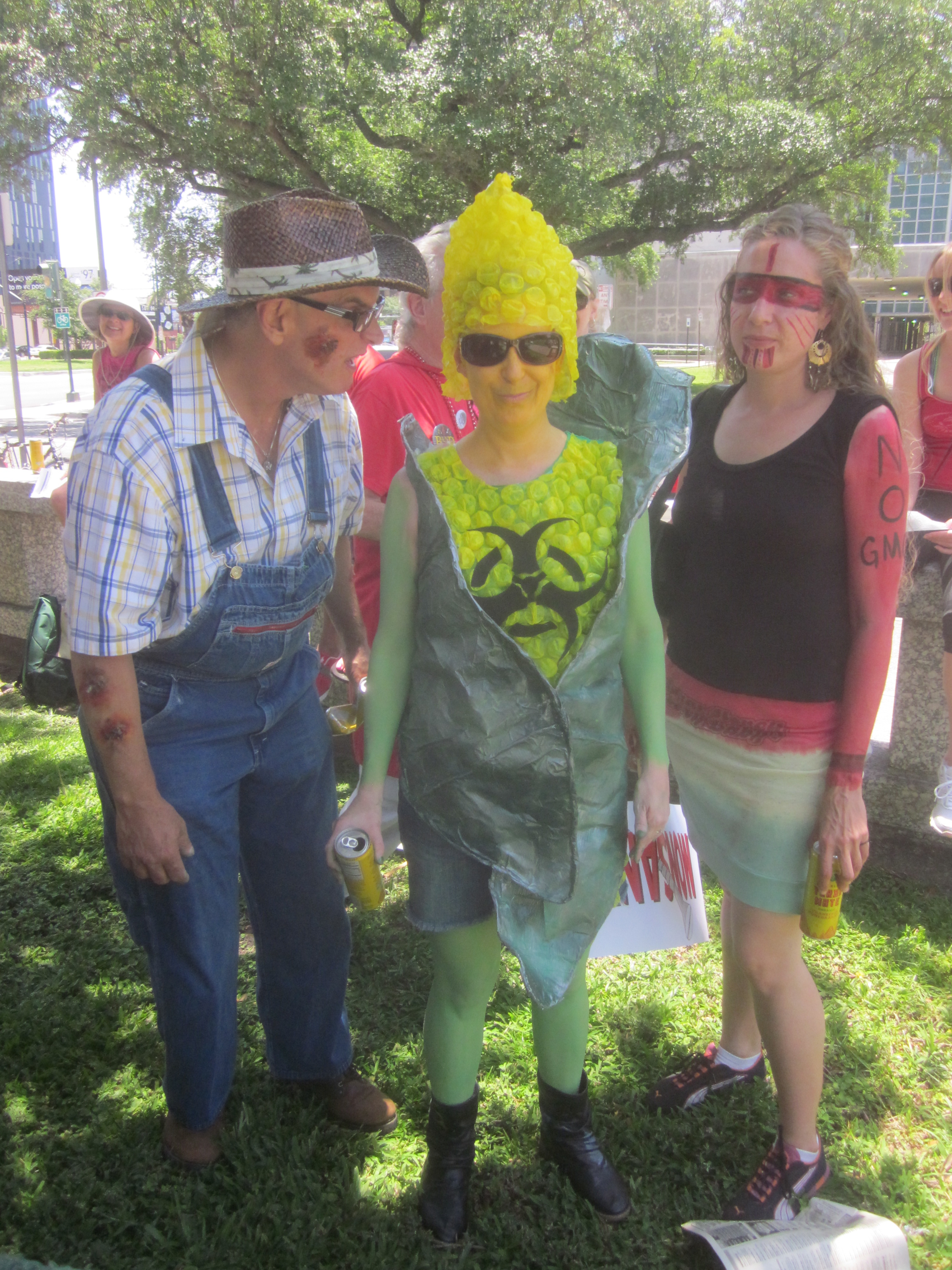 |
| March Against Monsanto New Orleans, May 2013 |
The authors threw out all the DNA sequences from vertabraes because a) they weren't interested in human DNA sequences and b) it would be difficult to tell what organism the DNA came from due to similarities in DNA sequences (after all, we're more similar to chickens that we'd like to believe). Then they took the remaining DNA samples and compared them to a database of sequences of chloroplast DNA. Chloroplast DNA is unique because it is separate from the DNA found in the nucleus of the cell. It is circular and there are multiple copies of chloroplast DNA in each plant cell (sounds a bit like mitochondrial DNA, if you're familiar with that from 23&Me and other ancestry DNA sequencing services). The authors found that there were quite a few sequences that matched chloroplast DNA, particularly the DNA sequences for potato and tomato chloroplast, and actually got more data of tomato DNA than human DNA in some regions.
Then, they wanted to determine the original size of the DNA fragment. It is generally thought that most DNA gets fragmented during the digestion process, so if they could demonstrate that the DNA that was sequenced was long, then you might be able to make a case that entire genes could be floating around. However, this is pretty difficult to do because during the process of preparing a sample for next-generation sequencing, you generally chop up the DNA into bits and pieces. If we go to a cookie analogy, imagine that you make chocolate chip cookies with walnuts. You buy a bag of walnut pieces, which may contain a few whole walnuts. The recipe calls for throwing the walnut pieces into the food processor before you add them to the cookie batter. So it's pretty tough to figure out how many whole walnuts were in the bag by eating the cookies.
To get around this conundrum, the authors physically filtered the DNA according to size. They had 3 filtration sizes which became 3 different samples. Each sample was then chopped up and when it was sequenced, you could infer that the DNA's original size was larger than the filtration cutoff (for the science-y people, they ran a gel and cut three bands from the smear: >10kb, 10kb-200bp, and ~200bp). If we go back to our walnut analogy, imagine that you take the bag of walnut pieces and pass it through a 1/2 inch sieve. Everything that gets caught goes in one bowl. Then you take the stuff that went through and you pass it through a 1/4 inch sieve. You repeat the process with a 1/8 inch sieve. Then you take the 3 bowls of walnuts and you put each one of them through the food processor, make the cookie batter, and end up with 3 batches of cookies. All 3 batches will have roughly the same walnut size, but you can infer that the original starting size of the walnut pieces was >1/2", 1/2-1/4", and 1/4"-1/8" (BTW, I honestly don't understand this whole Imperial measurement system. The Canadian AND Venezuelan parts of me are shuddering as I write this).
The authors infer that a lot of DNA sequence came from the largest filter size from patients diagnosed with irritable bowel syndrome (IBS). The filter size that they used was 10 kilobases. If you consider that the average size of a human gene is 10-15 kilobases, then this implies that most of the cell-free DNA in patients with IBS is large enough to have a gene in it.
The authors then wanted to confirm their findings. They searched publicly available DNA databases and found 909 samples of cell-free DNA, representing 907 individuals. They also found non-human DNA in the electronic data, but noted that the amount that was present had "large variations" from person to person. They followed the same data analysis workflow as before. The DNA in the public databases came from 2 projects: one project was studying patients with an autoimmune disorder and the second was trying to detect fetal DNA in pregnant women. Here's the breakdown of the DNA from the two studies.
- Autoimmune disorder: The most common matches were to chloroplast DNA from Brassica rapa, as well as orange. The machine used to sequence these samples was not the same as the one used by the authors. The authors state that there's a lot of plant DNA in these samples when compared to control. Since this is the same observation noted in the patients with irritable bowel syndrome, the authors state that high levels of plant DNA circulating in plasma may be associated with inflammation. I'm holding my tongue on all criticisms of this paper till I'm done with the description, but I can't help myself from saying "wha-aaaat? how did you jump from here to there???"
- Pregnant women: There wasn't much sequencing data from these samples, but the authors were able to determine that the most common match to chloroplast DNA were from soybean. Additionally, since these samples weren't actually pooled together (i.e., each sample was sequenced independently), the authors were able to identify differences in the abundance of plant DNA in these samples, which represents differences in the diets of the pregnant women. For example, if I had been a participant in this study, I have no doubt that the authors would have identified an abnormally high level of chloroplast DNA from pomegranates. This finding suggests that the plant DNA detected in these samples are not actually contaminants.
The authors conclude that the presence of foreign DNA in the plasma is not unusual, that its concentration is highest in patients with inflammation, and that these findings should lead us to revisit our views on the degradation and absorption of DNA/RNA in our bodies.
I think that the finding that there is plant DNA circulating in our bodies isn't a big deal. The paper provides several references for studies that have examined this issue and have found DNA from our food in our organs and tissues (see here and here). However, it's always been chopped up. This paper suggests that full genes are floating about, which is what raised the alarm flags for activists. So I'm going to focus on this unique finding from the paper.
Getting back to the paper. I have several issues with the experiment the authors performed in their lab (i.e not the data analysis work on the plasma samples from autoimmune disorder patients or pregnant women):
1) Contamination. As I stated at the beginning of this piece, the authors are sequencing the DNA in the space between our cells. There's very little DNA in there so the risk of sequencing a contaminant is high. To recap from last week's piece, it's a matter of abundance: if you had actual cellular material, all that plant DNA would get drowned out by the vast amount of human DNA that you'd end up sequencing. As mentioned last week, like having 1 cup batter of chocolate chip-raisin cookies with a handful of cranberries that your kid threw in versus 1 gallon batter of chocolate chip-raisin cookies with the same amount of cranberries. Since the authors probably had very little DNA when they started, any DNA from the environment or from their equipment could be mistaken for DNA from their samples.
Since the risk of contamination is higher, the authors should have included a negative control. Going back to the cookie analogy, to determine if the cranberries are part of the chocolate chip-raisin mix in the cookies or not, there's a very simple test: make a batch of cookies with no chocolate chips or raisins. If you end up with cranberries in there, then you can conclude that the cranberries are a contaminant (i.e. your kid walked by and threw a handful in there). If there are no cranberries, then you can conclude that the cranberries were part of the chocolate chip-raisin mix. The authors failed to do this simple test.
I was happy to see that this point is also noted in the comments section by a scientist who has published a rebuttal. I'll review this further below.
Since the risk of contamination is higher, the authors should have included a negative control. Going back to the cookie analogy, to determine if the cranberries are part of the chocolate chip-raisin mix in the cookies or not, there's a very simple test: make a batch of cookies with no chocolate chips or raisins. If you end up with cranberries in there, then you can conclude that the cranberries are a contaminant (i.e. your kid walked by and threw a handful in there). If there are no cranberries, then you can conclude that the cranberries were part of the chocolate chip-raisin mix. The authors failed to do this simple test.
I was happy to see that this point is also noted in the comments section by a scientist who has published a rebuttal. I'll review this further below.
2) The authors find high levels of tomato and potato DNA in all their samples. This doesn't make much sense to me. Why would the authors find the same two DNA samples to be of highest abundance in all the different patient types and filtration sizes? As seen in the study with pregnant women, there should be variation between the different groups. I know that tomatoes definitely don't make up the biggest part of my veggie/fruit diet, so this is really weird.
3) The authors find abnormally high levels of plant DNA in the irritable bowel syndrome patients, but only for the largest filtration size. The authors conclude that foreign DNA in plasma is elevated in patients with inflammation. As such, you'd expect to see increased levels of foreign DNA in every filtration size. However, the medium and small filtration sizes have plant DNA levels equivalent to the patients with no symptoms. There's one thing that I think you can agree with: concluding that "plant DNA is elevated in patients with inflamation" is a HUGE conclusion to draw from a single sequencing run.
4) Ummmmm... Filtration controls? Where are you? The authors infer DNA size based on physical separation of DNA. However, they have no controls. It would be fairly simple to just spike in DNA of different, but known, sizes (the use of a "ladder" in DNA size separation is very, very, very, very, very common, so it would have been trivial to do). This size control would have also helped determine contamination: if you find some of the large DNA control in the small DNA results, then you know that some sort of contamination may have occurred during the filtration process. It would be similar to placing a brazil nut, a hazelnut, and a peanut whose sizes you've measured into the walnut size separation. The brazil nut should filter out with the large walnut chunks, the hazelnut with the medium chunks and the peanut should end up in the small bits and pieces. If any pieces of these nuts appear in the "wrong" cookie batch, then you could conclude that there was contamination. Maybe you didn't wash the blade on your food processor well enough. Or maybe you got carried away by the music you were playing in the kitchen and made an inadvertent mistake. Seriously. Anything is possible, and if you don't have controls, you'll never know.
5) Choice of NGS technology. As I mentioned in the first installment in this series, different NGS companies have different chemistries, all of which have pros and cons. The technology that the authors of this study chose required the DNA to get chopped up to small bits and pieces, leading them to infer that the DNA was long, but not measuring the length directly. They didn't have to use that specific chemistry. I would have chosen a technology that would have allowed them to sequence longer lengths of DNA (for the NGS geeks, I think that PacBio might have been a better fit). It depends on how much DNA they had to start with, and they don't really elaborate this point. However, given the fact that they pooled together DNA from 50 patients, I think it might have been possible.6) Why chloroplast DNA? I think it's odd that they focused exclusively on the analysis of DNA from the chloroplast, and not the DNA from the nucleus of the plant cell. Is this truly reflective of all the DNA in the cell? Is it possible that due to the circular nature of chloroplast DNA, it can avoid degradation more readily? Since there are more copies of chloroplast DNA in each cell, how does this affect their findings?
But, let's imagine that the findings of the paper are not an error and that someone else actually replicated these findings. What does it mean?
- This has little to do with GMOs. I feel the need to reiterate that if a full gene for a transgenic food is floating in our system, so is a full gene from a traditionally bred crop. Additionally, scientists haven't gotten smart enough to invent new genes/proteins, so whatever gene is in a transgenic crop, also comes from nature. The only difference is what you ate in order to get that gene into your system. This fact alone should debunk titles of articles such as "Genetically Modified DNA transfers from food to blood" (also, now that you've gone through this post, you know that it's not actually blood that was studied here)
- As I said at the beginning of this post: then what? Somehow these whole genes that are floating about have to make their way through the outermost layer of the cell (cell membrane), avoid getting degraded by proteins that chop up foreign DNA, and make their way into the nucleus. Within the nucleus of our cells, it would then somehow have to "trick" regulatory proteins so that they think that the foreign gene has to be turned on, so that it gets made into RNA. An alternate option is for the foreign DNA to get integrated into the cell's DNA (i.e. act like a virus), even though it doesn't have any of the viral proteins/genes. But let's say that somehow one of these scenarios were to play out, and the gene that was floating about was the transgenic gene from a GMO corn (the odds of this alone are 1 or 2 in 32000, since there are only 1-2 transgenic genes added to corn, which has 32000 genes), and that this DNA somehow managed to defy all odds and get made into RNA. The RNA will then be made into a protein. And let's pretend that this happens stably: meaning that this protein keeps getting made. That's 1 cell out of the 46-68 trillion in our body that is making a foreign protein. The two most likely fates for this protein produced by this single cell in your body is a) your immune system will take care of matters or b) the protein will just fade away (all proteins have a half life; they don't just float around forever). If you want to lose sleep over that, go right ahead. I'm more worried about the zombie apocalypse, and the CDC thinks you should be too.
Well, that's paper #1. Next week, we'll review a controversial paper that found that small RNA from rice can regulate a protein in our bodies and all the subsequent papers that attempted to replicate the findings.
Friday, May 23, 2014
An Intro to Next-Generation Sequencing (NGS) - Part 1
A few months back, I wrote a post about the alleged dangers of eating DNA from a GMO. In summary, our bodies don't know the difference between DNA derived from a transgenic crop or a traditionally bred crop. We've been eating cellular material for quite some time now and we haven't become green from eating veggies. (I wonder if the Creation Museum has a display of a caveman chomping down on some delicious dinosaur ribs.)
However, I still see many arguments about how we've now found DNA from our food circulating in our blood or how we've found RNA from rice inside us. Many of these studies have been enabled through a technology known as Next-Generation Sequencing (NGS). In the spirit of full disclosure, this is my field of work: I've worked in companies that develop NGS technologies for 6 years: the last 4 have been in internal product development, and this last year has been in the R&D lab itself. In this series of posts I'm going to explain the controversies about a few papers that have used NGS technologies and are used as examples of how eating DNA from a GMO is dangerous.
This post gives an overview of the technology and the considerations in experimental design. Next week (or sometime after), I'll post reviews of the papers.
Let’s begin with a brief history of DNA sequencing: prior to NGS, you generally had to know what you were going to sequence. You couldn't just randomly take a DNA sample and tell a lab: “tell me what's in here”. You had to know what you were looking for in order to do your experimental design. Even in forensics, which has yet to adopt NGS, they look at very specific and well characterized regions of the genome. There were ways around this to allow for discovery, but the processes were long and very expensive, which was why the sequencing of the human genome took 13 years (1990-2003) and cost 2.7 billion dollars. The most popular technologies behind next-generation sequencing follow the same general principle: you take your DNA, you chop it up, you amplify it so that the machines have enough to work with and detect, then you put it on a machine that “reads” each DNA base and tells you what’s there. There are several different chemistries for sequencing, each patented by a different company, and each of which has its pros and cons. With the advent of NGS, scientists found that they could virtually sequence anything. There have been a lot of exploratory experiments going on in the past decade based on this technology. Not only that, but you aren’t necessarily restricted to the analysis of DNA. You can indirectly sequence RNA, DNA modifications and structures, as well as DNA bound to proteins.
Here are some examples of the amazing things that have been done with NGS (and why):
Pretty awesome, eh? The possibilities are seemingly endless. I actually want a sequencer in my garage, but I’ve been deterred by the thought that my employers would notice if one went missing… (and a shout-out to the spouse for cleaning out the garage for Mother’s Day!! Don’t worry. I won’t turn it into a lab. For now).
Hopefully, you can imagine the applications and experiments that could be performed in agricultural biotechnology, as well as studies pertaining to transgenic organisms. As I've mentioned before, companies use NGS to determine if there were any unintended consequences of the transgenic event. Studies could also be performed to determine the impact of glyphosate on the gut microbiome or on bacteria in the soil, or to determine what happens to the DNA of the food we eat. In another possible application, the mysterious pathogenic organism that Dr Don Huber claims to be enriched in GMOs could also be sequenced, if he were to release the organism (outlined eloquently by Dr Kevin Folta in this change.org petition).
There are a few more concepts that require explanation. One of the key questions in an NGS experiment is “how much sequencing do I have to do”? Here’s an analogy: imagine you’re baking oatmeal cookies with chocolate chips and raisins. You make a big batch of cookie dough. Your kid walks by and throws in a very small handful of dried cranberries. Then you bake cookies. For the sake of this analogy, we have to imagine that the number of cookies you could bake was infinite (i.e. you had an endless amount of cookie dough).
How many cookies do you have to bake and eat in order to determine the ratio of chocolate chips to raisins? If you bake 10 of them, you probably get a good enough idea, right? What if you want to know if there are any raisins at all. You might be able to get away with baking a single cookie. But what if you want to know how many cranberries your kid threw in. Do you bake 20? 30? 100? The number of cookies that you bake depends on the question that you’re asking.
The same is true in the world of NGS. If you’re looking for a mutation that you inherited from your mom and is present in all your cells, you can do a “standard” amount of sequencing for the technology you’re using. But what if you suspect that you might be HIV positive, and the event that led to this suspicion occurred very recently? How much DNA do you have to sequence in order to detect the presence of the virus? The answer will be very different. It's basically a question of abundance. Looking for something that is present in every cell will require much less sequencing than looking for something that is much more rare.
The next concept is that of input material vs contaminant. In our cookie analogy, imagine that you make 2 batches of cookies: a 1 cup batch and a 1 gallon batch. Since the toddler in this analogy is of the “up-to-no-good-variety”, he manages to throw the same amount of cranberries in both batches without you noticing. For the small batch, odds are that you’ll have a cranberry in every cookie you bake. You might even conclude that the cookies weren’t chocolate-raisin, but were chocolate-raisin-cranberry. However, for the second and larger batch, you could probably eat a full dozen without coming across a single cranberry. If you do come across a cranberry, you’d probably say “Huh… What’s that doing in there?”
In the world of NGS, the same is true. If you start with a lot of DNA, you can exclude contaminants more easily/readily than if you start with a small amount, and the inclusion of appropriate controls is a key element. Contamination does happen, however, its impact on your experiment depends on the amount of sequencing you perform and the question you're trying to get answered. For example, the world's first next-gen sequencing diagnostic assay actually allows for 10% contamination before the experiment is deemed a failure. However, the assay's accuracy is still incredible because it does a lot of sequencing and is asking a simple question (i.e, it's only looking for chocolate chips and raisins, not cranberries).
So you see that there are many considerations on how to use the technology depending on the experiment, and every experiment needs to use different controls even though the technology used may be the same. However, such considerations can be often overlooked.
Make sense? Alrighty! I hope to see you here next week when we start reviewing the papers.
BTW, my husband wanted me to change cranberries to walnuts. But I pointed out that walnuts belong in a cookie and would never be mistaken for a contaminant, whereas cranberries don't belong in there. He has seen the error in his views and now agrees.
However, I still see many arguments about how we've now found DNA from our food circulating in our blood or how we've found RNA from rice inside us. Many of these studies have been enabled through a technology known as Next-Generation Sequencing (NGS). In the spirit of full disclosure, this is my field of work: I've worked in companies that develop NGS technologies for 6 years: the last 4 have been in internal product development, and this last year has been in the R&D lab itself. In this series of posts I'm going to explain the controversies about a few papers that have used NGS technologies and are used as examples of how eating DNA from a GMO is dangerous.
This post gives an overview of the technology and the considerations in experimental design. Next week (or sometime after), I'll post reviews of the papers.
Let’s begin with a brief history of DNA sequencing: prior to NGS, you generally had to know what you were going to sequence. You couldn't just randomly take a DNA sample and tell a lab: “tell me what's in here”. You had to know what you were looking for in order to do your experimental design. Even in forensics, which has yet to adopt NGS, they look at very specific and well characterized regions of the genome. There were ways around this to allow for discovery, but the processes were long and very expensive, which was why the sequencing of the human genome took 13 years (1990-2003) and cost 2.7 billion dollars. The most popular technologies behind next-generation sequencing follow the same general principle: you take your DNA, you chop it up, you amplify it so that the machines have enough to work with and detect, then you put it on a machine that “reads” each DNA base and tells you what’s there. There are several different chemistries for sequencing, each patented by a different company, and each of which has its pros and cons. With the advent of NGS, scientists found that they could virtually sequence anything. There have been a lot of exploratory experiments going on in the past decade based on this technology. Not only that, but you aren’t necessarily restricted to the analysis of DNA. You can indirectly sequence RNA, DNA modifications and structures, as well as DNA bound to proteins.
Here are some examples of the amazing things that have been done with NGS (and why):
- Identify micro-organisms in samples of ocean water from around the world (because there are so many species that we have yet to discover and understand - BTW, when I was a grad student, I really wanted to work on the yacht that was doing this project)
- Sequence the genome of a panda (because the panda genome is cute and cuddly!)
- Study the microbial content of our gut by sequencing DNA from feces and mucosa (because we need to determine what the microbial content of a healthy gut “looks like”, in order to determine why/how it goes awry).
- Identify mutations in infants in the NICU (because doctors need quick diagnoses of genetic illnesses for infants in the NICU due to their critical conditions).
- Identify modifications to DNA in prostate cancer samples (because these may tell us how genes are turned on/off in cancer samples vs normal samples)
Pretty awesome, eh? The possibilities are seemingly endless. I actually want a sequencer in my garage, but I’ve been deterred by the thought that my employers would notice if one went missing… (and a shout-out to the spouse for cleaning out the garage for Mother’s Day!! Don’t worry. I won’t turn it into a lab. For now).
Hopefully, you can imagine the applications and experiments that could be performed in agricultural biotechnology, as well as studies pertaining to transgenic organisms. As I've mentioned before, companies use NGS to determine if there were any unintended consequences of the transgenic event. Studies could also be performed to determine the impact of glyphosate on the gut microbiome or on bacteria in the soil, or to determine what happens to the DNA of the food we eat. In another possible application, the mysterious pathogenic organism that Dr Don Huber claims to be enriched in GMOs could also be sequenced, if he were to release the organism (outlined eloquently by Dr Kevin Folta in this change.org petition).
There are a few more concepts that require explanation. One of the key questions in an NGS experiment is “how much sequencing do I have to do”? Here’s an analogy: imagine you’re baking oatmeal cookies with chocolate chips and raisins. You make a big batch of cookie dough. Your kid walks by and throws in a very small handful of dried cranberries. Then you bake cookies. For the sake of this analogy, we have to imagine that the number of cookies you could bake was infinite (i.e. you had an endless amount of cookie dough).
How many cookies do you have to bake and eat in order to determine the ratio of chocolate chips to raisins? If you bake 10 of them, you probably get a good enough idea, right? What if you want to know if there are any raisins at all. You might be able to get away with baking a single cookie. But what if you want to know how many cranberries your kid threw in. Do you bake 20? 30? 100? The number of cookies that you bake depends on the question that you’re asking.
The same is true in the world of NGS. If you’re looking for a mutation that you inherited from your mom and is present in all your cells, you can do a “standard” amount of sequencing for the technology you’re using. But what if you suspect that you might be HIV positive, and the event that led to this suspicion occurred very recently? How much DNA do you have to sequence in order to detect the presence of the virus? The answer will be very different. It's basically a question of abundance. Looking for something that is present in every cell will require much less sequencing than looking for something that is much more rare.
 |
| Oatmeal chocolate chip cookies. Beware! You may become a chocolate chip oatmeal cookie by absorbing its DNA! From Wikimedia commons. But I wish it was from cookies in my pantry. Alas... |
In the world of NGS, the same is true. If you start with a lot of DNA, you can exclude contaminants more easily/readily than if you start with a small amount, and the inclusion of appropriate controls is a key element. Contamination does happen, however, its impact on your experiment depends on the amount of sequencing you perform and the question you're trying to get answered. For example, the world's first next-gen sequencing diagnostic assay actually allows for 10% contamination before the experiment is deemed a failure. However, the assay's accuracy is still incredible because it does a lot of sequencing and is asking a simple question (i.e, it's only looking for chocolate chips and raisins, not cranberries).
So you see that there are many considerations on how to use the technology depending on the experiment, and every experiment needs to use different controls even though the technology used may be the same. However, such considerations can be often overlooked.
Make sense? Alrighty! I hope to see you here next week when we start reviewing the papers.
BTW, my husband wanted me to change cranberries to walnuts. But I pointed out that walnuts belong in a cookie and would never be mistaken for a contaminant, whereas cranberries don't belong in there. He has seen the error in his views and now agrees.
Subscribe to:
Posts (Atom)